THE PRANK PEDDLERS
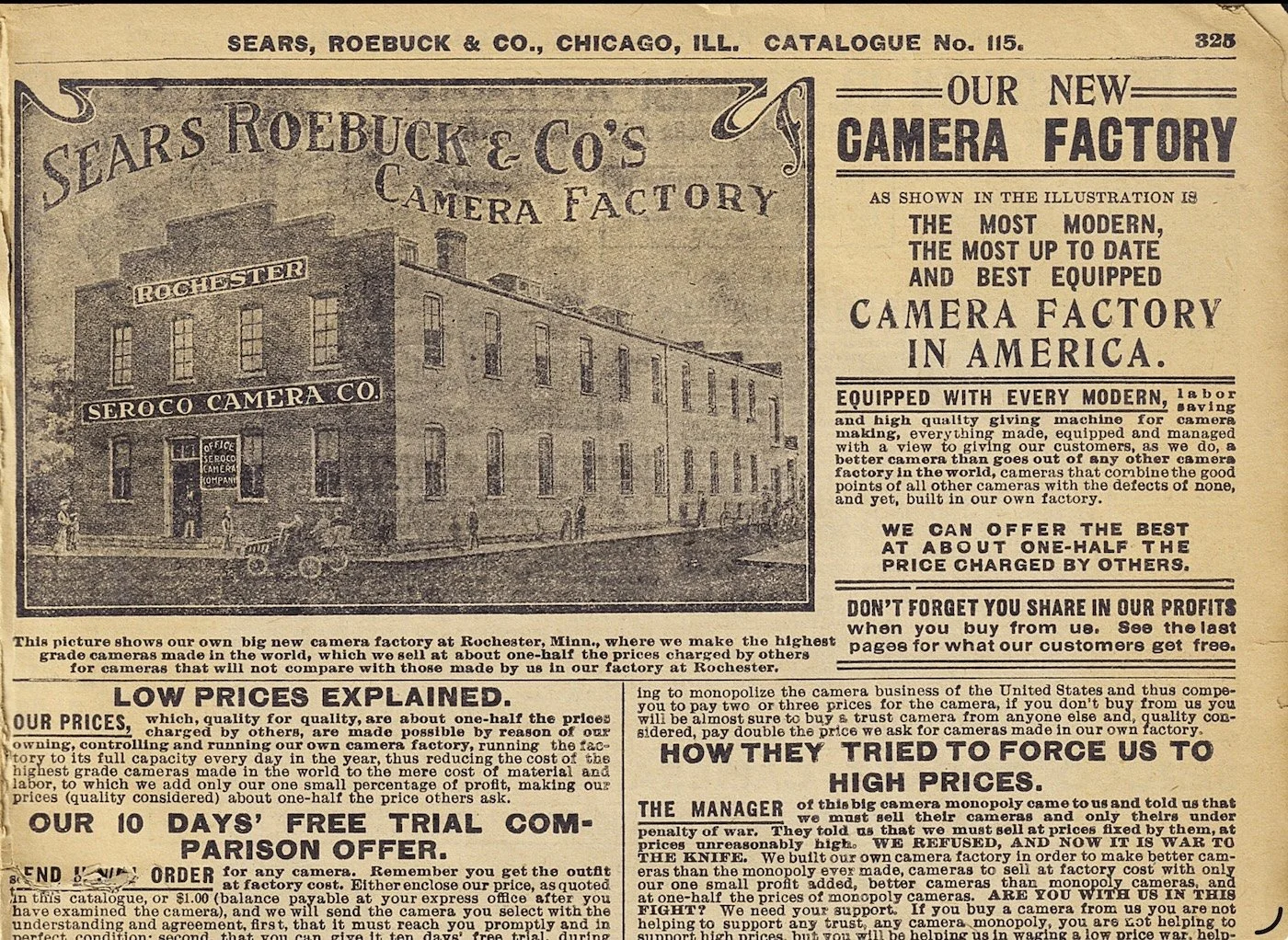
CHICAGO - 1914 — Four score years before Amazon.com, you could get anything by mail order, and most of it came from Chicago. Both Montgomery Ward’s and Sears and Roebuck’s doorstop catalogs sold everything you needed to stock a house, including a kit to build the house itself. Wood stoves and washboards. Banjos and guitars. Ivory Soap. . . But only one mail order catalog sold pure jackass fun.
— Sneezing Powder! — For parties, political meetings, car rides. It is the GREATEST JOKE OUT!
— Invisible Ink! — Used extensively by Secret Service agents!
Turn the pages and the fun leapt out.
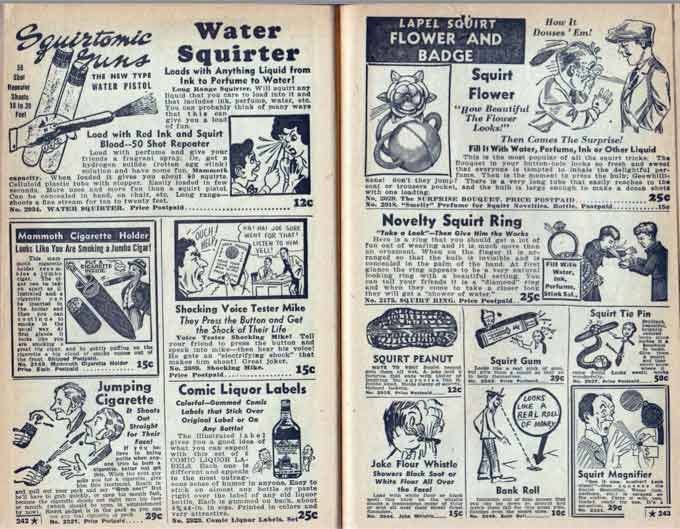
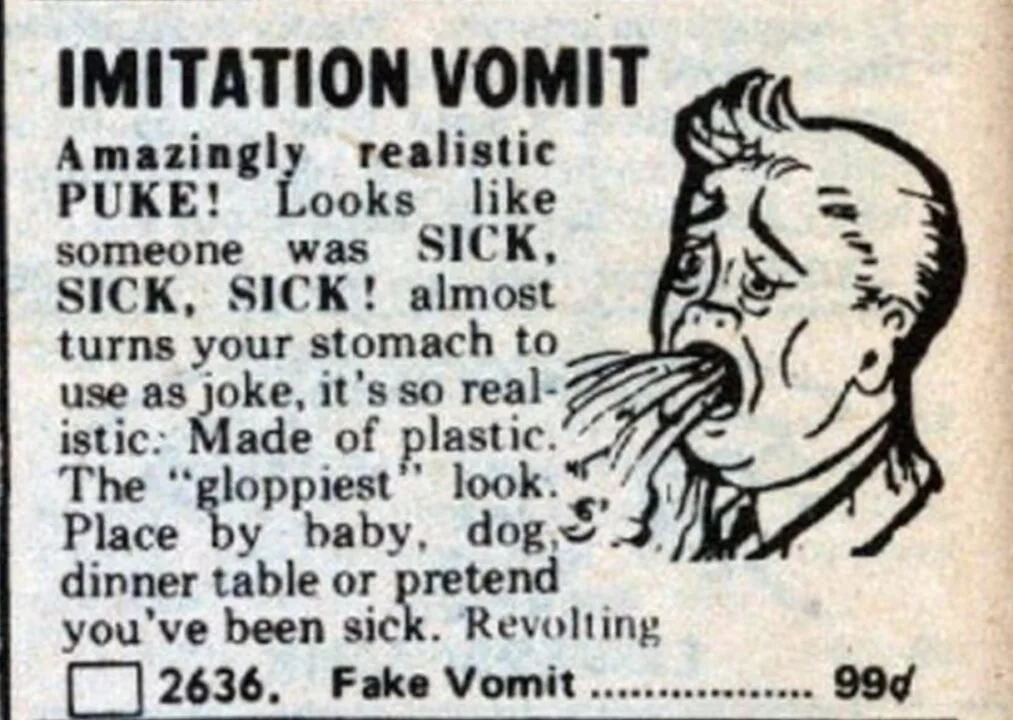
Whoopee Cushions and Dribble Glasses, of course, but also a Magic Nose Flute! Exploding Cigarettes! Live Sea Monkeys! And how could a boy live without his trusty patch of Fake Vomit?
Alfred Johnson Smith was born in England but in the 1880s, his family moved to Australia. After selling novelties in Sydney, A.J. Smith recognized that when it came to guffawing pranks, to chortling pre-adolescent dreams of popularity and revenge, there was no place like America.
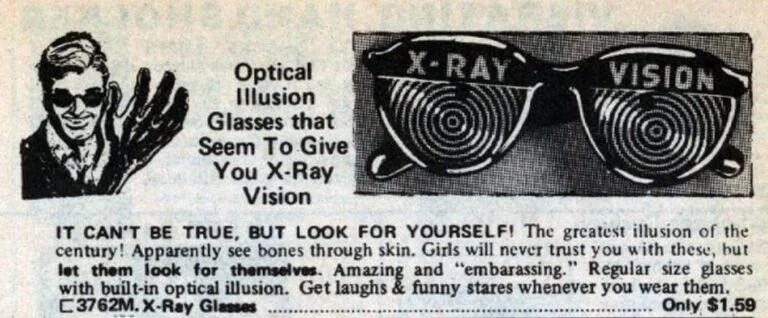
The 1914 Johnson Smith Catalog started slim, just 60 pages of Puzzles, Tricks, Jokes, and Useful Articles. But by the 1920s, what humorist Jean Shepherd later called “the Rosetta Stone of American Culture” had grown to 400 pages. Annual mailings topped 100,000 copies.
Joy Buzzers — small, hand-held instrument that simulates electric shock. Shake hands or touch somebody and. . . Surprise Salt Shaker — Looks just like the real article! Melting Spoon — Very comical and puzzling in its effects. Fake Warts. These warts are quite natural looking, with two or three hairs sticking out of each to make the illusion more perfect!
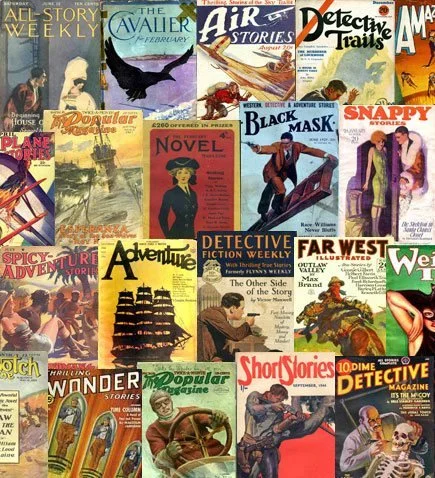
In 1923, with business booming, Smith moved his warehouse and family to Racine, Wisconsin. He also moved his huckster pitches, which he wrote himself, into the mass market magazines starting to sprout from newstands. Boys Life. Amazing Stories. Western Story Magazine. . .
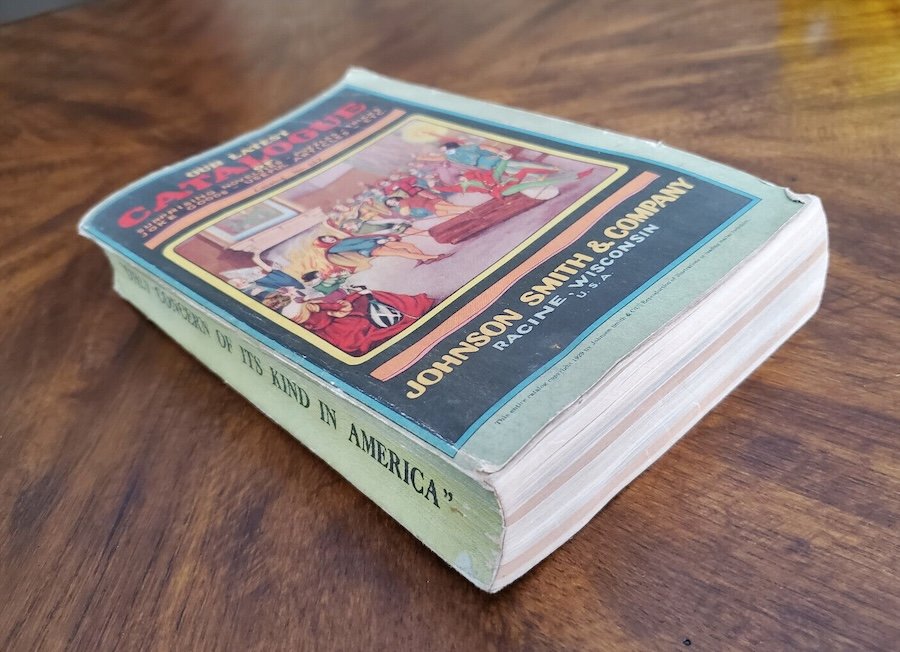
Both sales and the catalog continued to grow. The 1929 Johnson Smith Catalog spanned 768 pages. Gag after gag, trick after trick, the catalog captured the kinda lonely, kinda creepy angst of the All-American boy.
“Teenage boys are our biggest market,” said Smith’s son Paul, who despite studying math and physics at the University of Chicago, inherited and ran his father’s empire of fun. “Very few girls seem interested in our items.”
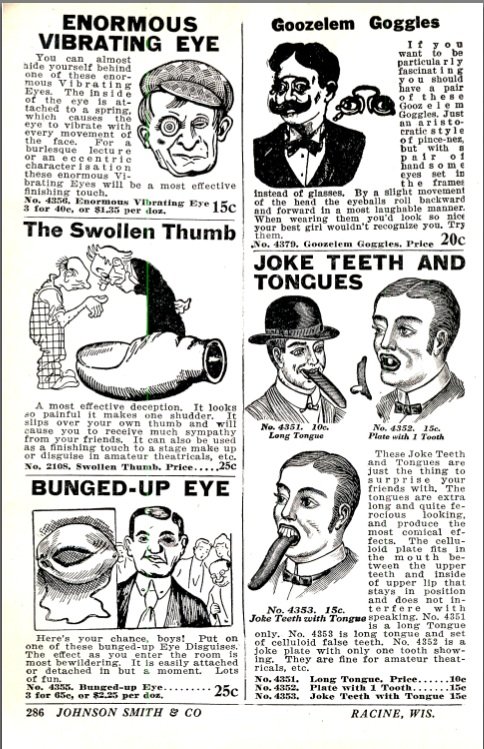
Girls? How could you understand someone who didn’t crave The World’s Smallest Harmonica or an Enormous Vibrating Eye? How could you even meet girls, anyway? Perhaps try our hypnotism booklet? Sway Others at Will—Make Others Love You! Shoe Lifts to make you taller? Fake Chest Hair? Instant virility! If Mother Nature forgot you, simply press on this chest piece. . .
“The catalog,” wrote novelist Stanley Elkin, “holds a fun-house mirror up to men’s desirings and imaginings, the hope of the heart writ small.”
The Depression hit hard, with millions unable to spare a dime for Phony Money or Fake Blood — Make cuts, bruises, gashes, scars. Great way to get sympathy! Fortunately, a new market opened.
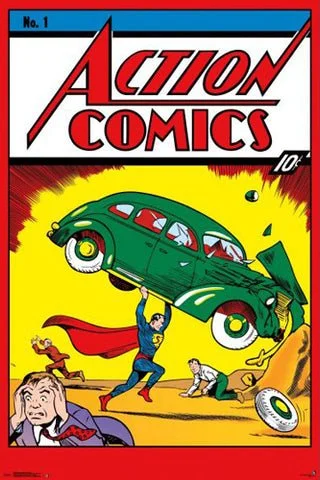
Ever on the cutting edge of boyhood, Johnson Smith ads filled the inside back covers of Action Comics #1, which debuted Superman, and Detective Comics #27 which gave the world Batman. And on into the 1950s, with slimmer catalogs but more boys than ever to read them, the fun never stopped.
Here’s where I come in. Short, pre-pubescent lad. Desperate for popularity. How could I resist the Disappearing Ink? Or The Ventrilo that promised to throw your voice!? I passed on Whoopee Cushions but must have owned a dozen Joy Buzzers. (Their springs wore out.) The less said about my other purchases, the better. Johnson Smith taught generations of youth an important lesson about consumerism. Much of that magic for sale? It’s crap.

But the hijinx and hilarity couldn’t last. Sales held solid into the 1970s, yet boyhood was changing. So were liability laws. “There’s been an increase in product-liability suits all over the country,” Paul Smith said. “Settlements are quite high. Until twenty years ago we didn’t even carry product-liability insurance. Now our premiums compare to a doctor’s.”
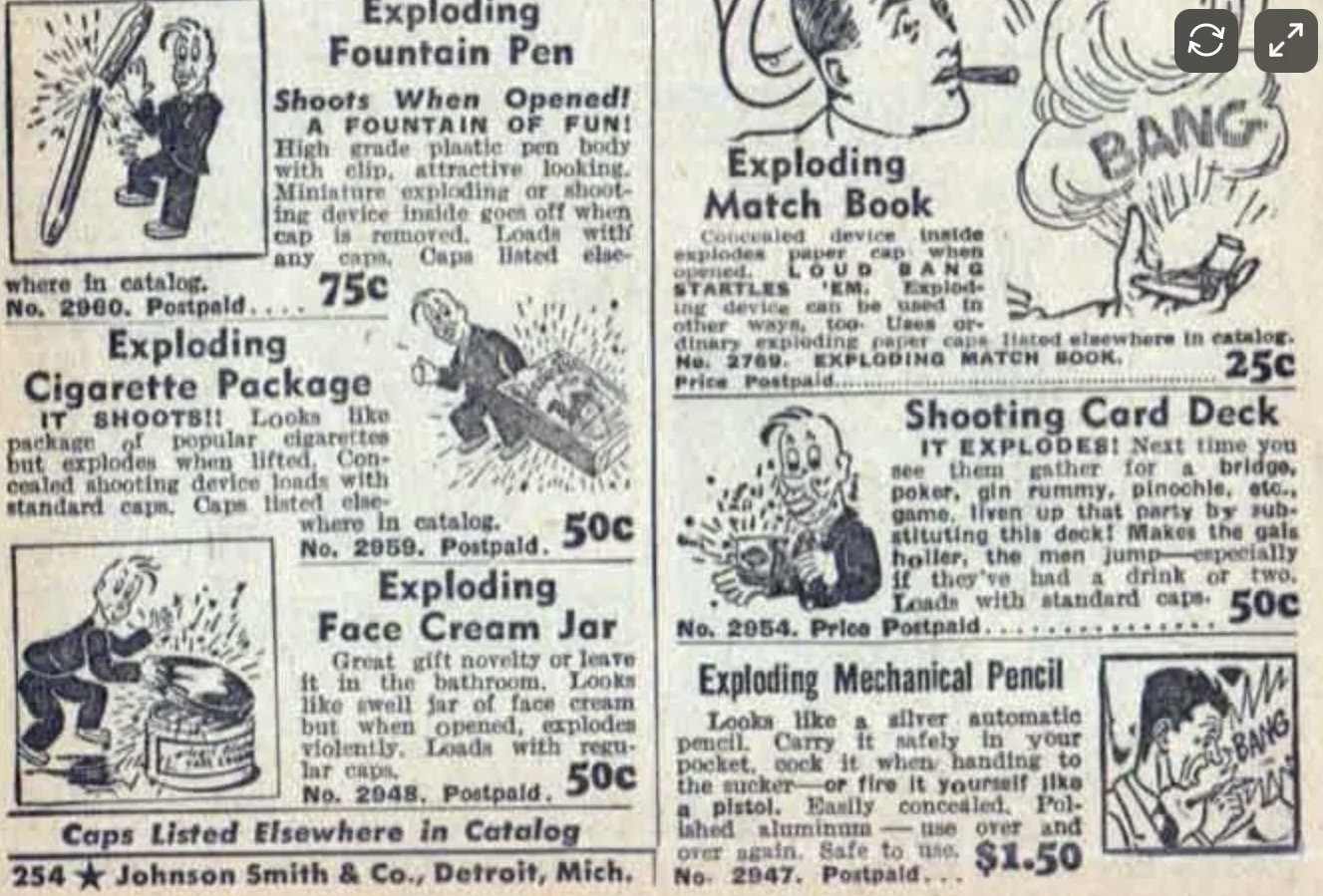
Gone were the Itching Powder, the Exploding Cigarettes, Exploding Fountain Pen, Exploding Face Cream Jar, etc. The demise of prankdom alarmed a few former boys.
“We get letters from fellas who will say, ‘Gee, will you send this catalog to my son? I remember ordering from you in the Thirties and I had more fun. You got me into more trouble, but I want my son to have the experience. They don’t have the fun they used to.’”
Fun, however, was not the lone holy grail. Imagination also mattered. Imagining how you’d use your Flesh Eating Plants could be more fun than the real thing, especially when those damn plants refused to eat any flesh. Alfred Johnson Smith recognized this early on, choosing woodcut illustrations over photos. “A photograph would be a letdown, a crash to earth,” the New Yorker wrote, “Until your sadly deflated gimcrack arrived, you could live in the mental space of those woodcuts, luxuriate in the boy-oh-boy of those verbal hyperboles.”
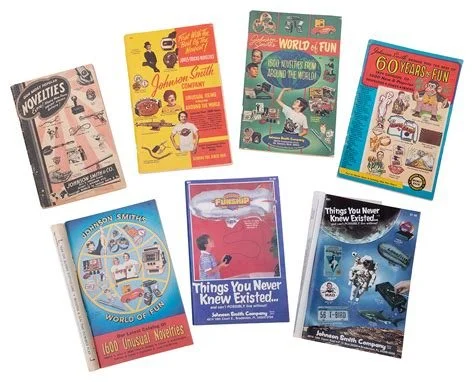
During the 1990s, when mail order followed Amazon online, Johnson Smith struggled. Under various names — Betty’s Attic, Clever Gear, Full of Life — the company sold its crap on the Web. But boys and toys were going ditigal. And Primal Joy — well, not even an outlet store in the new company home of Bradenton, Florida could revive the flow of phony money and fake blood.
After five score and five years in business, the Johnson Smith Company folded in 2019. Today, old catalogs sell on ebay for $50 and up. But unless you find some nostalgic novelty store outside some nostalgic tourist trap, you’ll have to make your own Fake Vomit. What’s this country comin’ to?