
WHEN SCIENCE WENT VIRAL
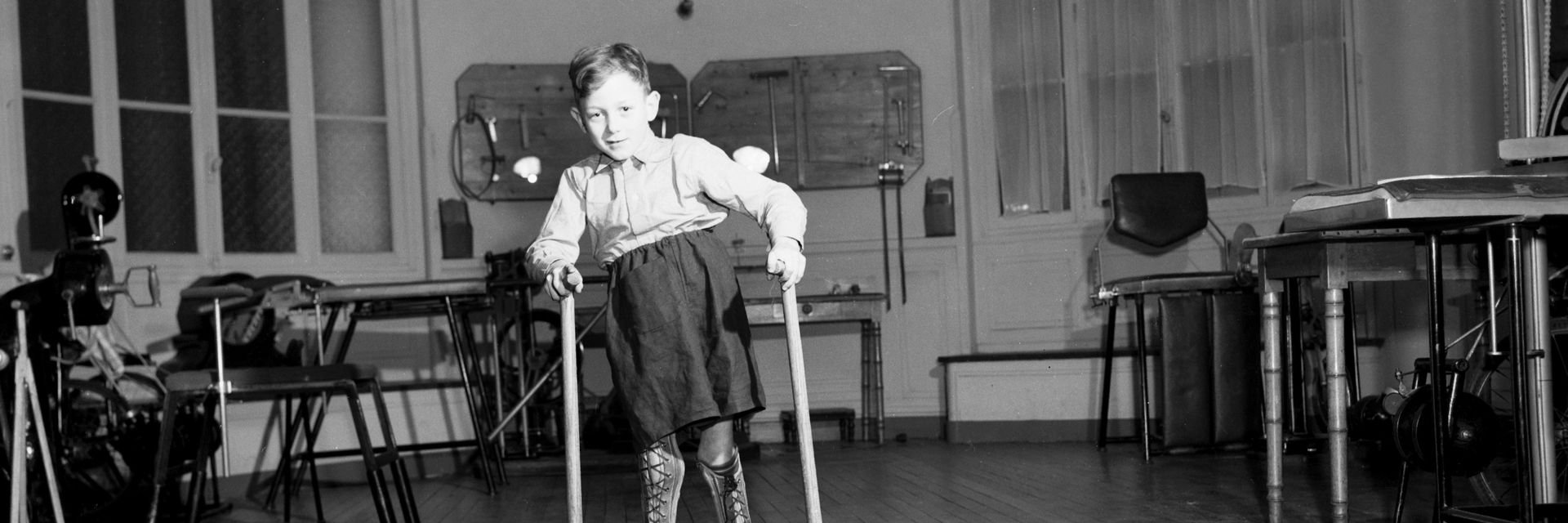
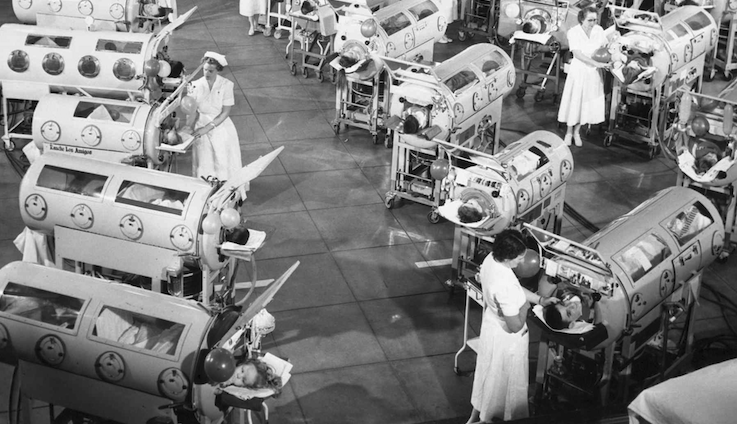
AMERICA — 1961 — Once I had taken my oral vaccine, my mother told me about the fear. Every parent’s nightmare. A child suddenly stricken. Limbs withered. Lives on hold. And in every hospital, rows of “iron lungs” where helpless victims lay trapped inside machines that breathed for them.
Throughout the first half of the 20th century, polio struck a half million people each year. Most were children. Almost every family knew a victim, and those that did not could recall a president in a wheelchair. The slightest threat of polio led to pool closures, school closures, quarantines. No one seemed safe. And then came the miracle.
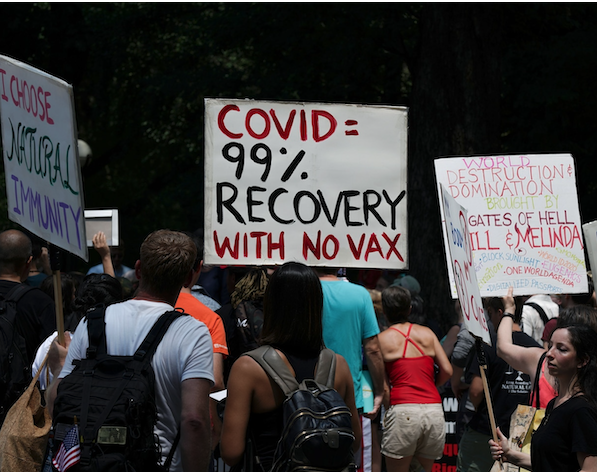
You hear a lot of utter nonsense about vaccines these days. None of it bears repeating but fear and ignorance can be fatal. After COVID vaccinations spread, the disease still killed 300,000 Americans who refused them. Remember that number. And now measles is on the rise, and an anti-vaxx fool runs our public health system.
So as World Polio Day approaches, let us pause to remember when one man and his dedicated team, backed by single dimes sent in by the millions, wiped a disease and its fear from most of the earth.
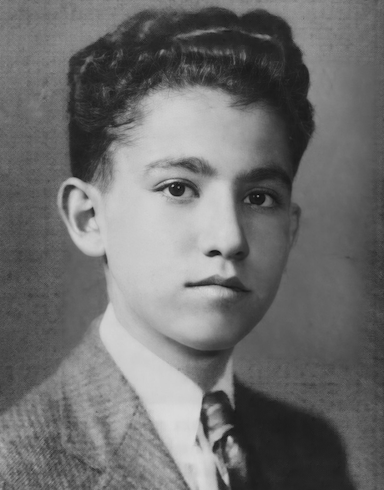
Growing up in the Bronx, Jonas Salk was not especially interested in science. “I was merely interested in things human, the human side of nature, if you like.” But the bright boy went to CCNY at 15, graduated at 20 and, steered from a law career by his mother, went to med school.
He knew he would never practice medicine. He had a bigger goal — “to be of some help to humankind.” Working in a lab, he began studying influenza, which in 1918-19 killed 50 million people worldwide. His research drew the attention of the U.S. Army which hired his team to develop the first flu vaccine. After the war, Salk turned to polio.
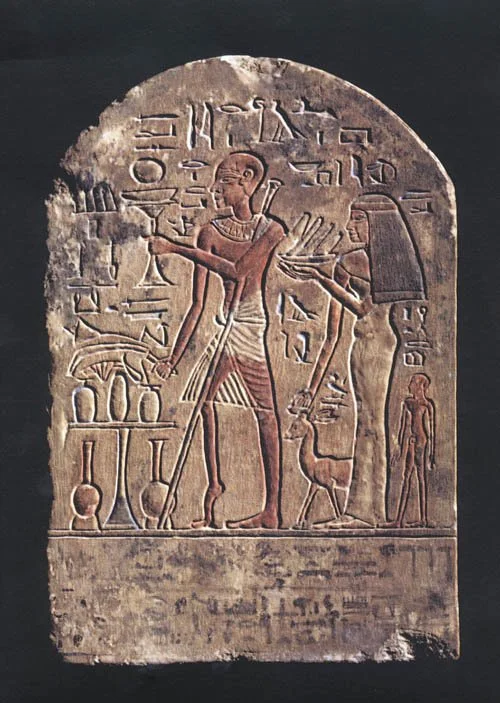
Often called “infantile paralysis,” polio has been traced to Ancient Egypt where carvings show children with withered limbs. But polio only cripples one percent of its victims. The rest, suffering milder symptoms, develop an immunity. Prior to 1900, the ubiquity of the virus created a “herd immunity” that protected almost everyone until, ironically, improved sanitation led to massive polio epidemics.
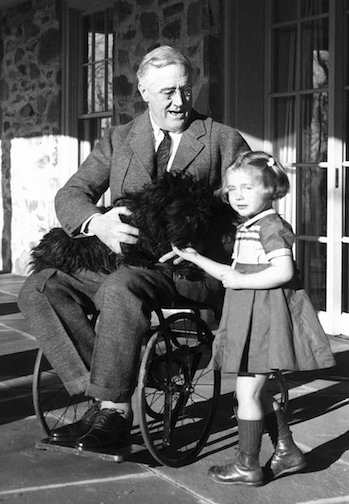
As polio stalked America, people rallied. In 1938, FDR, stricken by the disease (or some now think by an equally devastating one), started the National Foundation for Infantile Paralysis. It was soon nicknamed the March of Dimes.
Singer Eddie Cantor added the name during a national telethon just before FDR’s birthday. “To show our president that they are with him in this battle against this disease, nearly everyone can send in a dime, or several dimes,” Cantor told a radio audience.
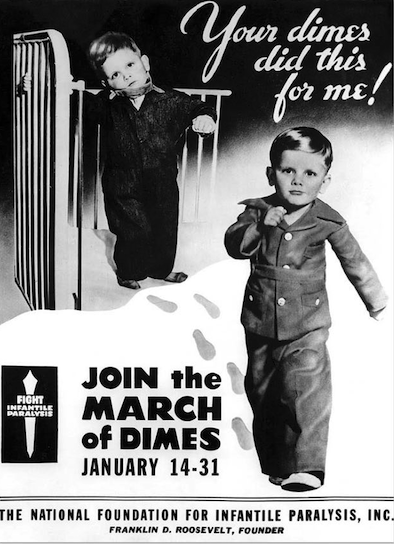
The press soon saw “a silver tide which swamped the White House.” Envelopes containing a dime or two poured in, 2.7 million in all, raising nearly $300,000 for polio research. When FDR died, his face was stamped on, what else, a dime.
Throughout the war and beyond, March of Dimes supported both polio patients and the research of Jonas Salk. Other virologists made early vaxxes from antibodies in blood plasma, but that proved too costly. Dr. Alfred Sabin worked on a live vaccine, but that could give a person polio. Salk favored a “killed vaccine” grown from the liver of monkey.
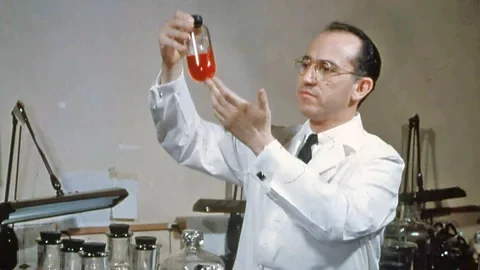
By 1952, the year when polio killed 3,000+ people and paralyzed another 21,000, Salk’s team had identified three deadly strains. Nicknamed Brunhilde, Lansing, and Leon, the narrowed targets allowed Salk to fine-tune his vaccine. That summer, he vaccinated lab animals. All proved immune. Human vaccinations began later that year.
First forty-three children, then Salk’s own children. In 1954 came the Polio Pioneers, a million children. The announcement was made on April 12, 1955.
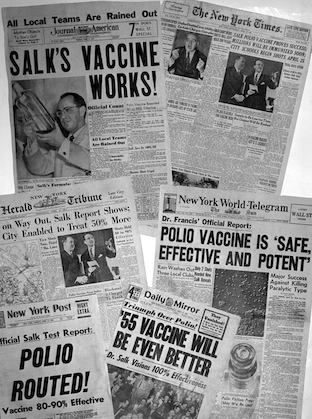
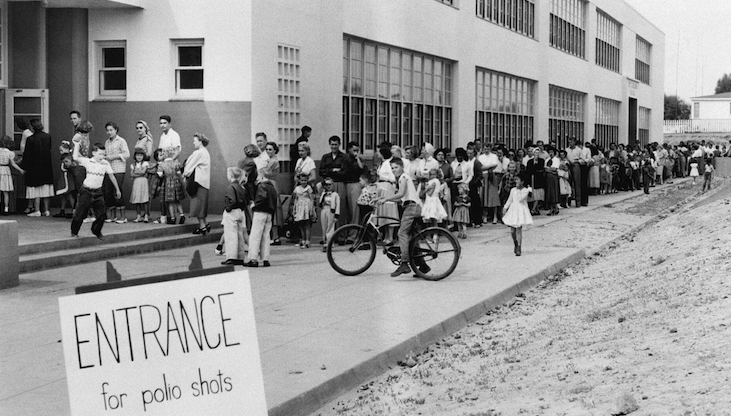
“The news,” the New York Times remembered, “caused a public sensation probably unequaled by any health development in modern times.” Vaccination clinics sprang up, first in the US, then Canada, Sweden, Denmark, Norway. . . Within four years, children in 90 countries had been vaccinated.
At 40, Jonas Salk became “a folk hero.” “Young man,” Edward R. Murrow told Salk. “A great tragedy has befallen you — you’ve lost your anonymity.” When pilots announced Salk’s presence on a plane, passengers burst into applause. Hotels upgraded his rooms. People interrupted him at restaurants, not for autographs, just to thank him.
Though he might have made millions, Salk refused to patent the virus. Asked "who owns this patent?" Salk replied, "well, the people I would say. There is no patent. Could you patent the sun?"
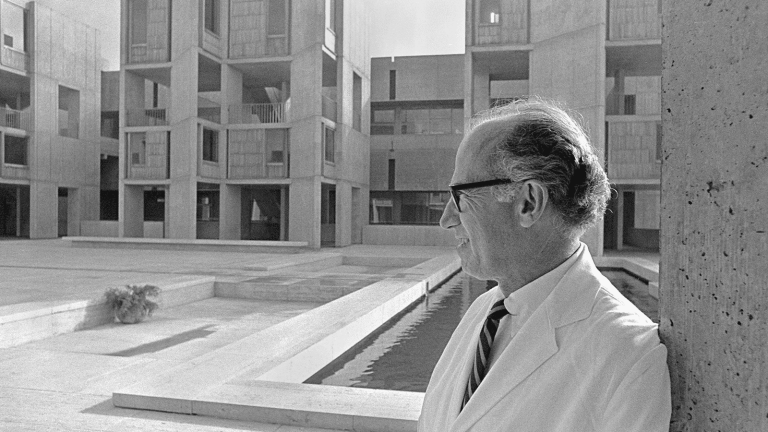
Salk used his fame to found the Salk Institute for Biological Studies in La Jolla, CA. He saw it as “a kind of Socratic academy where the supposedly alienated two cultures of science and humanism will have a favorable atmosphere for cross-fertilization.” Working there, he researched cancer, multiple sclerosis, and AIDS. He also campaiged for universal vaccination of children — “a moral commitment.”
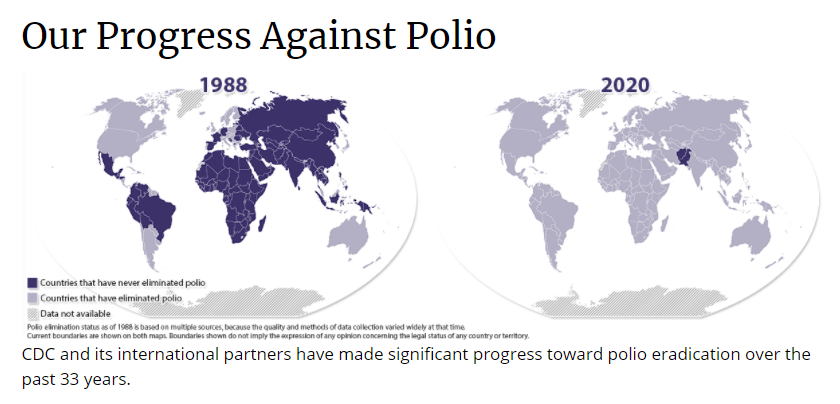
Salk died in 1995, a year after the entire Western Hemishphere was declared polio free. Europe followed in 2002, Africa in 2020. Come October 28, World Polio Day, the World Health Organization’s Global Eradication Initiative will announce the latest progress. Last year, there were just 249 polio cases worldwide.
So do us all a favor. The next time you hear or read some anti-vaxx BS, share this story. Spread the word — like a virus — that intelligence can change the world. That you can trust science more than you can trust Youtube. And in the words of Jonas Salk. . .
“These changes we're observing are part of a natural order and to be expected from our capacity to adapt. It's much more important to cooperate and collaborate. We are the co-authors, with nature, of our destiny.”