
QUEEN OF THE DULCIMER

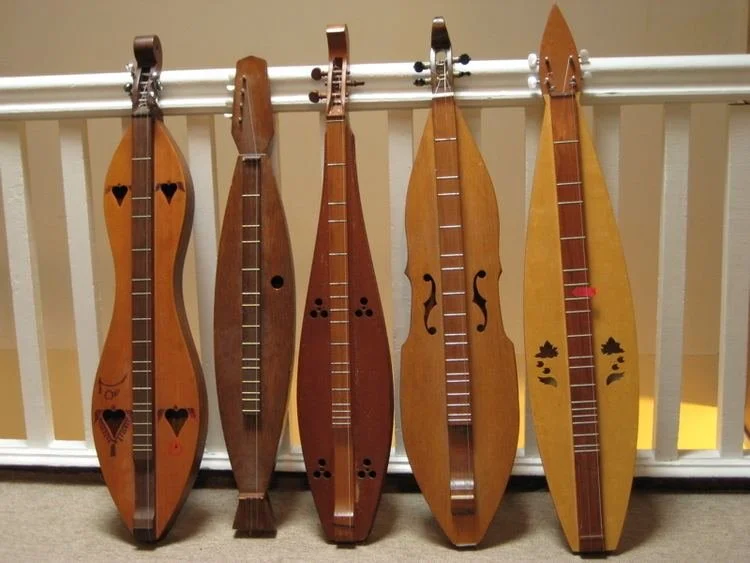
VIPER, KENTUCKY — 1927 — The sweet stringed instrument sat in the corner, silent. Shaped like an elongated hourglass, it had just three strings and a short stick to slide along the frets. A quiet sound, a haunting sound, a sound from the dark hollows of Appalachia. Listen.
But Balis Ritchie, who played while singing with his 14 children, forbade the kids to play. Still, littlest daughter just had to try.
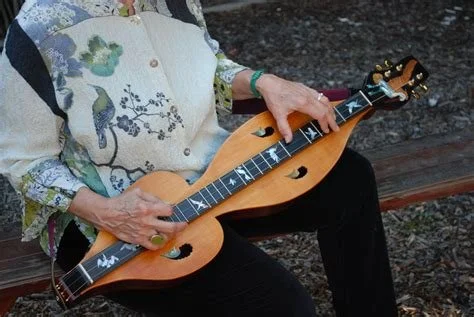
Mountain zither. Hog fiddle. Harmony Box. Harmonium. Along with its nicknames, the “mountain dulcimer” has come out of Appalachia and into the folk world. That’s the dulcimer opening Joni Mitchell’s “Blue.”
I am on a lonely road and I am traveling, traveling, traveling. . .
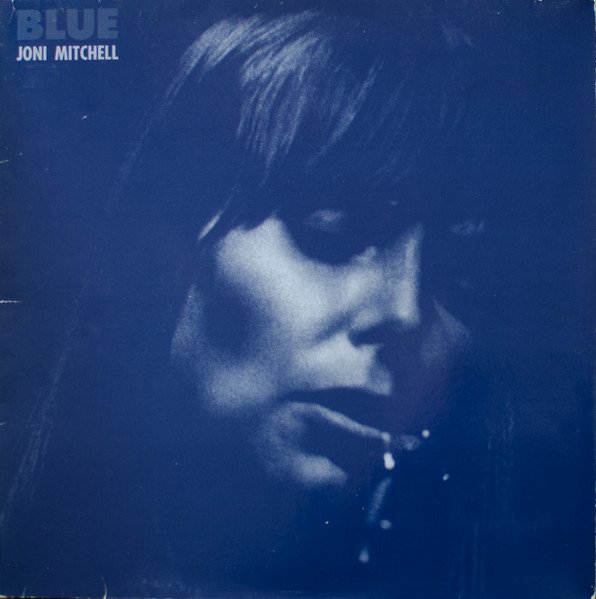


Along with Joni, Cyndi Lauper, Dolly Parton, even Brian Jones of the Stones played the dulcimer. Gen Z brought it into the 21st century, in Roots music. All who play or hear the sweet stringed instrument owe their appreciation to one woman.
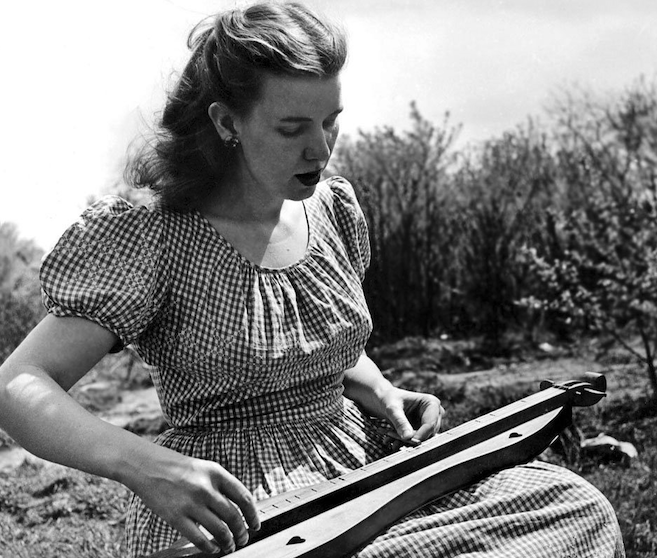
Jean Ritchie was much a cultural bridge as a musician, and her bridge spanned the rivers of American folk. “It’s a long way to Harlan,” the song says, “and a long way to Hazard.” But it was a longer way still from her hometown of Viper, halfway between Harlan and Hazard, to the folk clubs of Greenwich Village where Ritchie began performing in the 1950s.
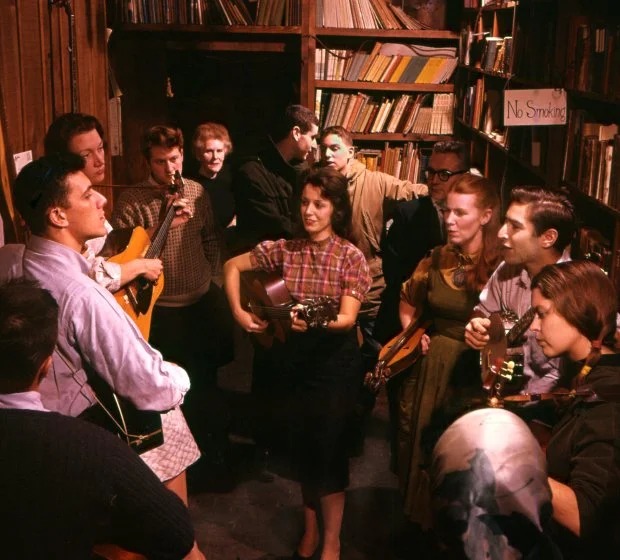
Everyone in the Village, it seemed, played the guitar back then. Some played a banjo or fiddle, but there was only one dulcimer player. And when Ritchie, who had come to New York as a social worker, began strumming, heads turned.
Pete Seeger hired Ritchie to share the stage with The Weavers. Oscar Brand put her on his folk show. And folklorist Alan Lomax marveled at this one-woman almanac of ballads and Appalachian lore.
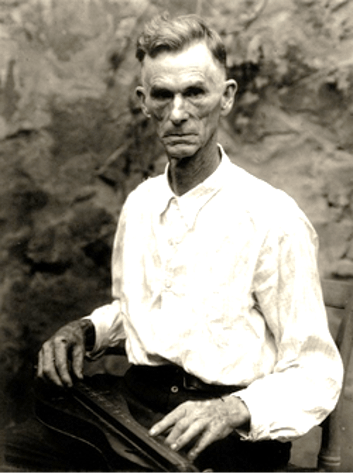
The Ritchie family, Lomax learned, were “quiet, thoughtful folks, who went in for ballads, big families and educating their children.” Jean, the youngest of the 14 and one of ten daughters, had grown up singing. Balis and Abigail Ritchie were known all over Kentucky as song collectors, and when Jean hit the New York folk scene, she brought some 300 ballads learned by heart in the family kitchen.
“I was asked to attend some parties and bring my dulcimer,” she remembered. “That's how my so-called career got started.”
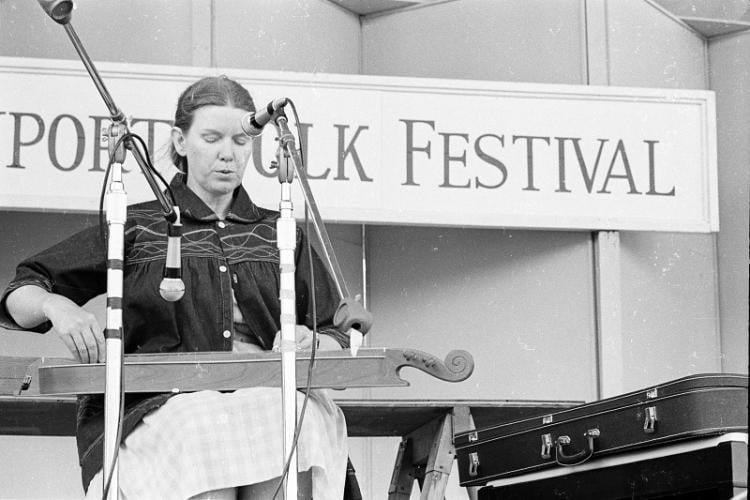
The ballads Ritchie brought from Kentucky had deep roots. Many were so-called Child Ballads, collected by Francis Child back in Britain. Still unknown beyond Appalachia, once Ritchie recorded them, many became folk standards.
Shady Grove. The Cuckoo. Barbara Allen. And one barely-known tune that Ritchie sang with Doc Watson at Folk City. Listen.
With time away on a Fulbright to gather folk songs in England, Ritchie made New York her home. When her new husband made her a dulcimer, the two set up a dulcimer workshop beneath the Williamsburg Bridge in Brooklyn. There they put the finishing touches on dulcimers brought from Kentucky, then began making their own.
Ritchie wrote the first dulcimer instruction book, and also explored the instrument’s history. Seems the dulcimer just “appeared” in Appalachia in the mid-1800s. The first on record were made by two luthiers in the region folks called The Forks of Troublesome.

Ritchie, captivated as much by her family’s lore as their music, captured both in her memoir Singing Family of the Cumberlands. The Ritchies, she wrote, sang constantly. In the kitchen or the cornfield, on porches, at parties, they “sang the moon up.” And once she brought their songs to the world, Jean spread the tradition. Beyond Greenwich Village, she sang and strummed her dulcimer at Newport and other folk festivals, at Royal Albert Hall in London, and on stages throughout America.
As the folk boom faded and protest songs emerged, Ritchie began writing her own tunes. Many told of the hardships of Appalachia. “Blackwater,” “Blue Diamond Mines,” and others told of mining disasters, strikes, and black lung disease. Ritchie’s songs were recorded by Johnny Cash, Judy Collins, Dolly Parton and others.

As folkies and folk-rockers adopted the dulcimer, Ritchie continued to lead a modest life of song. On into her 70s, she showed up at folk festivals. She recorded 37 albums, each so spare that it seems she and her dulcimer are in your kitchen. She also wrote eight books about folklore, earning the title “Mother of Folk.”
When her husband died, Ritchie moved back to Kentucky. Much had changed in Appalachia, but the hollows and the hardships continued. Ritchie died there in 2010 at the age of 92.
“No one was more important to the survival, appreciation, and revival of traditional Appalachian folk music in the 20th and 21st centuries,” the American Folklife Center wrote of Ritchie.
Dulcimers now sit in the corners of stringed instrument shops and in countless cabins and homes of aging hippies and young Roots revivalists. Their sweet music is an integral part of the cultures Jean Ritchie bridged.
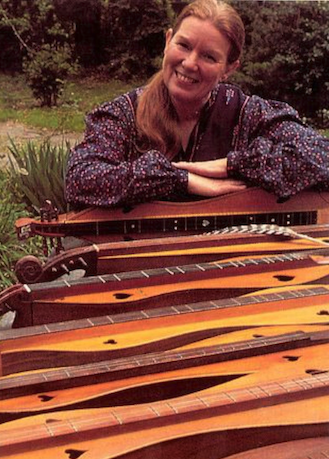
“I see folk music as a river that never stopped flowing,” she said. “Sometimes a few people go to it and sometimes a lot of people do. But it’s always there.”