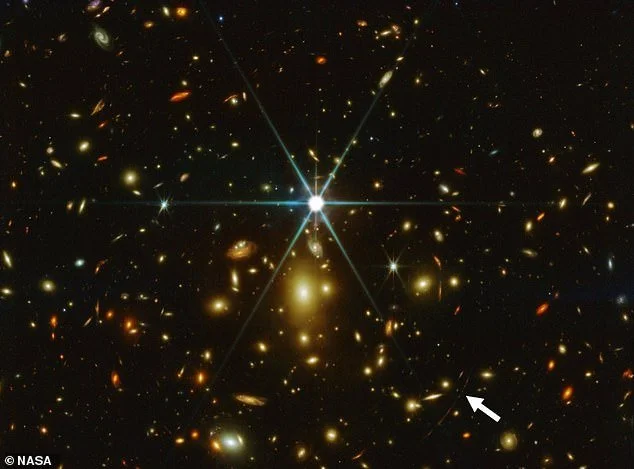
FROM THE LONG END OF THE SCOPE
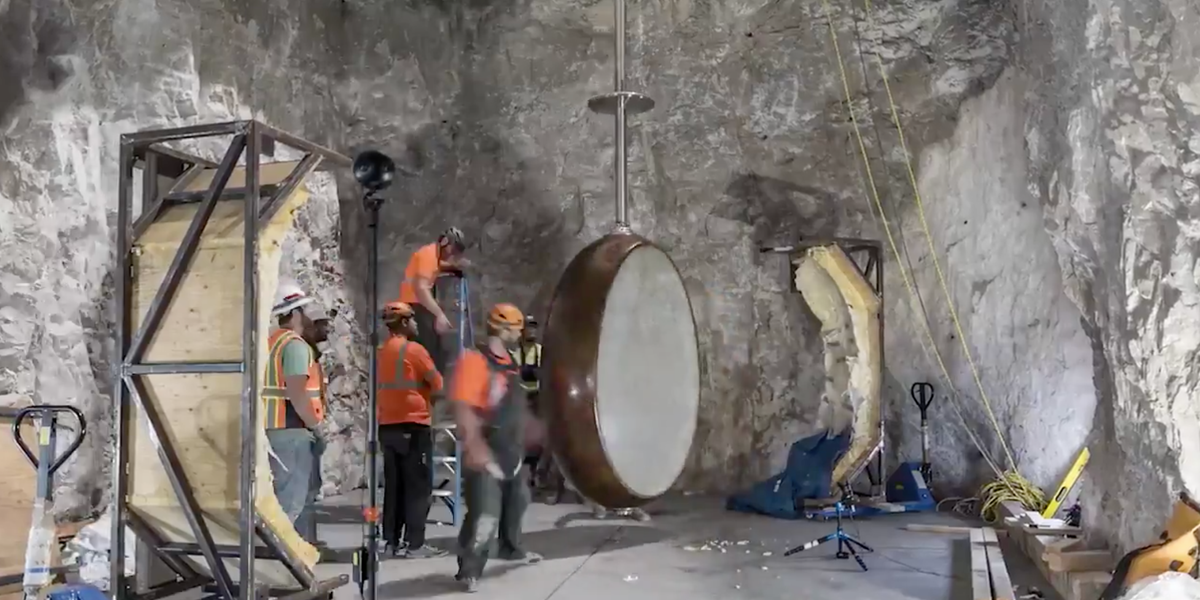
WEST HORN, TEXAS, FALL 2022 — The headlines again tell the story of yesterday. War in Ukraine. Hurricane season gearing up, COVID winding down. But deep in the bowels of a limestone cave, a clock ticks — once.
The faint click is the only sound the clock will make this year. Its chimes, which rang in the new millenium, will not resound until the next millennium. This is the Long Now.
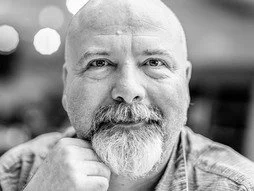
When Danny Hillis was growing up in the 1960s, talk of the future inevitably turned to the year 2000. Thirty years later, when Hillis was a computer mogul in the Silicon Valley, talk of the future inevitably turned to. . . 2000.
How can we think further, Hillis wondered. What might reset our obsession with “now” and help us focus on millennia to come?
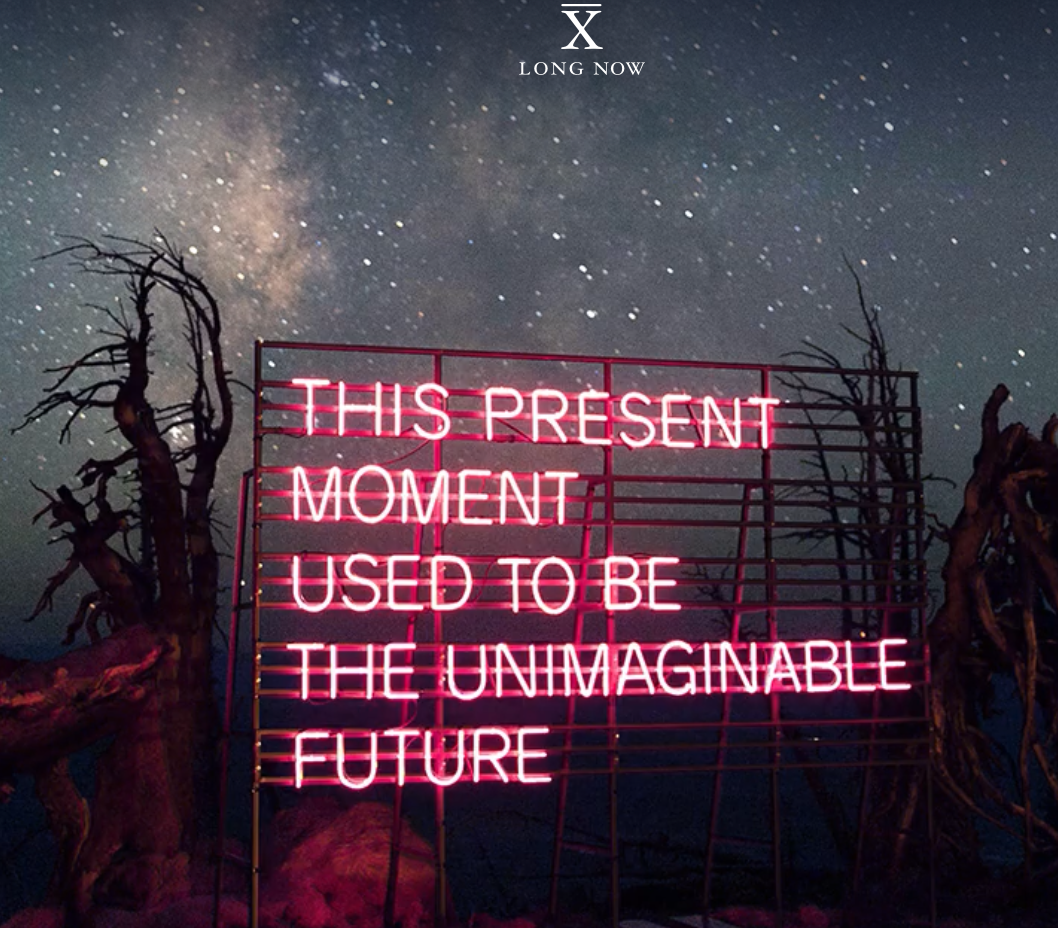
In 1996, as President Bill Clinton spoke of “building a bridge to the 21st century,” Hillis and a few friends started the Long Now Foundation. Based where America’s futuristic thinking is usually based — San Francisco — Long Now had a lofty goal. To get people to think looooonnnngggg term.
“Civilizations with longer nows look after things better,” explained Brian Eno, former member of Roxy Music and co-founder of Long Now.
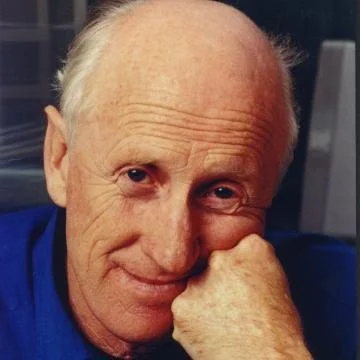
“Civilization is revving itself into a pathologically short attention span,” added another co-founder, Stewart Brand.
Brand seems to turn up at every turn of the counterculture. After riding the bus “Further” with Ken Kesey’s Merry Pranksters, Brand published “The Whole Earth Catalog,” then founded the first online community, the WELL.
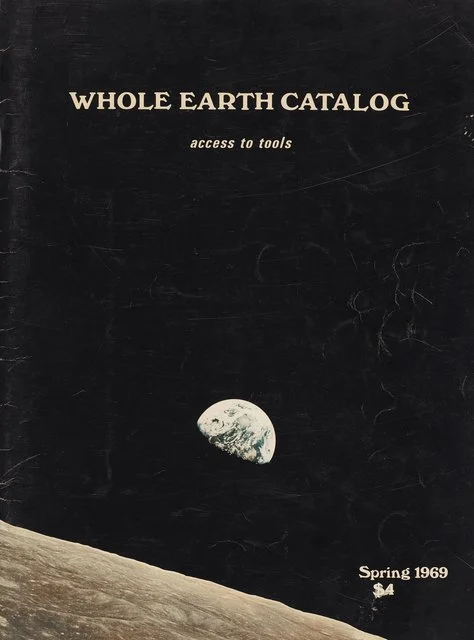
Still looking for the biggest picture, Brand now has Lon Now and hosts monthly “Long Now Talks” with futuristic thinkers. And as Whole Earth veterans remember, when it comes to thinking outside the box, the planet, the ambient angst, Stewart Brand talks a good game.
“Nobody can save the world but any of us can set in motion a self-saving world,” Brand says, “if we are willing to engage the processes of centuries, because that is where the real power is.”
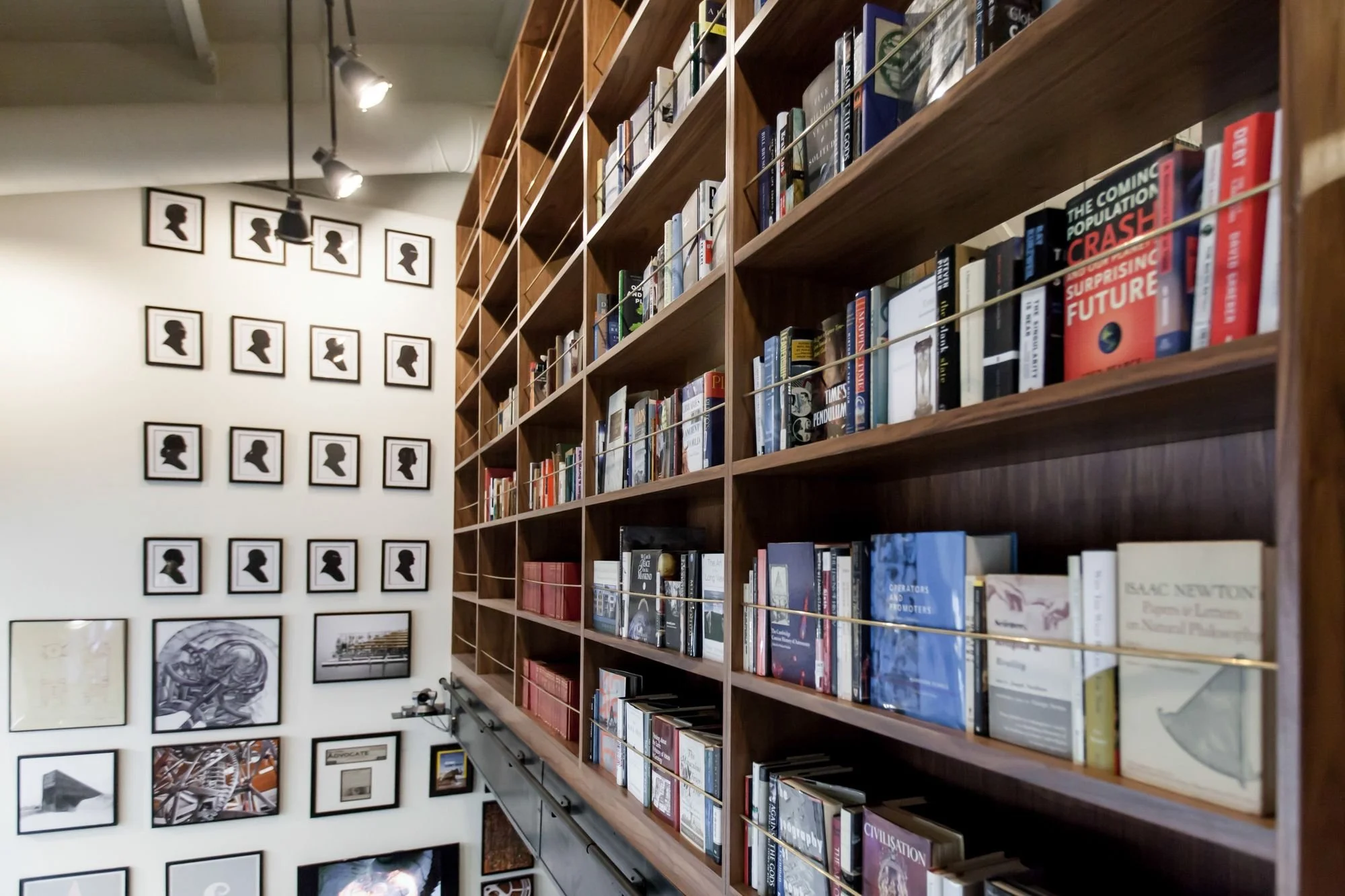
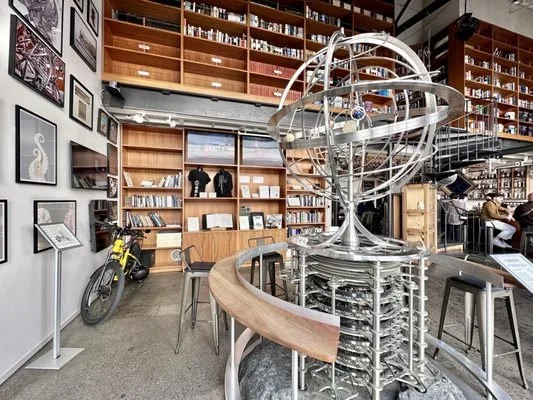
Along with its 10,000 year clock, Long Now is working on a 10,000 year “library of the deep future.” When finished, the library will be housed at The Interval, Long Now’s ultra-cool cafe and hangout at San Francisco’s Fort Mason.
To jumpstart the library, aka “The Manual for Civilization,” Brand and Eno asked writers, artists, scientists, and other long thinkers to consider “what books would you want to restart civilization from scratch?” Some 1,200 suggestions can now be surveyed online. Titles range from Faulkner and Jane Austen to shipbuilding, science and science fiction, a guide to raising chickens, and an attempt to understand “thinking machines.”
But will there be anyone around to read civilization’s manual? Longnow.org explains:
“We believe a world that operates at the timescale of civilization — a world that takes the long-term past and long-term future seriously — would operate very differently. . . Everyone in this world would find themselves in the middle of the story of civilization. Everyone in this world would understand themselves as someone else’s ancestor. Everyone in this world would remember that they are part of something larger than themselves. Together, they — we — would form a civilization of good ancestors.”
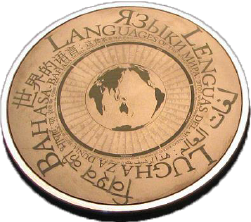
As good ancestors, Long Now also created the Rosetta Disk. Each disk, small enough to hold in one hand, contains 13,000 pages sampling some 1,500 languages. Microscopically etched into solid nickel, the disks can be read with microscopes.
Cool, unbelievably cool, but meanwhile, back at the impending apocalypse. . . What about today’s headlines? The latest existential crisis? The latest clown car antics in DC? Isn’t 2028, or even 2050 sufficiently far ahead to command our attention?
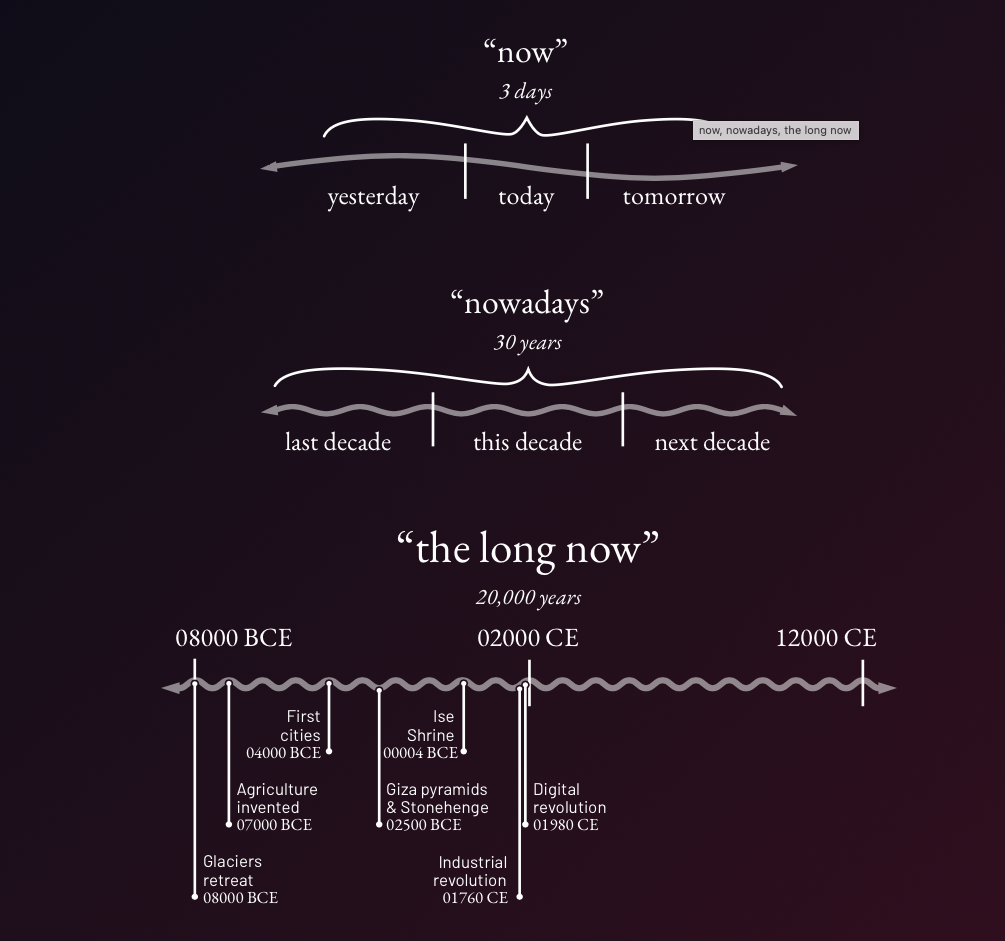
Seekers of the Long Now define “now” as lasting three days, “nowadays” as 30 years, and a “Long Now” as 20,000 years. The clock, the library, the disk have the long now covered. To focus, if we must, on “nowadays,” the foundation hosts Long Bets.
Think something great, or terrible, is coming soon? Care to bet on it? Since 2002, Long Bettors have posted prognostications, set end dates, and asked challengers to put their money where their hope (or fear) is.
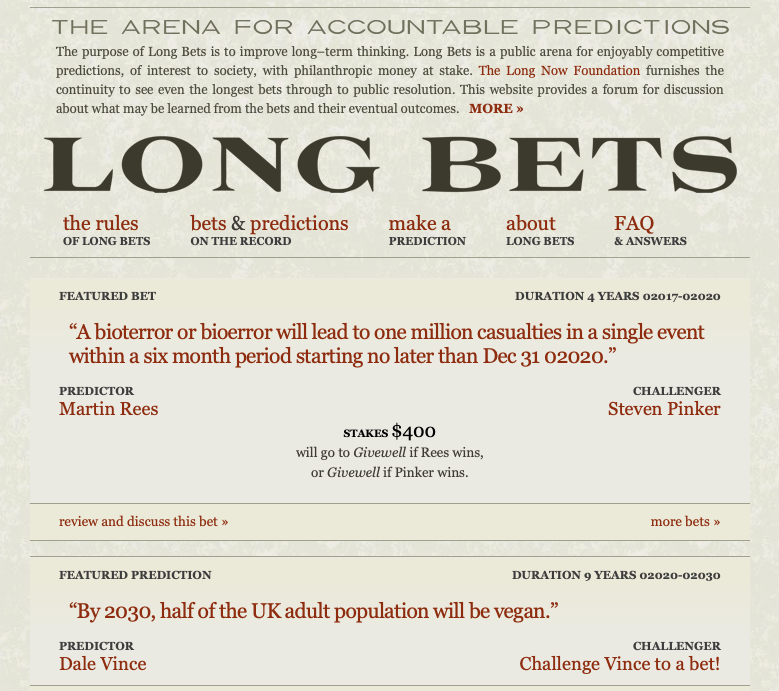
Long Bet #924 — Within ten years (of 2024) the James Webb Space Telescope will find evidence of photosynthesizing live on an exo-planet.
Long Bet #968 — By 2050 the UN Security Council will cease to function as it is currently understood to, if it exists at all.
Long Bet #955 — By 2035 it will be possible to order a burger, fries, and a drink for delivery by a flying drone in Santa Barbara, CA.”
All these bets remain open for challenge. Previous Long Bets have been won or lost not just by Long Now’s post-hippie visionaries but by Stephen Pinker, Ted Danson, physicist Freeman Dyson, and me. (I lost my 2018 Long Bet that the Equal Rights Amendment would be law by 2023. The future works in strange ways.)
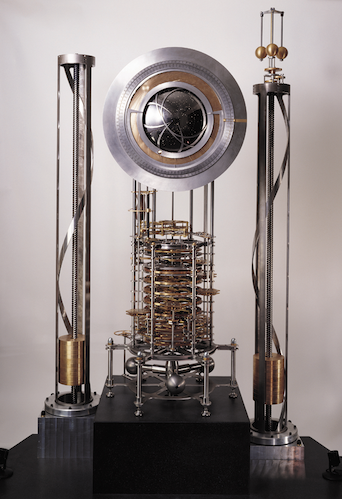
The 10,000 year clock is ticking. Once each year. Meanwhile “the world,” as Wordsworth lamented, “is too much with us now.” The dreamers at Long Now don’t want you to forget today. They just want you to see that time is endless, hope eternal, and vision a matter of focus. So turn those telescopes, those binoculars around and take the long view.
“I know this is a controversial idea these days,” Danny Hillis said, “but I believe that over the long view of history people really are getting better. . . That is what Martin Luther King was talking about when he said, ‘the arc of the moral universe is long, but it bends toward justice.’ The longer your point of view, the easier it is to see that bend.”