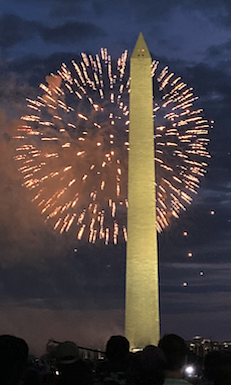
THE FIFTIETH FOURTH
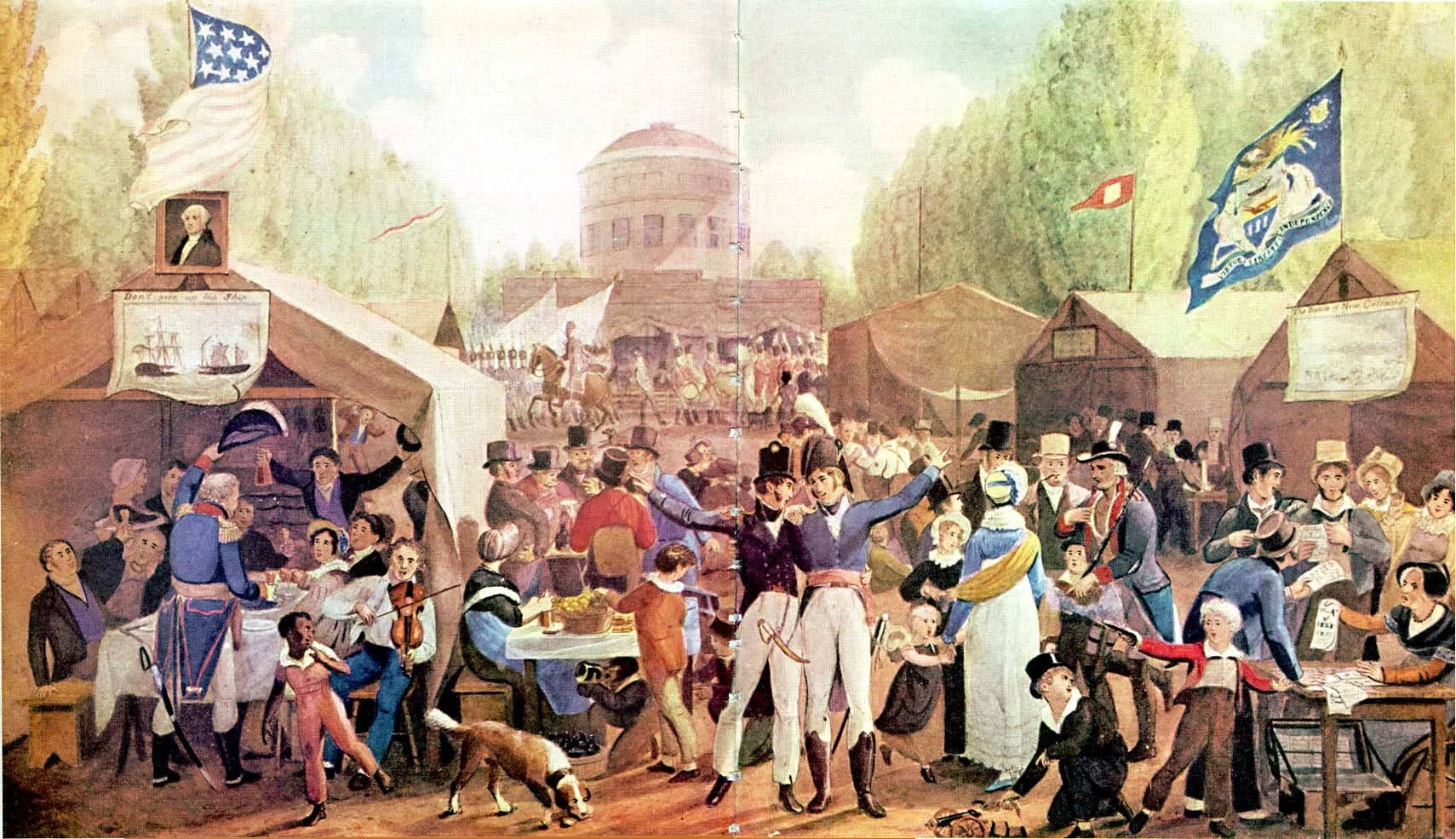
JULY 4, 1826 — Up and down the Eastern Seaboard, families gather for picnics. Fireworks, of course, and with something of a sigh, a sense of survival.
The nation has outlasted its angry adolescence, those first two decades when the new political parties called each other “tyrants” and “enemies of the Union.” The subsequent “Era of Good Feelings” has ended. Now comes another Fourth of July, the Fiftieth Fourth.
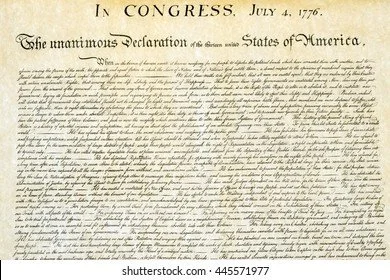
Bands blare. Paraders strut. The Declaration is read aloud. But all festivities pale beside the endgames unfolding in two fine homes 1,400 miles apart, where Thomas Jefferson and John Adams lie dying.
Our age caricatures them as cardboard cutouts, ancient men on pedestals, whose words are supposed to mean. . . something. But the crusty, curmudgeonly Adams and the brilliant, conflicted Jefferson (yes, slaveholder, too) still deserve our attention. And their reconciliation in old age might even have a lesson to teach us as our stormy 250th approaches.
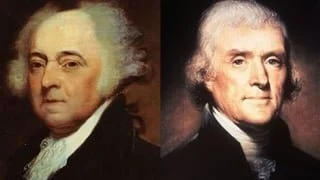
There is no way to exaggerate their importance. “One was ‘the pen,’ the other ‘the voice’ of independence,” David McCullough wrote. Yet after birthing the Declaration, sharing diplomatic duties in Paris, and loyally serving President Washington, Jefferson and Adams became bitter enemies.
Two presidential elections — 1796 and 1800 — saw them as rivals. Adams won the first election, Jefferson the second, an ugly contest where Jefferson’s supporters branded Adams as “insane,” “unfaithful,” and worst of all in the new nation, “a monarchist.” Though enraged, Adams sent the new president a kind note. Jefferson never responded and for a decade, the two stewed in silence.
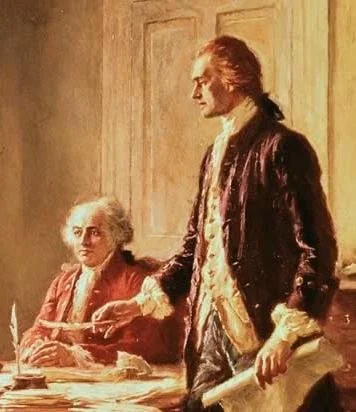
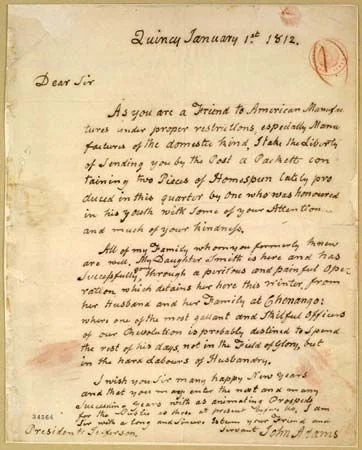
Age, however, can soften the hardest hearts. On New Year’s Day 1812, Adams, then 76, decided to reach out. He used an excuse, sending his son John Quincy’s new book, calling it “homespun lately produced in this quarter by one who was honored in his youth with some of your attention and much of your kindness.”
Jefferson replied immediately. Adams letter, he wrote, “carried me back to the times when, beset with difficulties and dangers, we were fellow laborers in the same cause.”
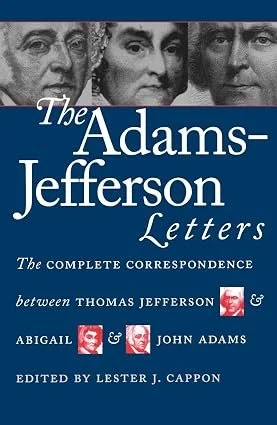
What followed was, wrote David McCullough, “one of the most extraordinary correspondences in American history.” Within two years, fifty letters crossed the gravel paths between Jefferson’s Monticello in Virginia and Adams’ Peacefield in Massachusetts.
At first, old arguments surfaced. Adams dragged out disagreements on the French Revolution, asking, “What think you of terrorism, Mr. Jefferson?” Jefferson was diplomatic. Differing opinions, “equally honest on both sides, should not effect personal esteem or social intercourse. . . Nothing new can be added by you or me to what has been said by others, and will be said in every age.”
Adams agreed and the conversation found safer shores. The two shared daily habits, philosophies, and opinions on everything from religion to “the Indians” to their own Revolution.
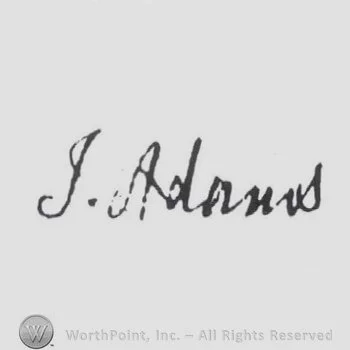
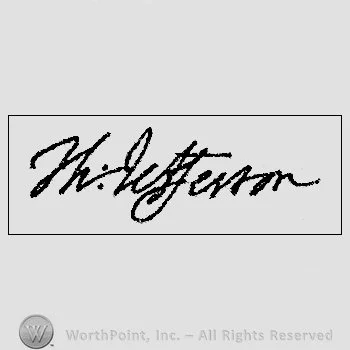
“Who shall write the history of the Revolution?” Adams asked.
“Nobody,” Jefferson answered,”except perhaps its eternal facts.”
Adams, cantankerous pessimist, and Jefferson, eternal optimist, argued over the fate of humanity and the country they had jumpstarted.
“Must We, before We take our departure from this grand and beautiful World, surrender all our pleasing hopes of the progress of Society?” Adams asked. “Of improvement of the intellectual and moral condition of the World? Of the reformation of mankind?”
“I will not believe our labors are lost,” Jefferson replied. “I shall not die without a hope that light and liberty are on steady advance.”
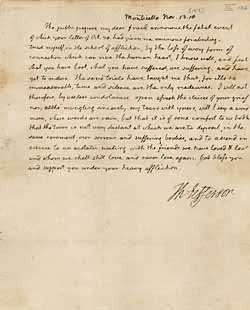
Age slowed but did not stop the conversation. By 1825, when Jefferson turned 83 and Adams approached 90, they were still in touch. Jefferson bemoaned old age when “here a pivot, there a wheel, now a pinon, next a spring will give way.” Nonetheless, he added, “I steer my bark with hope in the head, leaving fear astern.”
As America matured, the old men faltered. In June 1826, both were invited to festivities in Washington, DC. Both declined.
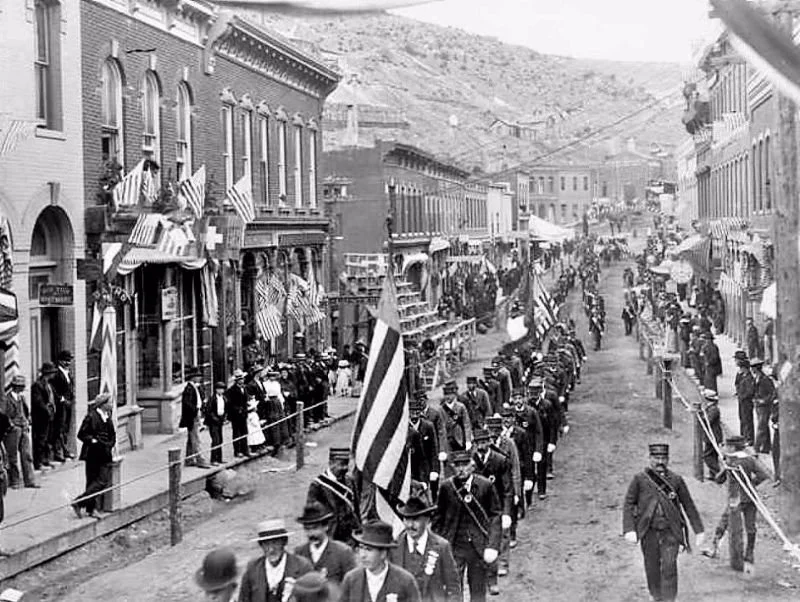
The Fourth, Adams replied, was “a memorable epoch in the annals of the human race,” yet he could not stifle doubt. Would the holiday turn out to be “the brightest or the blackest page?”
Jefferson had no doubt: “All eyes are opened or opening to the rights of man. The general spread of the light of science has already laid open to every view the palpable truth, that the mass of mankind has not been born with saddles on their backs, nor a favored few, booted and spurred, ready to ride them legitimately, by the grace of God.”

On July 3, each man clung to life. At Monticello, Jefferson was bedridden, taking laudunum. Sleeping, breathing heavily, he awoke at 7 p.m. “Is it the Fourth?” Told it would arrive soon, he slept, then woke and asked again. This time, an attendant lied.
“Ah, just as I wished.” He died the next afternoon.
In Quincy, when John Adams awoke that morning, friends told him it was the Fourth. “It is a great day,” he said. “A good day.” Later that afternoon, he stirred and uttered his final words. “Thomas Jefferson survives.” He died that evening.
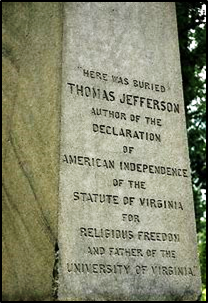
When word of the Founders’ deaths spread, the public, then as now, took sides. Some saw conspiracy. “Euthanasia, indeed,” a Virginia politician said. “They have killed Mr. Jefferson, too, on the same day.”
Others saw providence. President John Quincy Adams called the deaths “visible and palpable remarks of Divine Favor." But most simply saw two old men “hanging on” until the day they had sanctified with their words.
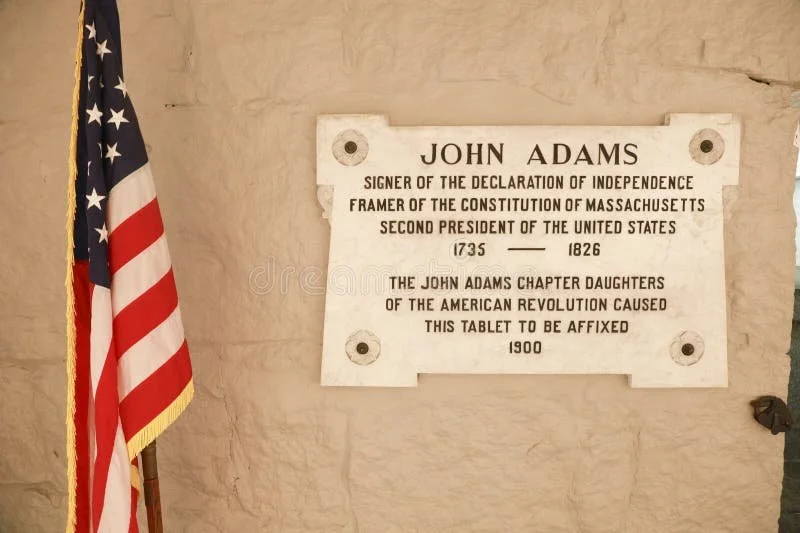
So let their words, amid all our current division, rancor, and fear, echo on this 250th.
As a toast to the holiday, the bedridden Adams offered “Independence Forever!” Anything to add? friends asked.
“Not a word.”
Jefferson, in his final letter, added, “Let the annual return of this day forever refresh our recollections of these rights, and an undiminished devotion to them.“