SAILING DOWN PETE'S GOLDEN RIVER
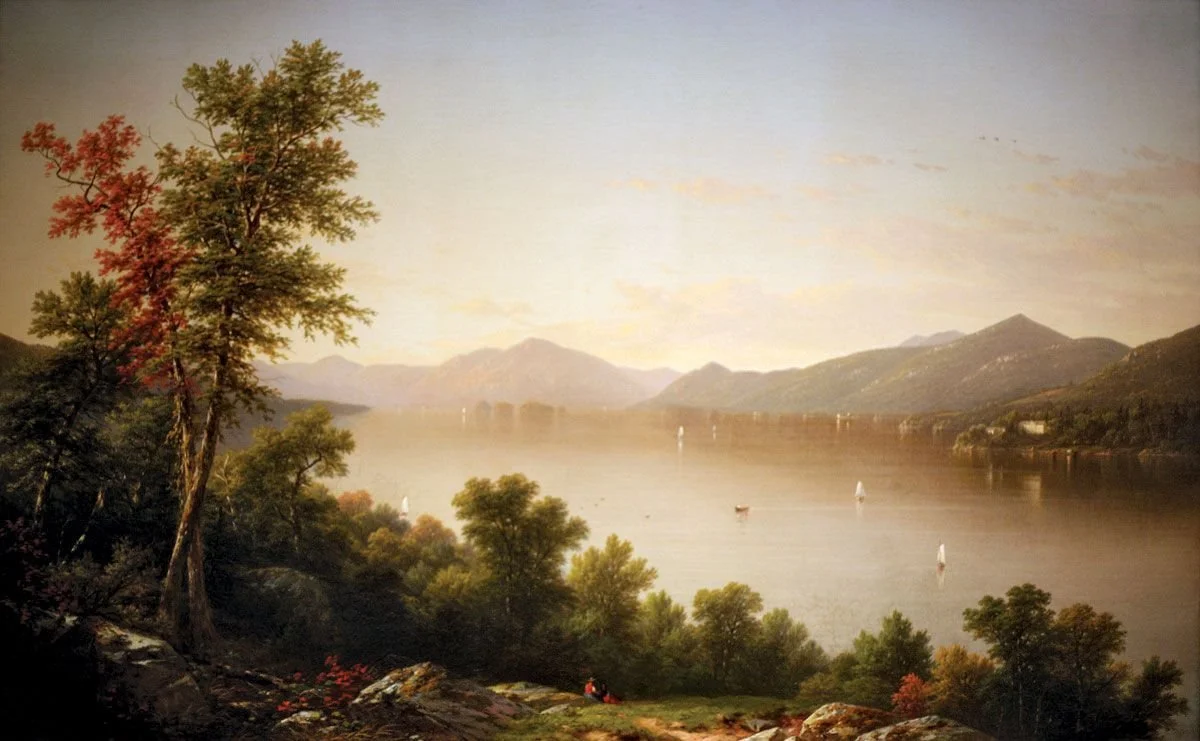
HUDSON RIVER — Though far from our longest or mightiest river, the Hudson holds a cherished place in American history.
Here native Mohicans fished and hunted. Here the Erie Canal linked the Atlantic with the Great Lakes. Here the first American literature grew from folk tales about a headless horseman while the first American art school found refuge in the wild. And here, starting in 1947, General Electric spewed 1.3 million pounds of toxic chemicals into the Hudson’s flowing waters.
“There’s no American history without the story of the Hudson,” said historian Douglas Brinkley. But in the late Sixties, he added, the Hudson “was a dying river.”

Millions in Manhattan, where the Hudson empties, did nothing about the river other than complain. All were warned against fishing, swimming, or drinking the water. But one man with a banjo decided to do something.
“Pete wants to clean up the river!” Arlo Guthrie remembered. “Everybody says ‘Pete! You can’t clean up the river! The river’s too big. Not enough people, nobody’s gonna help you, blah blah blah.’ That didn’t stop Pete.”
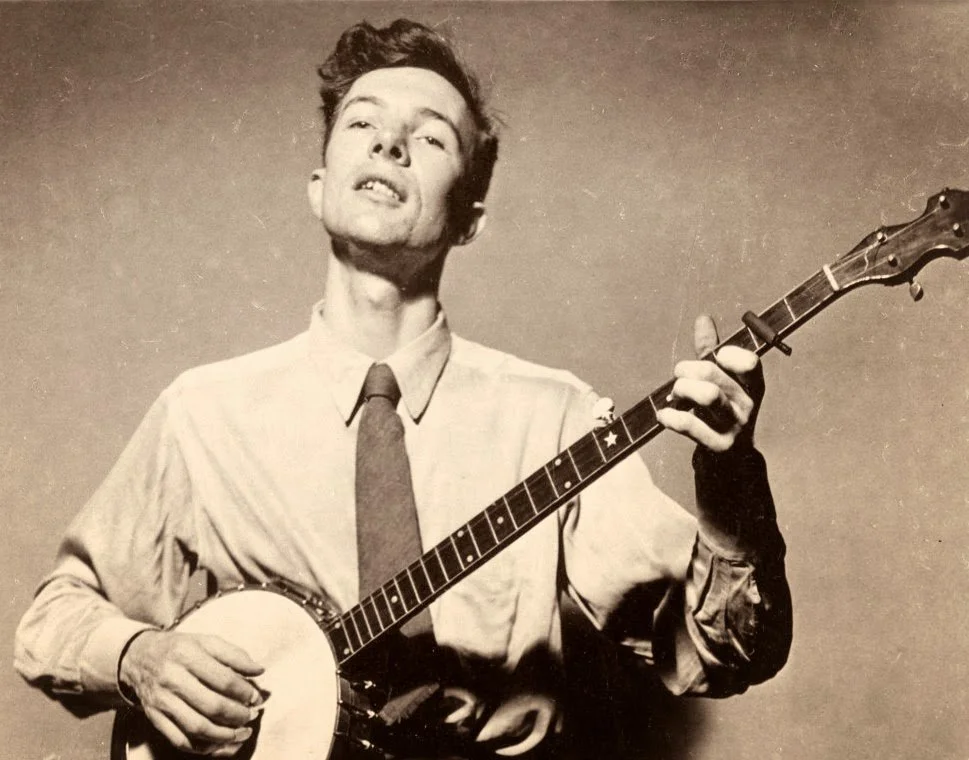
Nothing ever stopped Pete Seeger. In 1949, when he and his wife Toshi moved into a rustic cabin in Beacon, NY, overlooking the Hudson, he was just another strummin’ folkie. But over the next two decades he became a pariah, a hit maker, a worldwide ambassador of song, and a true believer in American freedom.
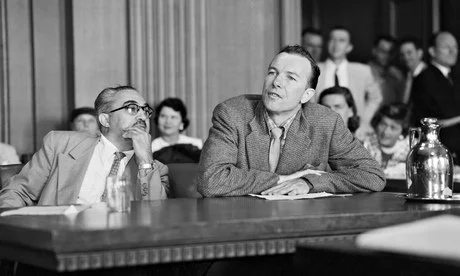
In 1955, former membership in the Communist Party got Pete called before the House Un-American Activities Committee. When he refused to answer questions, not even taking the Fifth that would have implied guilt, he was convicted of contempt and blacklisted. His answer was to host his own TV folk hour in NYC and help start the Newport Folk Festival.
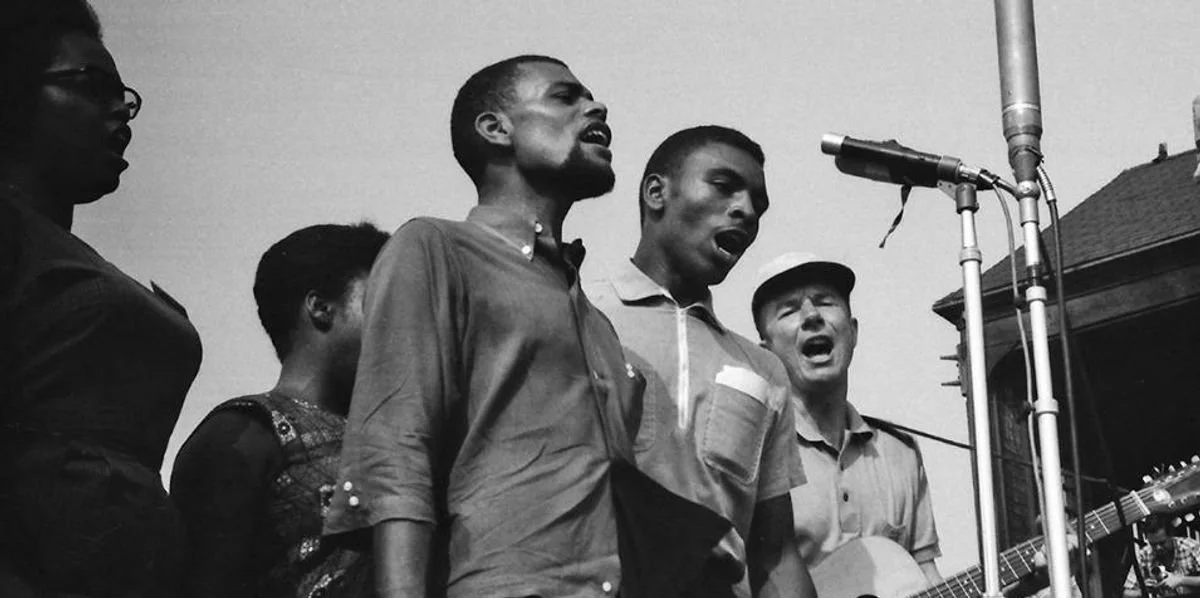
Meanwhile, he wrote or co-wrote songs that became folk standards. “If I Had a Hammer,” “Where Have All the Flowers Gone,” “Turn, Turn, Turn.” Though banned from radio and TV, he sang for children during Mississippi’s Freedom Summer and with marchers in Selma. His guitar was a 12-string, inspired by his friendhip with Leadbelly. His banjo had a motto based on his friend Woody Guthrie’s — “This machine corners hatred and forces it to surrender.” But he had never sailed a day in his life.
“No, that didn’t stop Pete,” Arlo contined. “He thought, ‘Well, I think we need to build a sloop and sail it up and down the river. And people will come to the river to see the sloop and look down and say, ‘Look, there’s shit in the river. We have to do something!”
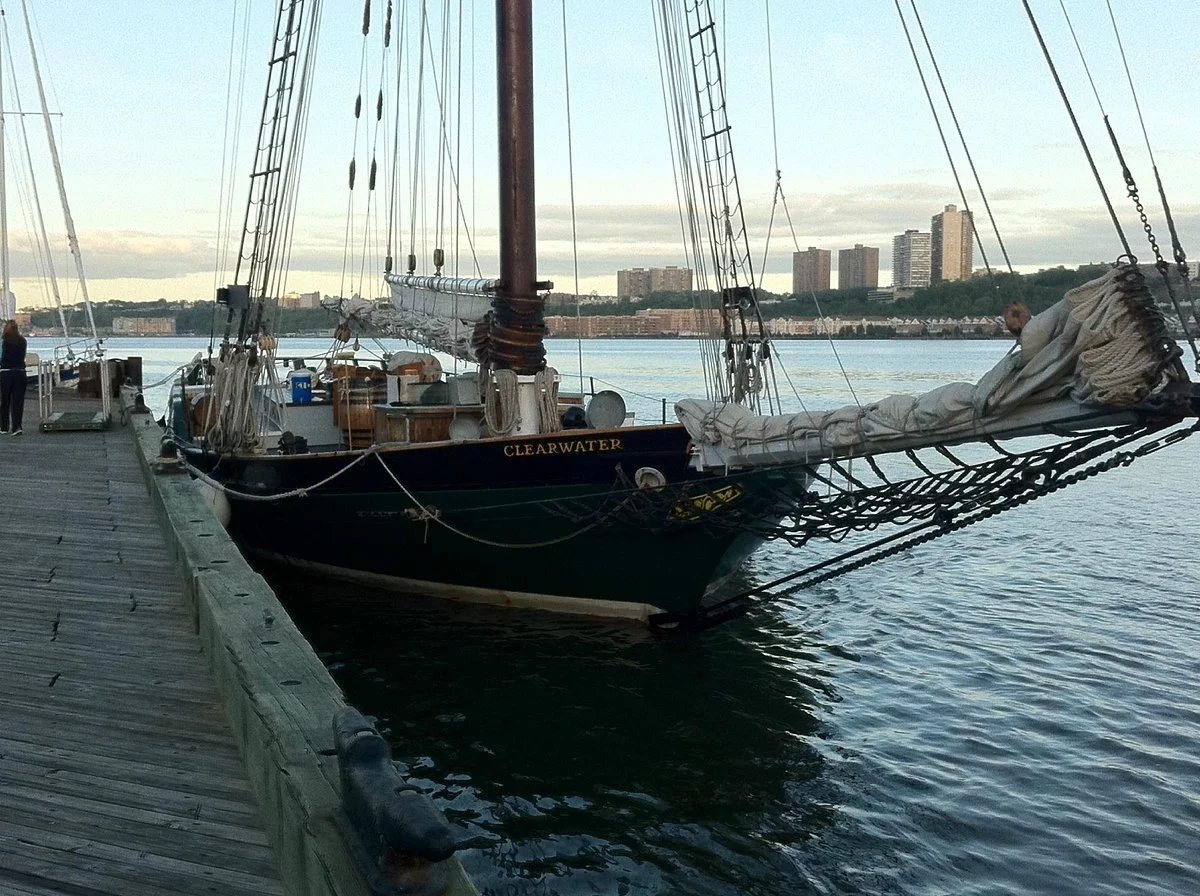
In 1966, Pete and Toshi Seeger founded the Hudson Sloop Clearwater Foundation. Three years later, a new but historic 19th century-style sloop docked at South Street Seaport pier in Manhattan and the music began.
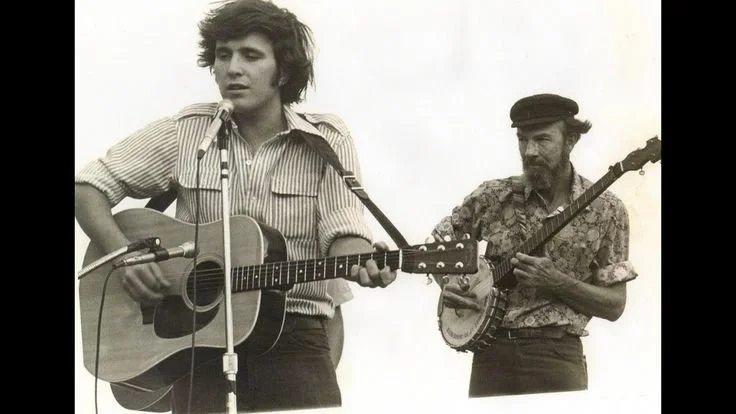
Pete called the Clearwater musicians “Woody’s Children.” They included Don McLean (before “American Pie”) and “Ramblin’” Jack Elliot, Tom Paxton and Janis Ian. But the star was always Pete, who got everyone singing about the river.
Sailin’ up
Sailin’ down
Up, down
Up and down the river
Sailin’ on — stoppin’ all along the wayyyy
The river may be dirty now
but it’s gettin cleaner every day
Songs will not clean up toxic waste, but awareness just might. With Toshi at the helm — “she had the chart, she kept us off the rocks,” Pete recalled — the Clearwater sailed the Hudson, stopping for concerts and educational programs.
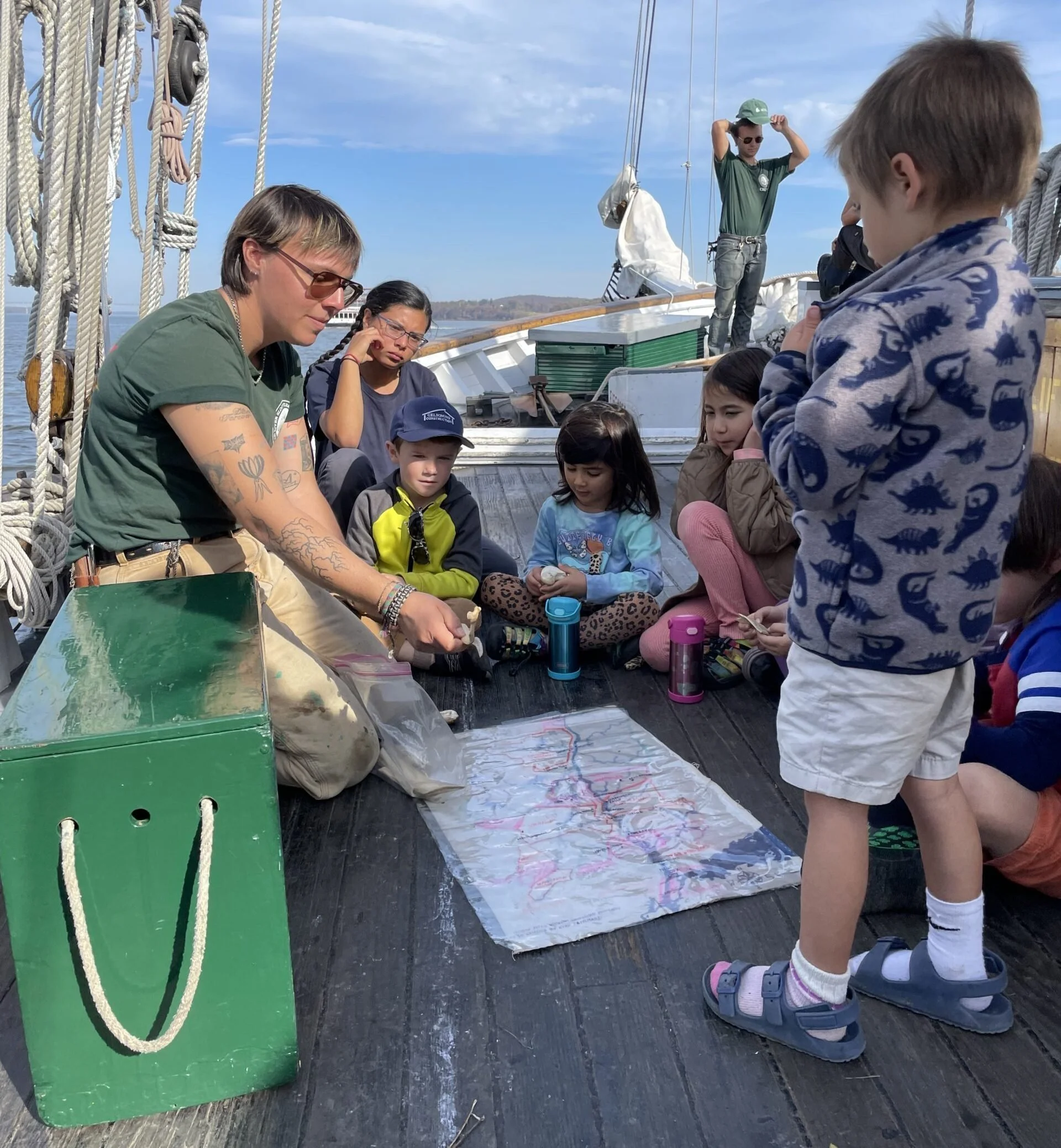
The Clearwater was a small part of the nationwide environmental movement, but Pete knew the power of song and of people. (Listen.)
Sailing down my golden river
Sun and water all my own.
Yet I was never alone. . .
In 1970, the new EPA leveled huge fines on GE and soon labeled the entire Hudson a Superfund cleanup site. In 1972, Congress passed the Clean Water Act. In 1980, a lawsuit blocked a power plant proposed along the Hudson.
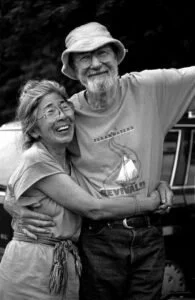
Pete’s final years saw tributes — a National Medal for the Arts and a 90th birthday tribute at Carnegie Hall. He died, six months after Toshi, in 2014 at age 95. His “subversive” past was largely forgotten. He was, Johnny Cash said, “one of the best Americans and patriots I’ve ever known.”

Each spring, the Clearwater comes out of dry dock and back into the Hudson. School kids still show up for classes on deck. Teens sail on longer voyages, learning of the river’s history and fragility. The annual Great Hudson River Festival now brings 30,000 people to hear every folkie you’ve ever heard of and some you haven’t. Meanwhile, the cleanup continues.
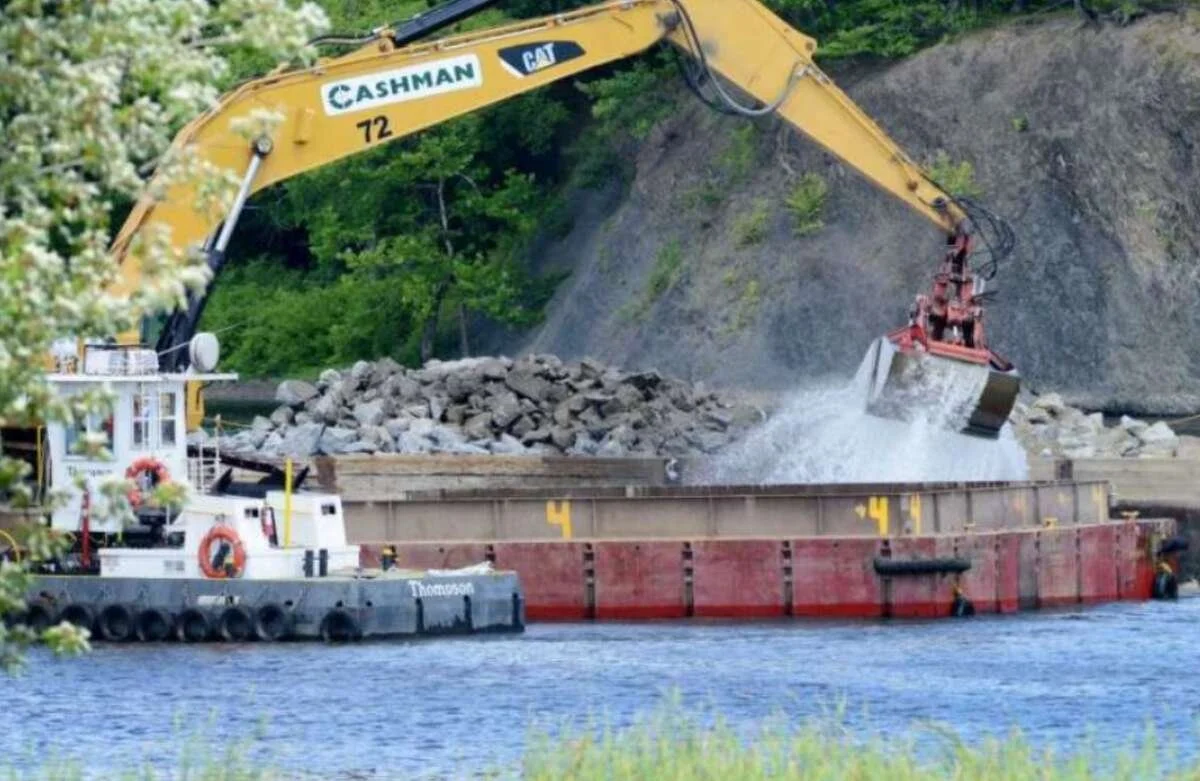
Up and down the river, GE has dredged out a million pounds of toxic sludge. Back in the 70s, Pete promised his granddaughter she would someday swim in the river. And she has. The Hudson’s lone nuclear plant closed in 2021. The sturgeon, which Pete eulogized as “gone but not forgot,” are back in the river. Eagles and osprey soar overhead.
The Hudson is not as clean as the comeback Cuyahoga in Cleveland. The Clearwater Foundation, disagreeing with the EPA that the river is safe enough, continues to call for “additional action to expedite the recovery of the Hudson.” And the Clearwater sails.
For Pete Seeger, the Clearwater was more than another sloop or floating stage. It was solidarity in song.
“Once upon a time wasn’t singing a part of everyday life, as much as talking, physical exercise, and religion?” he said. “Can we begin to make our lives once more all of a piece? Finding the right songs and singing them over and over is a way to start. And when one person taps out a beat while another leans into the melody or when three people discover a harmony they never knew existed or a crowd joins in on a chorus as though to raise the ceiling a few feet higher, then they also know there is hope for the world.”