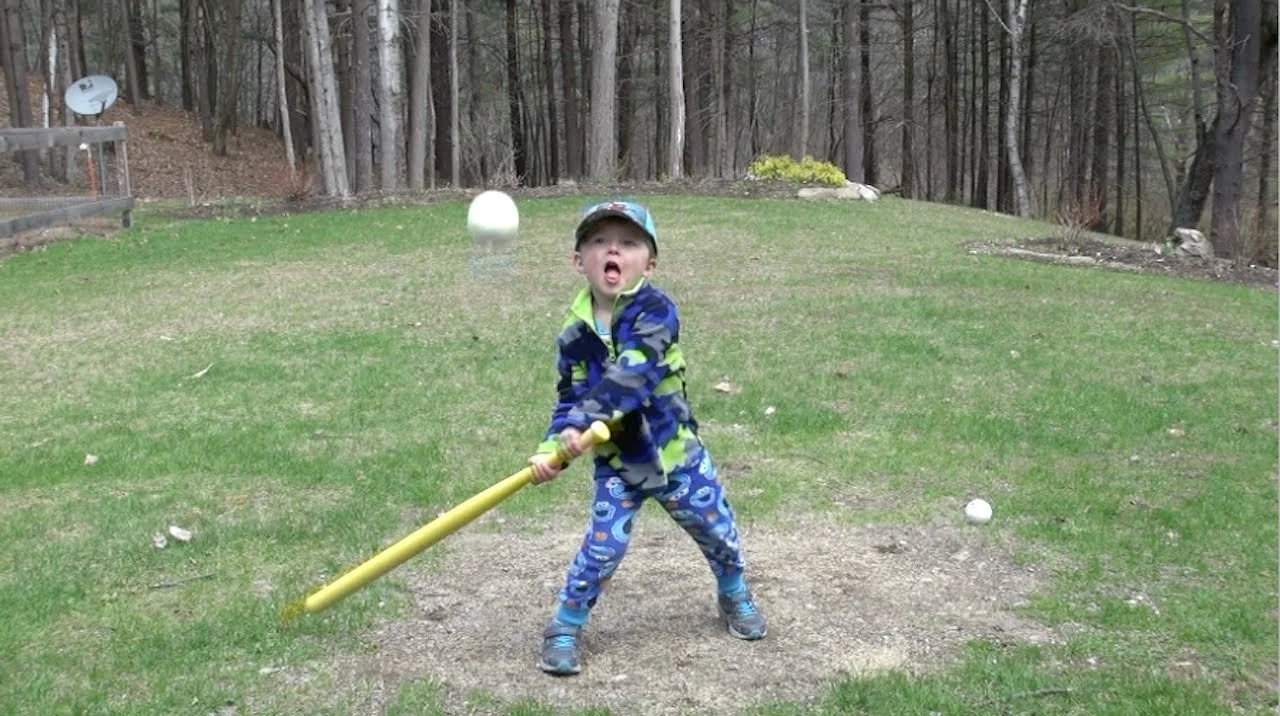
OUR BACKYARD NATIONAL PASTIME
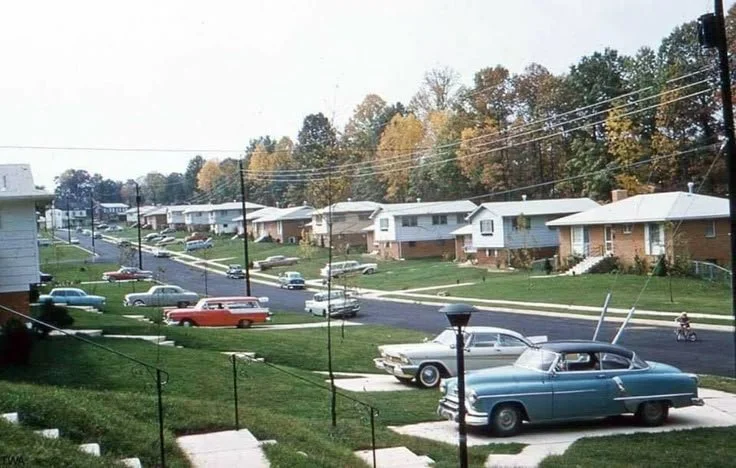
SHELTON, CT — August 1953 — Weary from a day’s work, a frustrated inventor turned salesman returns to his suburban home. Pulling into his driveway, he sees his 12-year-old son playing ball with friends. But why are they using a plastic golf ball?
“Gee, Dad, even a kid can make this ball curve just like Sal Maglie!”
The salesman/inventor has an idea.
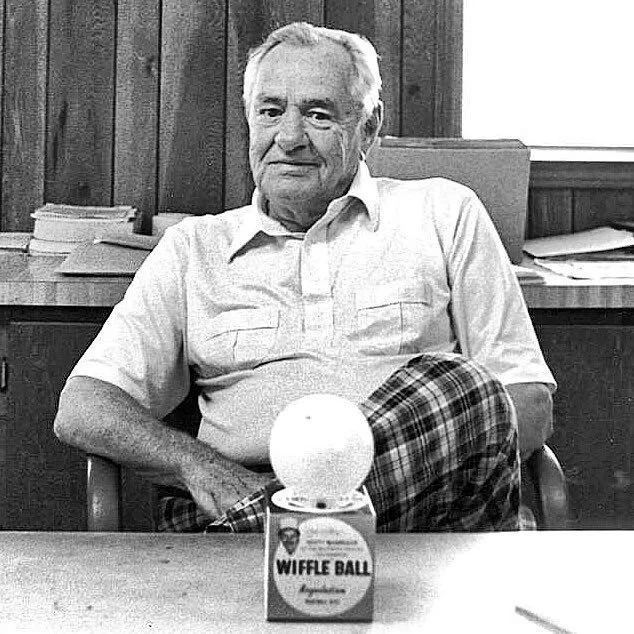
That weekend, David Mullany and his son, David Jr., sit at their kitchen table. Using razor blades and plastic pods that held perfume bottles, they cut different patterns of holes. With each new pattern, they rush outside to see which “ball” curves like crazy. Turns out that eight oblong holes on one side of the ball will have that sphere diving and dipping. The Wiffle Ball is born.
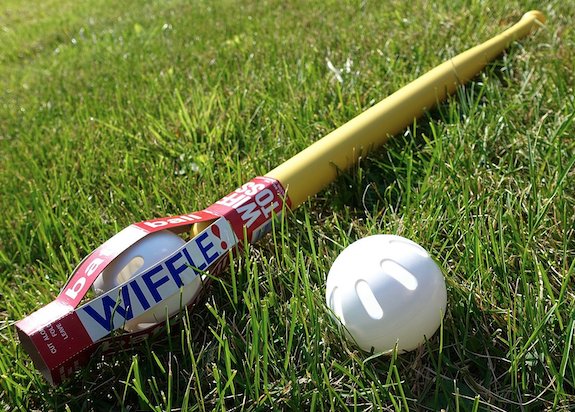
A week ago, the first sign of spring appeared across America. In drug stores, toy stores, and convenience stores, Wiffle balls and bats, often packaged together, blossomed from coast to coast. You have to have played the game to get excited about that. Here’s why.
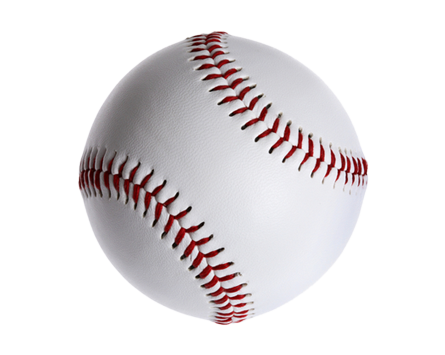
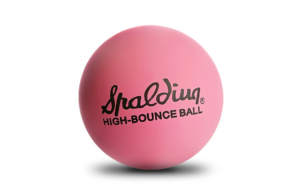
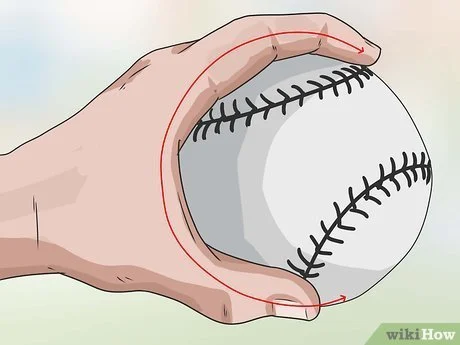
In my backyard, regulation baseballs, which we called “hardballs,” would have smashed every window in sight. So we sought substitutes. We played sock ball, but rolled up socks never flew far, even when slammed by a Louisville Slugger. Like our Dads playing Stickball, we hit pink rubber “Spaldeens.” But they flew out of the backyard again and again. The neighbors were restless. And regulation softballs seemed as huge and awkward as a globe.
Then Wiffle ball came to our suburb and the national pastime became our constant pastime.
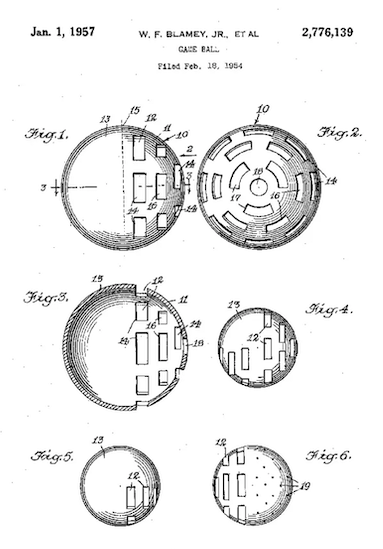
David Mullany’s previous inventions had tanked, but he doubled down on his plastic ball, which his son named for the “whiff” of a swinging strike. Taking a second mortgage on his house, filing for a patent, Mullany had hundreds of Wiffle balls made. Then he loaded up his station wagon, took the balls to the local diner and sold them for 49 cents each. Within a year, he had a going business and within a few, he had a two-story brick factory on the edge of Shelton, CT.
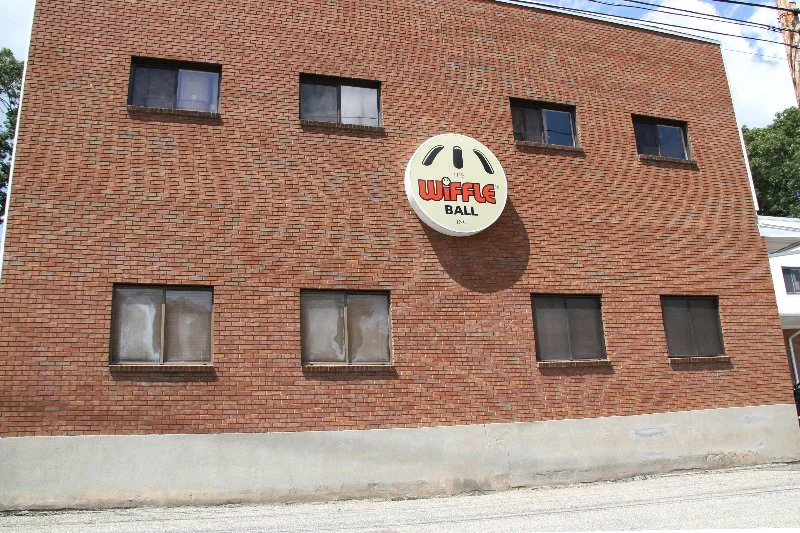
By 1960, Wiffle ball was a backyard institution. Because. . .
Wiffle ball democratized baseball. Even Little League required some speed, reflexes, and costly gloves, bats, uniforms, etc. But anyone with 49 cents and a dream could fall in love with Wiffle ball. The simple ball, the New York Times wrote, “ranks with the Hula-Hoop and Barbie as quintessentially American toys.”
Beyond affordability, the quintessentially American Wiffle ball had other advantages. Baseball requires a dozen, if not a regulation 18 players. But thanks to “imaginary runners,” any two best friends can play Wiffle ball.
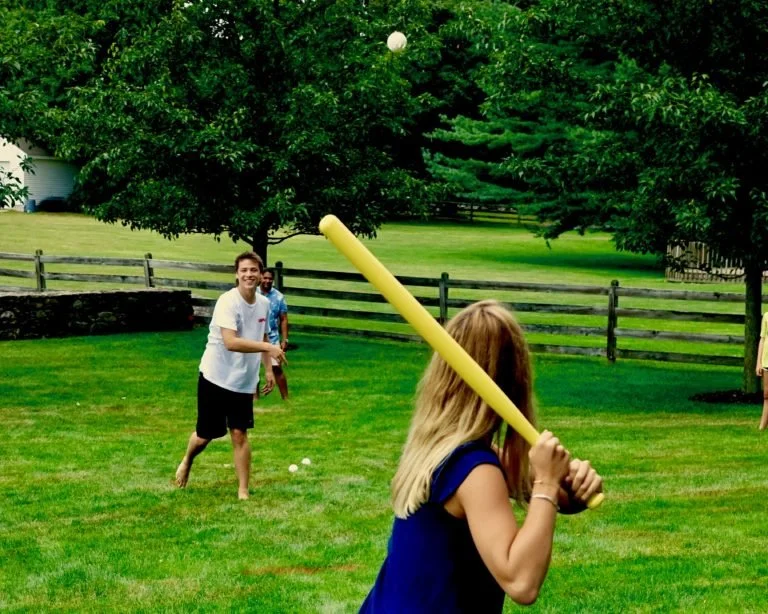
WIth its own ground rules, varying by backyard, the game is simple. (In my backyard, a ball hit past the pitcher was a single. Into the geraniums was a double, off the wooden fence a triple and over it, into my grandmother’s yard, a homerun. But into a neighbor’s yard on either side of ours — “yer out!”)
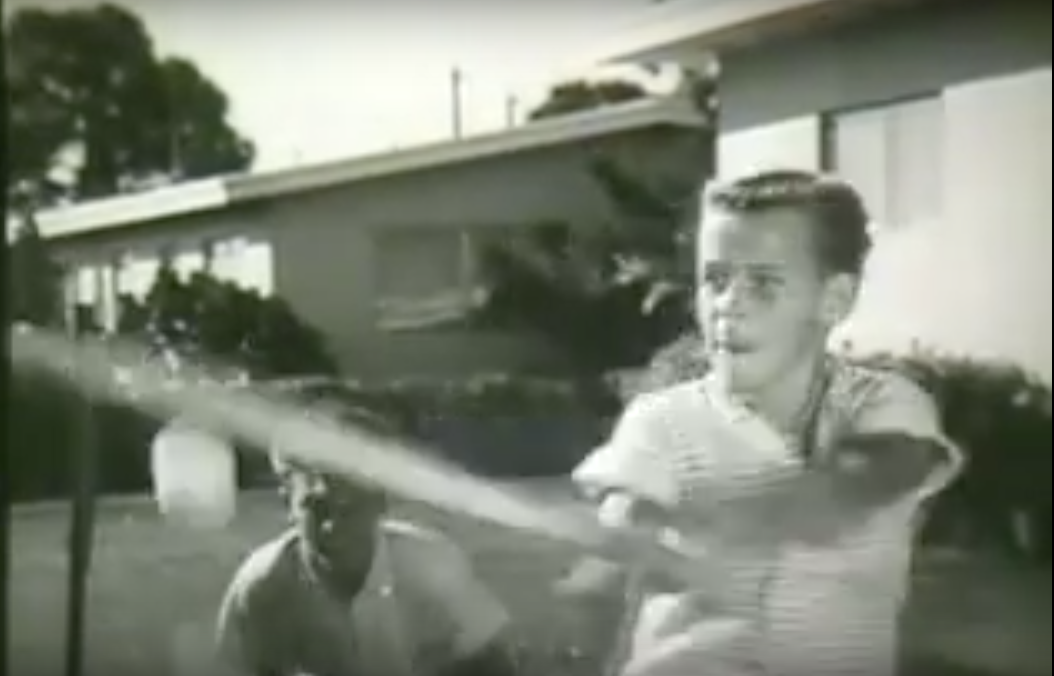
In baseball, you might get to bat four times a game. In Wiffle ball, you’re up every few minutes. Anyone can throw a wicked curve. And at least in our day, kids played better than adults. Perhaps because we played for hours and hours and hours. . .
And we were not alone. By the time David Mullany died in 1990, millions of Wiffle balls had been sold, spun, and cherished. The company, still in its original factory run by Mullany’s son, kept churning out balls and bats. Springs came and went, each a fresh season of dreams. And by 2000, Wiffle ball was ready for “the show.”
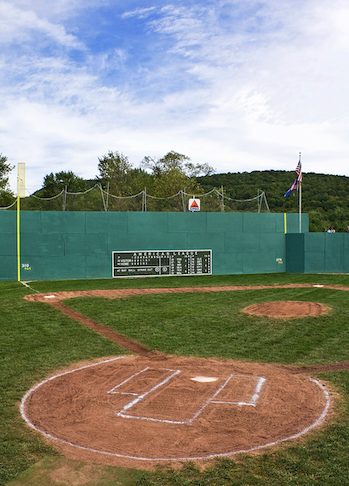
A few fledgling Wiffle ball leagues had started in the 1970s. Grown boys built backyard stadiums, some resembling Fenway or other MLB parks. But the leagues were all local. Even the World Wiffle Ball Championship, started in 1980, stayed in Mishawaka, Indiana. Then came the Internet, and the backyard game went viral.
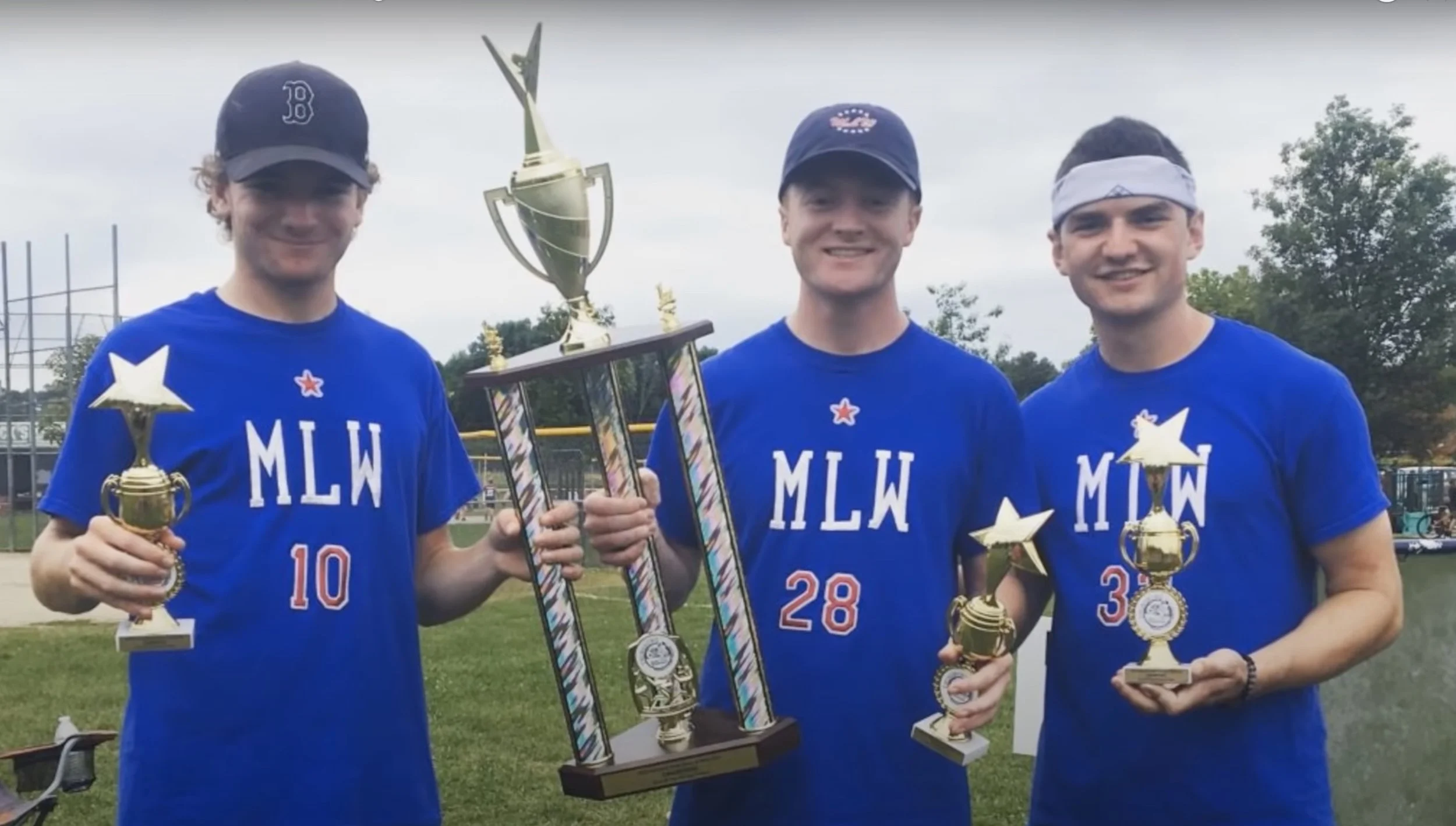
Today, some 80-100 Wiffle ball leagues play from coast-to-coast. Some are slow pitch, like the game we played. Others play at medium-pitch speeds of 50 mph. But in the last two decades, fast-pitch Wiffle ball has drawn former college players wiffing at 90 mph pitches that dart like swallows.
“It’s way more difficult to hit a Wiffle ball than a baseball, if it’s thrown by a good pitcher,” one player said. Watch:
AWA Wiffle Ball, Bay City Wiffle Ball, United States Wiffle League, Kalamazoo Wiffle Ball League, NWA Wiffle Ball, Big League Wiffle Ball, Mid-Atlantic Wiffle, Windy City Wiffleball — the play never stops.
And just as the MLB thrived on TV, Wiffle Ball has its couch fans. Since 2009, Major League Wiffle Ball, started by 10-year-old Kyle Schults in (where else?) his backyard in Brighton, MI has grown to a nationwide league with eight teams, an all-star game, a World Series, and a half-million followers on its Youtube channel. But. . .
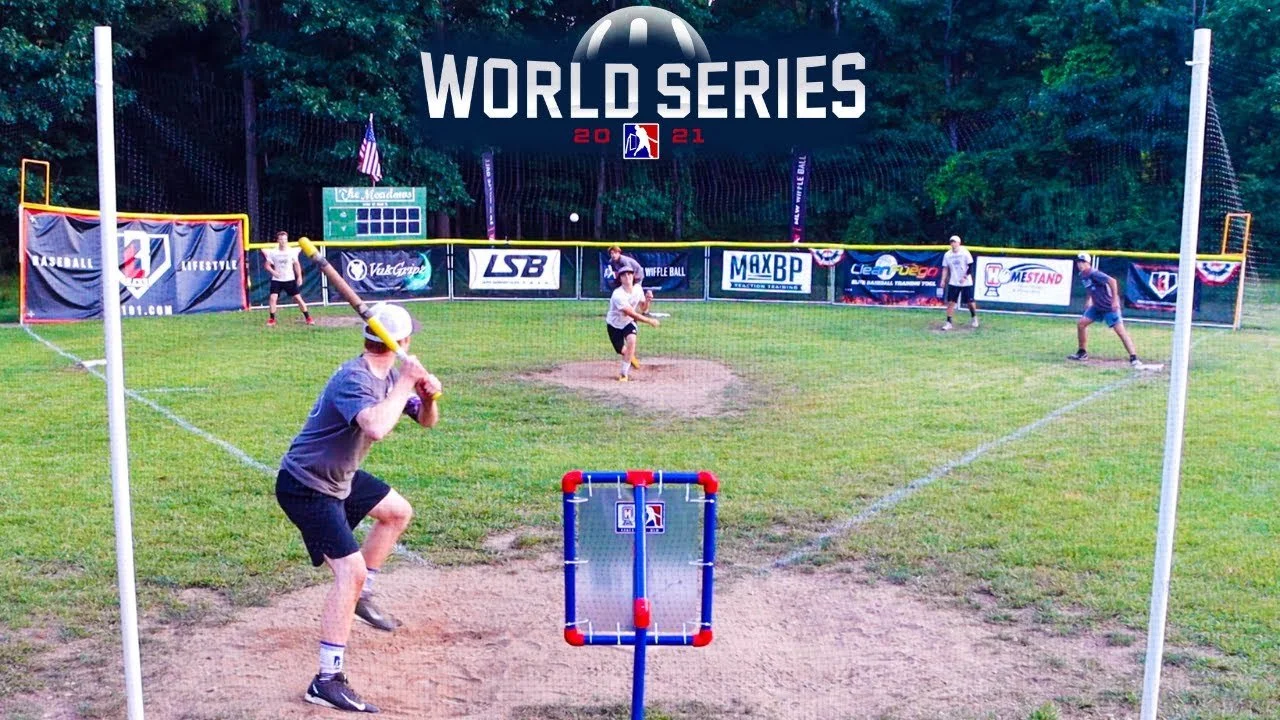
Time out! Big-time Wiffle ball may be popular, but don’t those adults just ruin everything? We kids never wanted Wiffle ball be “the show.” The fun was in the drop of a curve, the swish of a skinny plastic bat, and the dream. . .
Ninth inning, of course. Two imaginary runners on. Two out. Your best friend at bat.
There is no Internet, no Youtube. Major leaguers are not beefy billionaires but regular gods. And now you’re one of them. You hold the ball with its holes facing left. A screwball. You look over your shoulder to your lone outfielder standing just in front of the geraniums. You check the “runners.” You nod, spit, tug your cap. . .
Not a single person is watching, yet in your mind the stands are full. Your friend pinwheels the bat like Stargell. You throw sidearm like Drysdale. The crack of plastic on plastic. The ball soars. . .