


ARMONK, NY — MAY 1967 — It should have been a simple problem. How long is the coast of Britain? Well, just get out a yardstick and measure.
But what if, instead of a yardstick, you use a ruler? Or a micrometer? Wouldn’t smaller measuring sticks fit into places that larger ones bridged right over? What if you measured Britain’s coast as seen from a satellite? What if you measured it as felt by a worm?
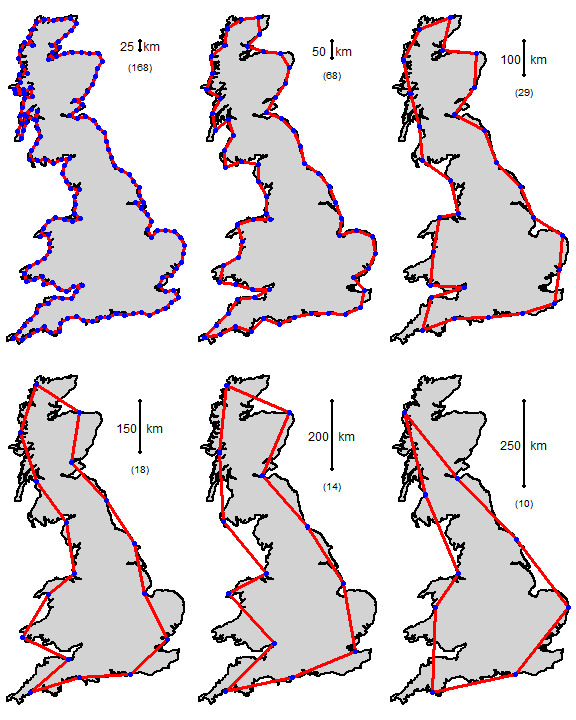
In our info-glutted world, math papers are like falling leaves. They flutter to the ground, noticed by a few, trod on by the rest. But in 1967, when Science published “How Long is the Coast of Britain?” the article sparked an entirely new way of seeing the world. Seems some little-known genius at IBM had found the cutting edge between art and math. And the edge was rough, jagged, and endlessly fascinating. Benoit Mandelbrot coined a word for his discovery — “fractals.”

“I never had the feeling that my imagination was rich enough to invent all those extraordinary things on discovering them,” Mandelbrot said. “They were there, even though nobody had seen them before.”
But first, a warning:
1. Math scares people who, if they could only heal the scars of grade school, might understand more than they expect.
2. Fractals involve equations but none will be spewed here (because they scare me, too.)
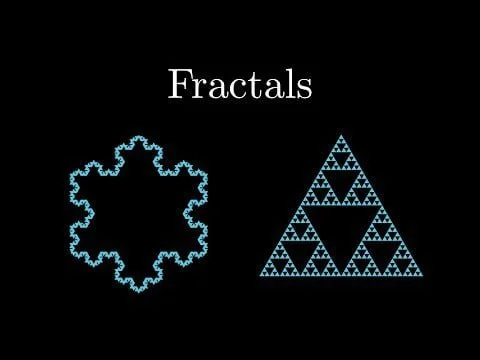
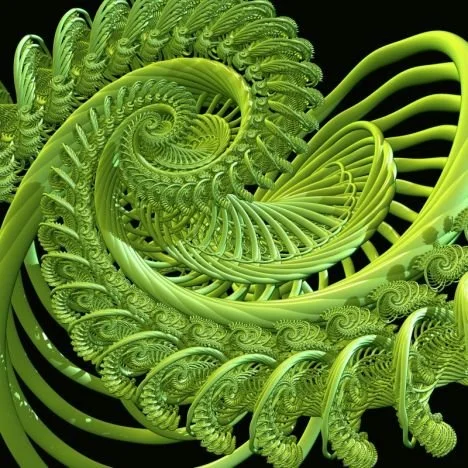
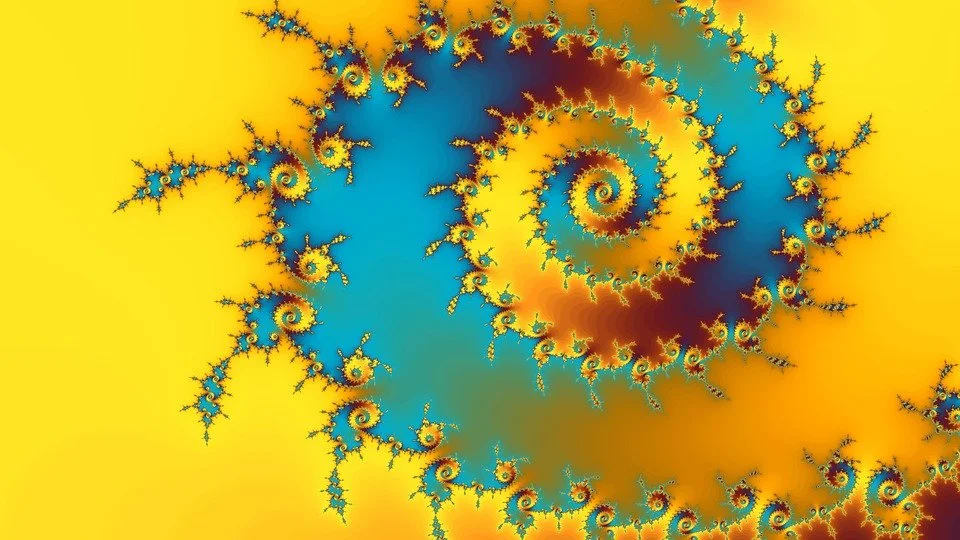
Dodging math’s arcane vocabulary — integers, polygons, quadratic equations — anyone can appreciate the wonder and beauty of fractals. Fractals, one mathematician noted, “can be intoxicating, motivating students’ interest in math more than any other mathematical discovery of the last century.”
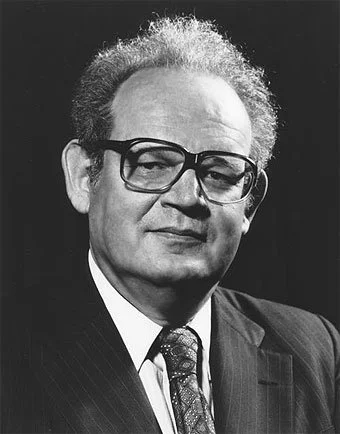
Benoit Mandelbrot was not just a genius but a maverick. Growing up in Warsaw, he fell under the tutelage of a wacky uncle who rejected rote learning in favor of (gasp!) letting the boy explore. “Most of my time was spent playing chess, reading maps and learning how to open my eyes to everything around me.”
The boy’s family, Lithuanian Jews in the crosshairs of the Nazis, fled Poland in 1936 to settle in France. Constantly alert, expecting to be rounded up any day, Mandelbrot never forgot how his father was arrested and narrowly escaped death. Joining a group of fleeing prisoners, the elder Mandelbrot split off and hid in the woods. When the Nazis gunned down the rest, independence saved his father’s life.
“I have been a lone rider so often and for so long,” Mandelbrot said, “that I’m not even bothered by it anymore.”
Degrees in math led to advanced statistical work on economics. Then in 1958, Mandelbrot arrived in America to become a brain-in-residence at IBM. His access to the world’s fastest computers soon linked him to mysteries once called “mathematical monsters.”

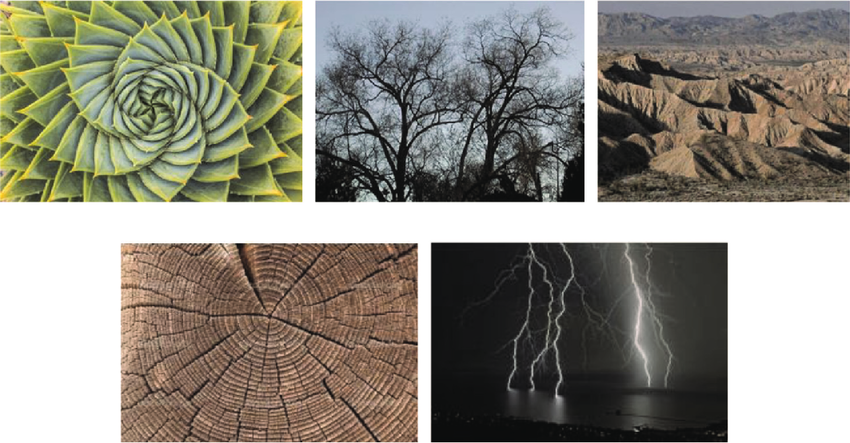
Might there be shapes that are “self-similar?” Shapes that, when expanded and expanded, repeated the same shapess? Look at broccoli. A single branch looks pretty much the same as a whole bunch. What about a tree? Break off a branch and you have a little tree. The same goes for a snowflake. A mountain. A cloud. With all due respect to Euclid, Nature abhors a vacuum but also loathes straight lines and simple curves.
“Clouds are not spheres,” Mandelbrot wrote in The Fractal Nature of Geometry. “Mountains are not cones, coastlines are not circles, and bark is not smooth, nor does lightning travel in a straight line.”
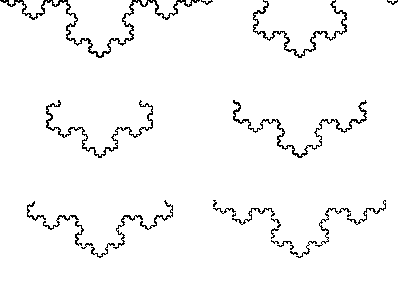
Throughout the early 1970s, fascinated by “the art of roughness,” determined to find order in chaos, Mandelbrot moved beyond his “Coast of Britain” article to do the math. With equations in hand, he coined the term “fractals,” from the Latin verb frangere, “to break.” Suddenly, fractals were everywhere.
Physicists began using them to chart planetary motion and the flow of fluids. Computers used the “Mandelbrot set” to make cool patterns that repeated themselves as you zoomed in or out. Fractals were math’s Russian dolls, one within another within another.
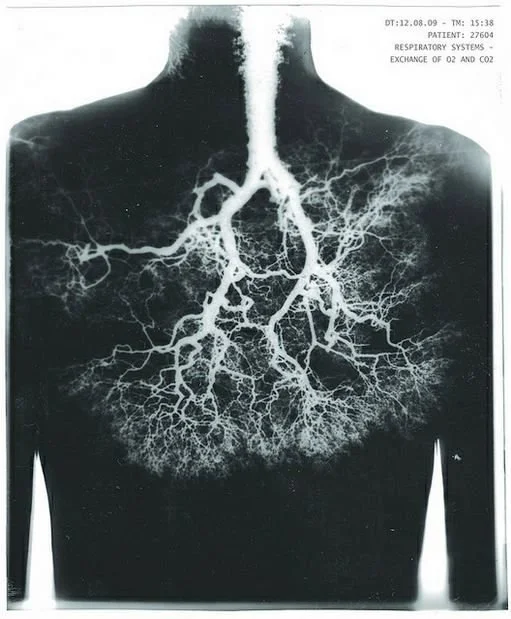
Video games and cinematic CGI used fractals to sketch eerily real cliffs and ocean waves. Fractals showed up in the patterns of leaves and the rings of Saturn, in DNA and in heartbeats, in Nautilus shells, in the branching of your lungs and blood vessels.
“One might have thought that such a simple and fundamental form of regularity would have been studied for hundreds, if not thousands, of years,” physicist Stephen Wolfram wrote. “But it was not. In fact, it rose to prominence only over the past 30 or so years—almost entirely through the efforts of one man, the mathematician Benoit Mandelbrot.”
Science fiction writer Arthur C. Clarke was more effusive. Fractals, he wrote, “are one of the most astonishing discoveries in the entire history of mathematics.”
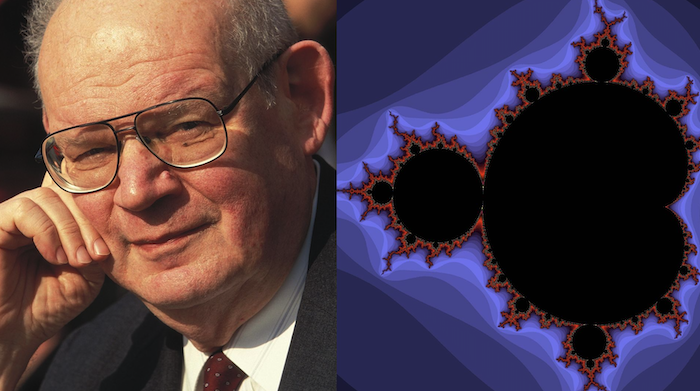
All his life, Mandelbrot had resembled, one acquantance said, “the ‘mad scientist’ stereotype—flyaway white hair, very cerebral, intense convictions, a fondness for digression and disputation.” Suddenly celebrated, he took fame in stride. He stayed at IBM, then at age 71, jumped to Yale where he became the university’s oldest tenured professor. He continued to play with fractals, finding them in the rise and fall of stock markets, the flow of information, and the theory known as “chaos.”
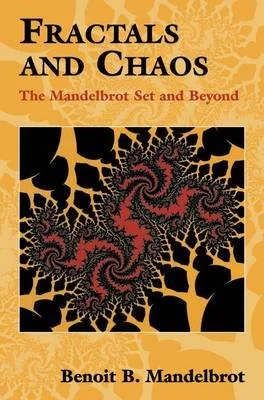
Mandelbrot died in 2010 By then, fractals were as close to a household word as anything in math gets. And the coastline of Britain was, measured fractally, infinite.
“It's marvelous,” Mandelbrot said. “A very simple formula explains all these very complicated things. So the goal of science is starting with a mess, and explaining it with a simple formula, a kind of dream of science.”