

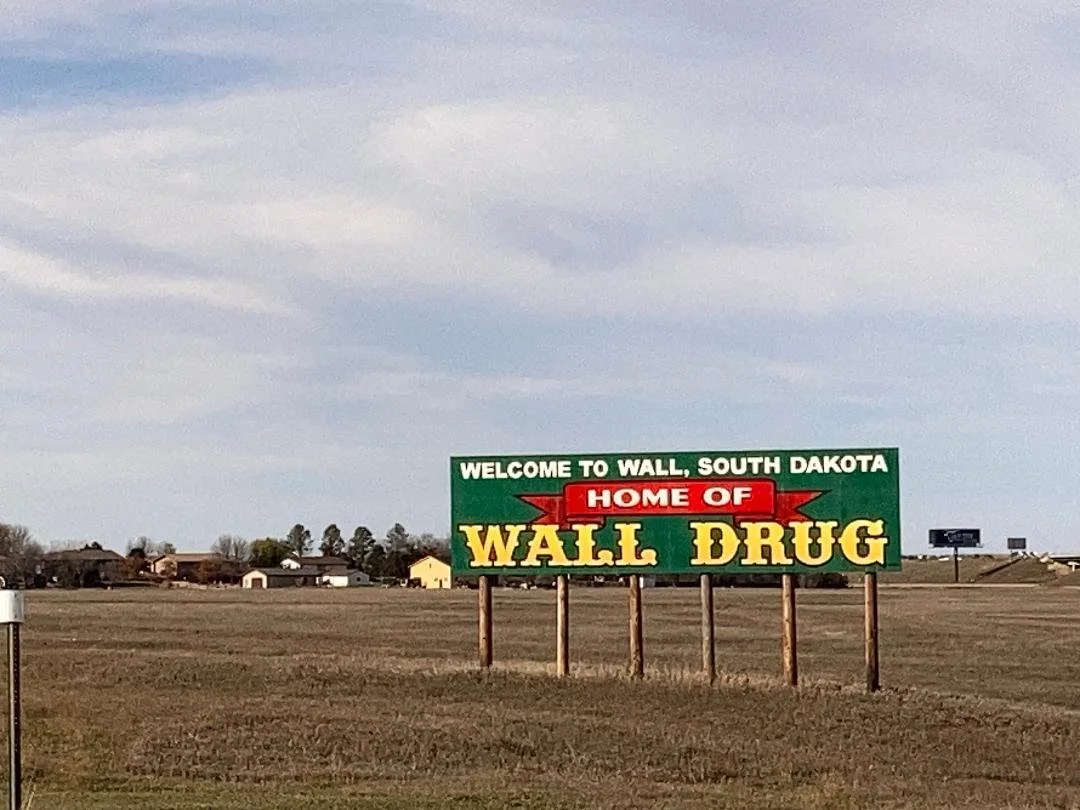
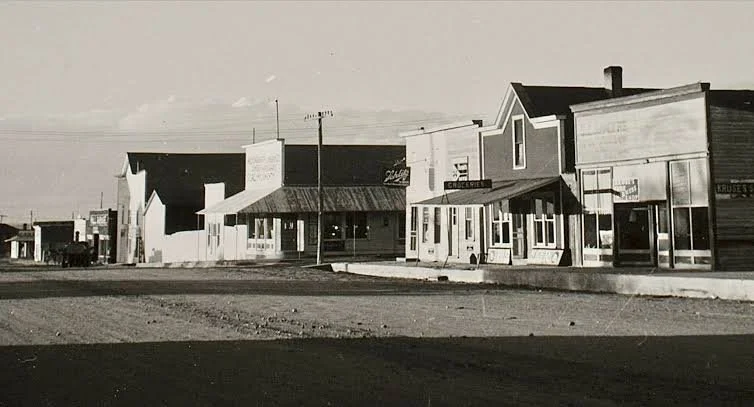
WALL, SOUTH DAKOTA — DECEMBER 1931 — The Plains are flat, bleak, and unforgiving. With the Depression deepening, 300 people cling to hope in this tiny town hours from the nearest anything. But the tiny town has a tiny drugstore, and a new pharmacist rattling in with his family in an old truck.
On the day-long journey from Sioux Falls, the driver warns Ted Hustead of hardships ahead. Blinding snowstorms. Scorching heat. Snakes and —
That’s when four-year-old Billy tugs on his mother’s skirt. Why is the family moving to a town his grandfather calls “just about as Godforsaken as you can get?”
“Because,” Dorothy Hustead replies, “your father is crazy.”
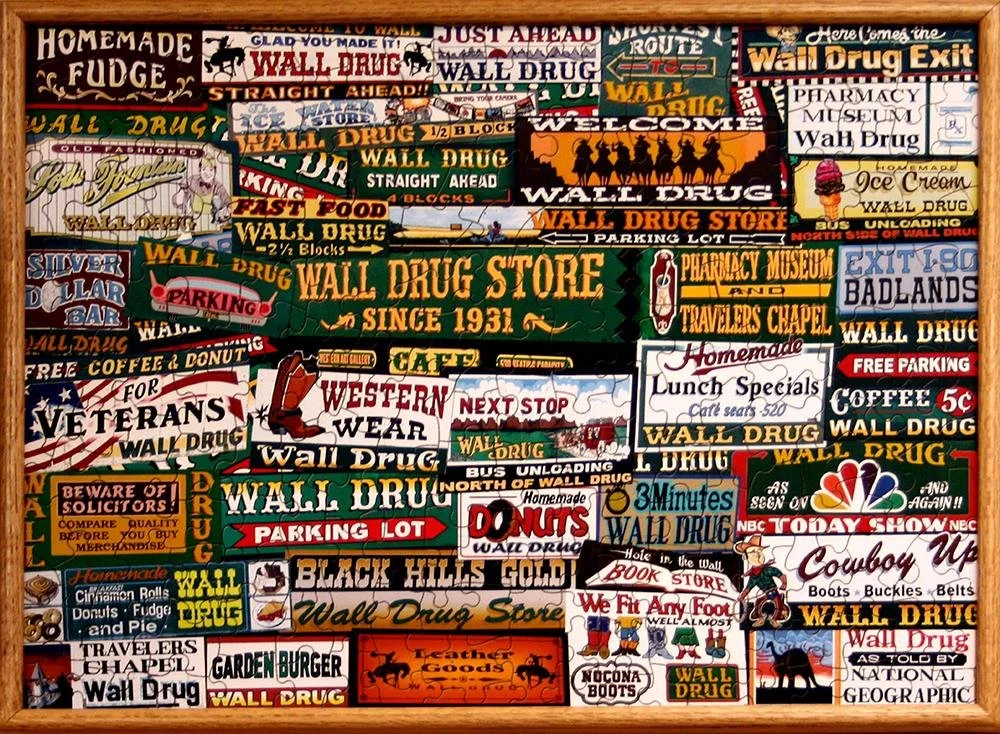
Winters are still wild here and summers scorching. Godforsaken no more, Wall lies along I-90 with both Badlands National Park and Mount Rushmore nearby. But Wall (pop. 699) gets more visitors each year than either national park. That’s because a magic name — Wall Drug — has been spotted on countless billboards and bumper stickers, and touted on signs around the world. Wall Drug is an American icon, and it all started with ice water.
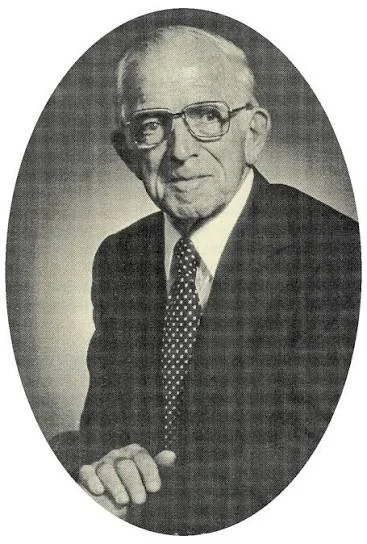
Raised in Nebraska, Ted Hustead worked hard jobs before earning his pharmacy degree months before the stock market crash. While Dorothy taught school, Ted worked in Sioux Falls drug stores. When his father died, a $3,000 inheritance offered independence, if the Husteads could find a town with 1) a drug store for sale and 2) a Catholic Church.
The couple drove their Model-T throughout the Plains before finding the right pharmaceutical mix in Wall. A cousin warned them — Wall was “in the middle of nowhere and everybody is flat broke busted.” “Godforsaken.” But Dorothy’s aunts, both nuns, urged the Husteads to pray. Convinced that God approved, they spent Ted’s inheritance on Wall Drug.
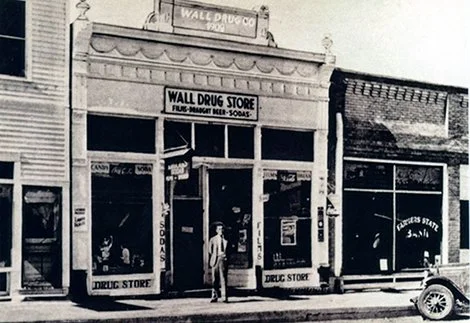
Ted soon wondered “if we’d heard God right.” Though he filled daily prescriptions, he “still spent too many hours looking out the store window for customers who never showed up.” Resigned to give Wall “five good years,” the couple was nearing their limit when, on a scorching July day, Dorothy had an idea.
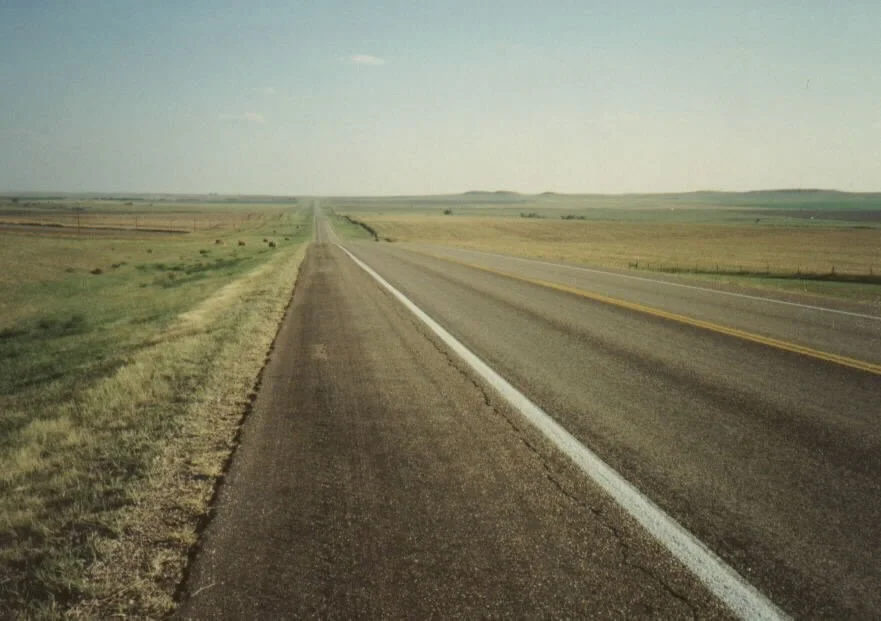
Just blocks away, on Route 165, cars were crossing the Plains in a hurry, never stopping. Why not offer ice water? Dorothy had even written a jingle.
Get a soda
Get root beer
Turn next corner
Just as near
Free Ice Water
Wall Drug
“It wasn’t Wordsworth,” Ted remembered, but Ted took it to the street. To imitate the spreading Burma Shave signs, he painted wide wooden placards and spaced them along the highway. Within hours, Wall Drug was flooded with visitors. The following summer, Ted hired eight women to handle the influx. Then he took it to the next level. If one set of signs could work wonders. . .
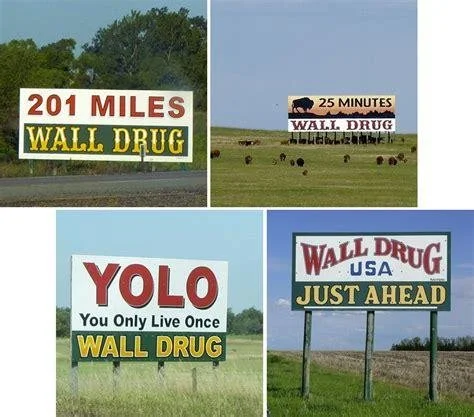
By 1940, as if this lone drug store were some Midwestern Mecca, billboards for Wall Drug stretched from the Mississippi to the Rockies. By then, Mount Rushmore was drawing crowds, and Wall Drug was booming. During World War II, American G.I.’s posted Wall Drug signs, with mileage, in London, Paris, and beyond.
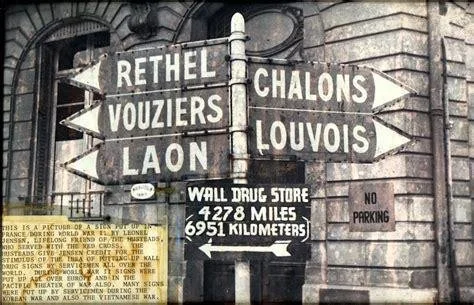
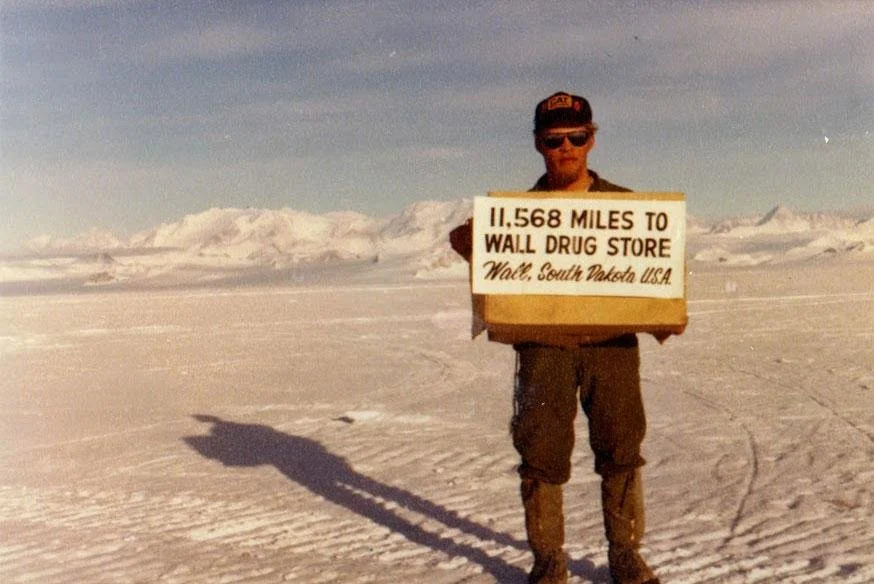
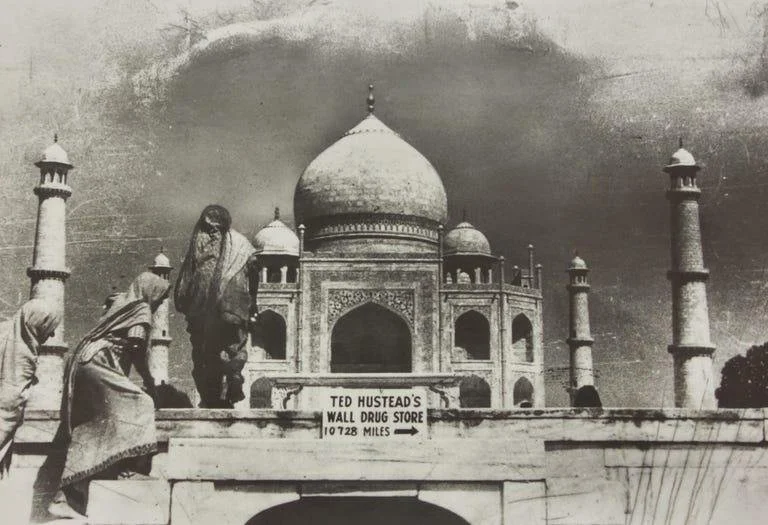
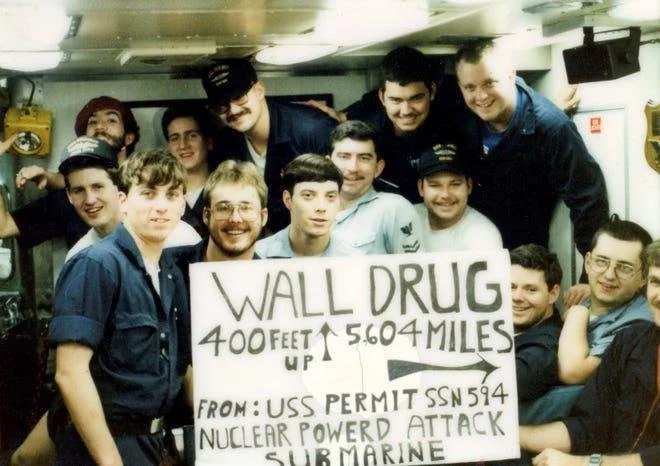
At its peak, Wall Drug had 3,000 billboards across America and homemade signs around the world. Antarctica, the Taj Mahal, the Great Wall of China, a submarine in the Atlantic. Free bumper stickers appeared nationwide. I saw them in Southern California, and when I mention that to Leigh Ann, behind the counter here, she says, “Eastern Pennsylvania.”
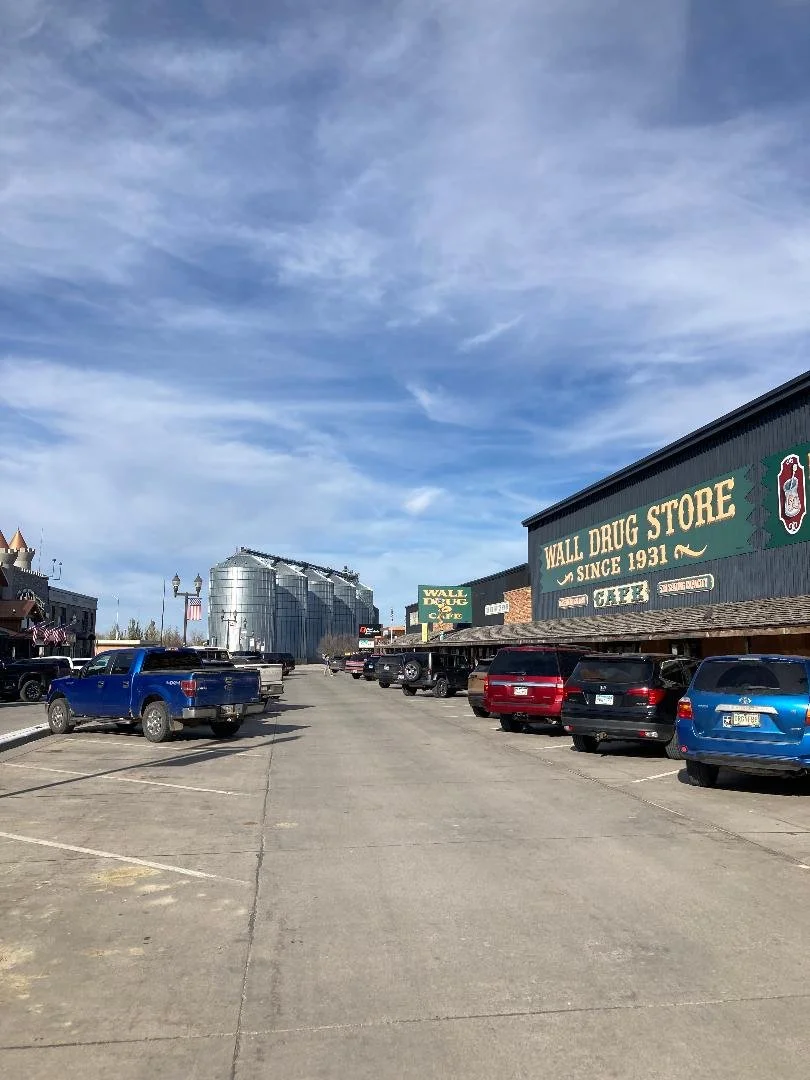
“It helps that we’re still in the middle of nowhere,” she tells me. “People need to stop, stretch their legs.” Sure, but I-90 has plenty of small towns. Why does Wall draw two million visitors a year?
Wall Drug, the New York Times wrote, “seems famous largely for its very fame.“ And drawn by the name, I stop. Soon I am walking through what should be called Mall Drug, a block long commercial hodgepodge selling Western wear, gems, T-shirts and store after store of souvenirs — a living museum of American kitsch.
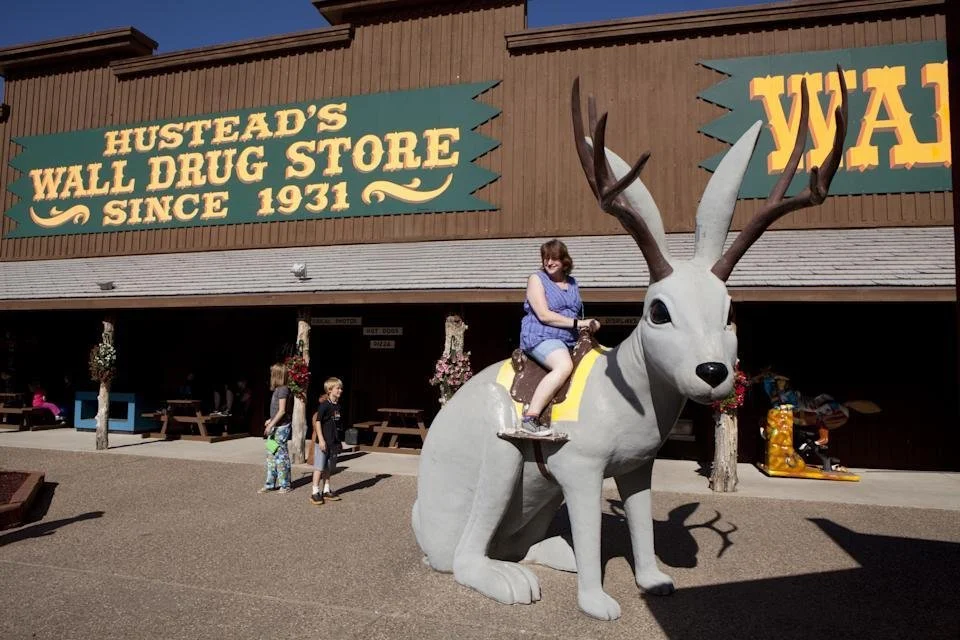
To keep tourists happy, Bill Hustead, also a pharmacist and savvy marketer, began the expansion in the 1950s. Seems Bill was embarrassed in high school. "All those signs, and when you arrived it was just an ordinary small town store. It was my crusade to develop the store into something special."
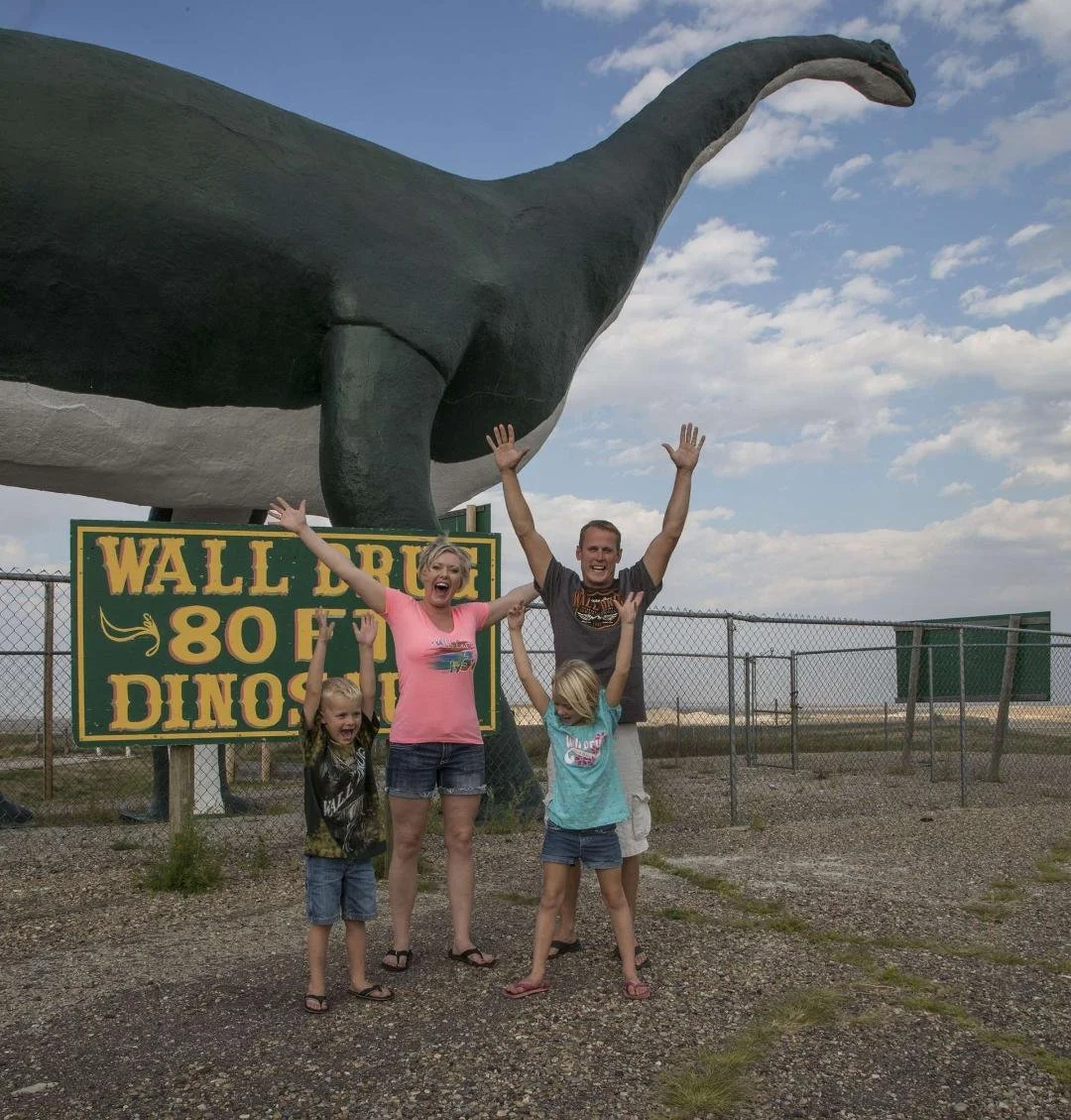
Bill’s first step — a life-sized cement Brontosaurus on I-90. The beast is gone now, but the billboards still stretch across the Plains. How can you not stop?
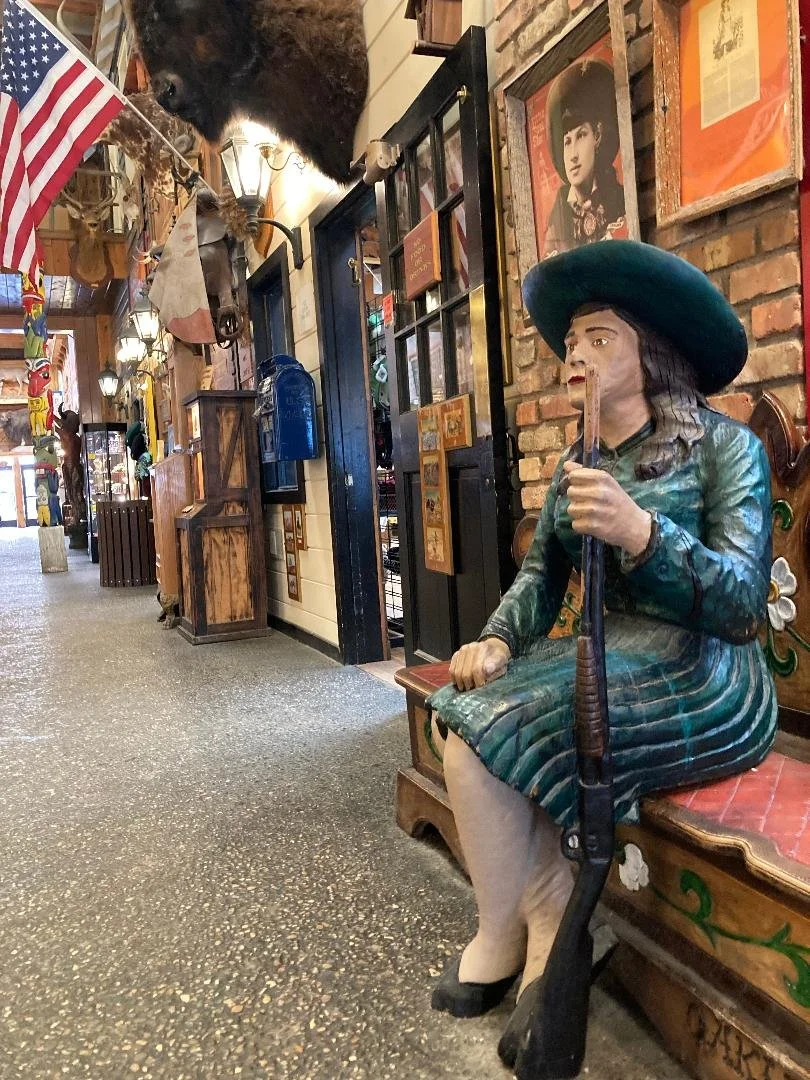
Walking and gawking through what Atlas Obscura called “the grandaddy of all tourist traps,” I marvel at the proud tackiness of today’s Wall Drug. There’s a plaster statue of Annie Oakley on a bench near other life-sized figurines of cowboys, coyotes, and courtesans. A cafe seats hundreds. A cowboy orchestra tunes up. A narrow Traveler’s Chapel is empty. A narrow alley is lined with Hustead family photos. Out back, statues include a giant jackalope, a roaring T-rex, still more cowboys, more kitsch. There’s ice water, of course. Free. And coffee still costs five cents.
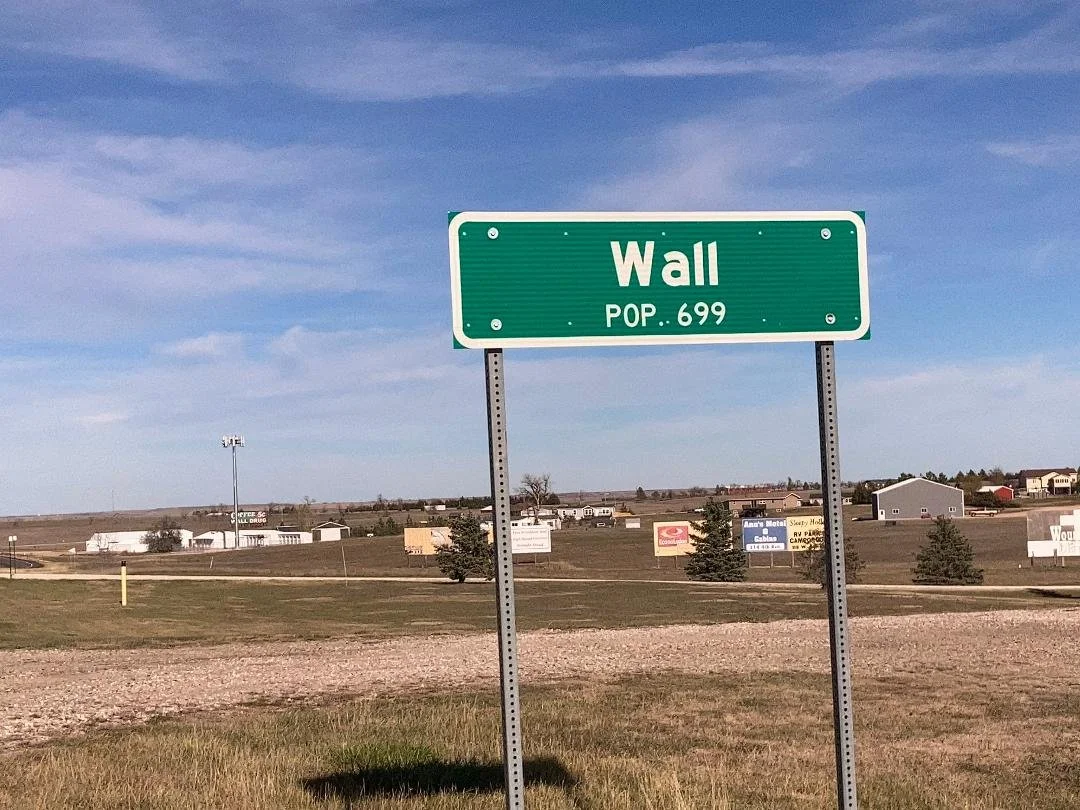
The town of Wall is more than its famous drug store, a little more. Down one end of Main Street, traffic passes on I-90. On the other end are five enormous grain elevators. The town also has several motels, a Harley-Davidson dealer, a one-room casino, and a Dairy Queen.
But these SUVs and pickups didn’t come for DQ. Their license plates — Georgia, Florida, WIsconsin, Texas, Illinois. . . suggest that all America comes to Wall Drug. Just because it’s here.
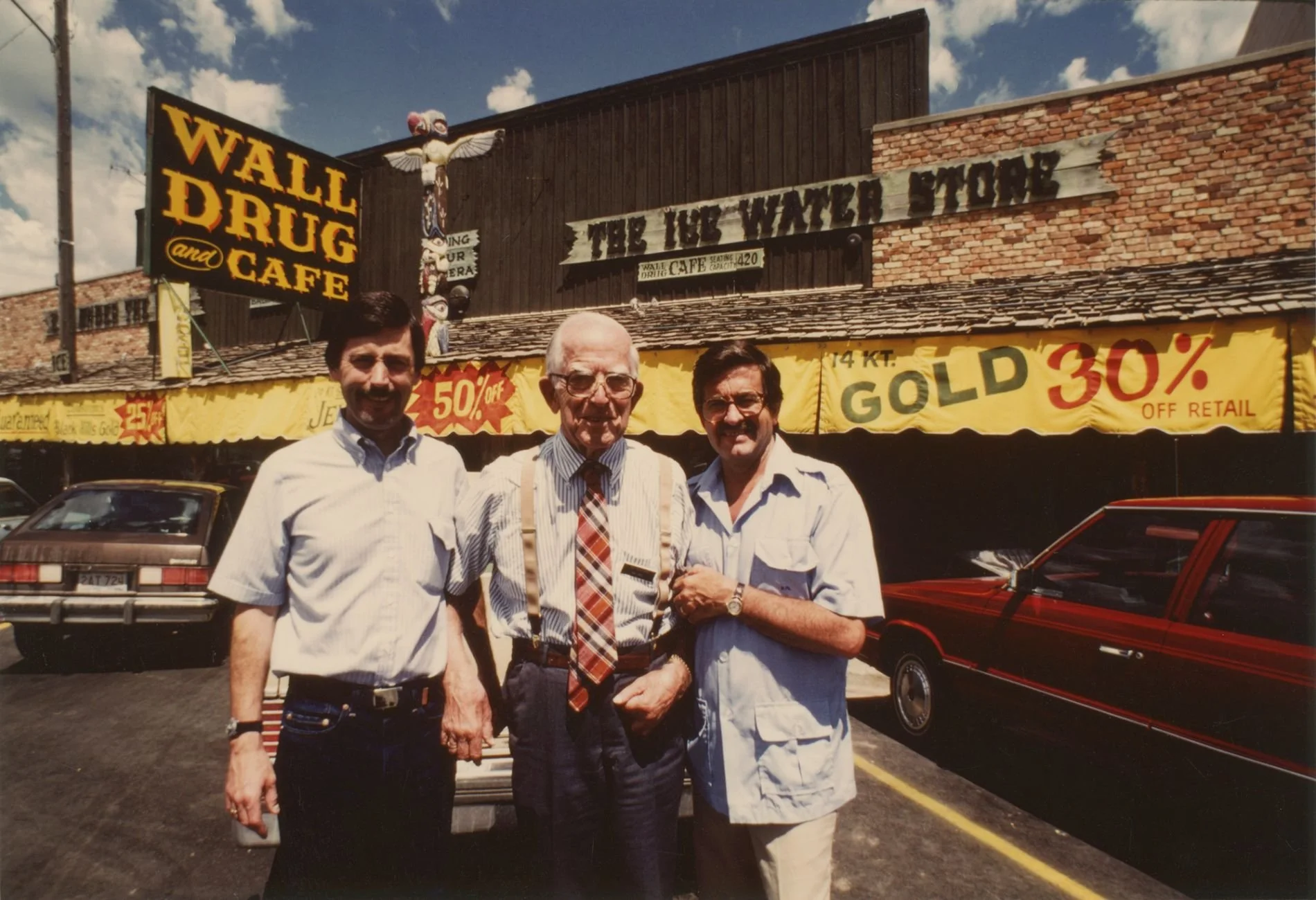
A third generation of Husteads manages this celebrity tourist trap, famous for being famous, and as busy as ever. Leaving it behind, I stop at DQ, then head for the rest of America.
Call it kitschy, call it corny, but you’ve got to hand it to the Husteads and the tiny town they put on the map. Each day along I-90, where billboards tout assorted roadside attractions, thousands pass right on by Vivian and Murdo, Kadoka and Cactus Flat. But everyone stops at Wall.
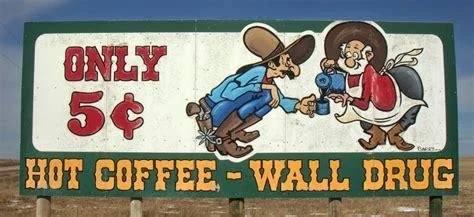
“It's an awful place,” Bill Bryson wrote in The Lost Continent. “One of the world's worst tourist traps, but I loved it and I won't have a word said against it."