
POETS ON THE PRAIRIE
Cowboys are romantics, extreme romantics, and ninety-nine out of a hundred of them are sentimental to the core.
— Larry McMurtry
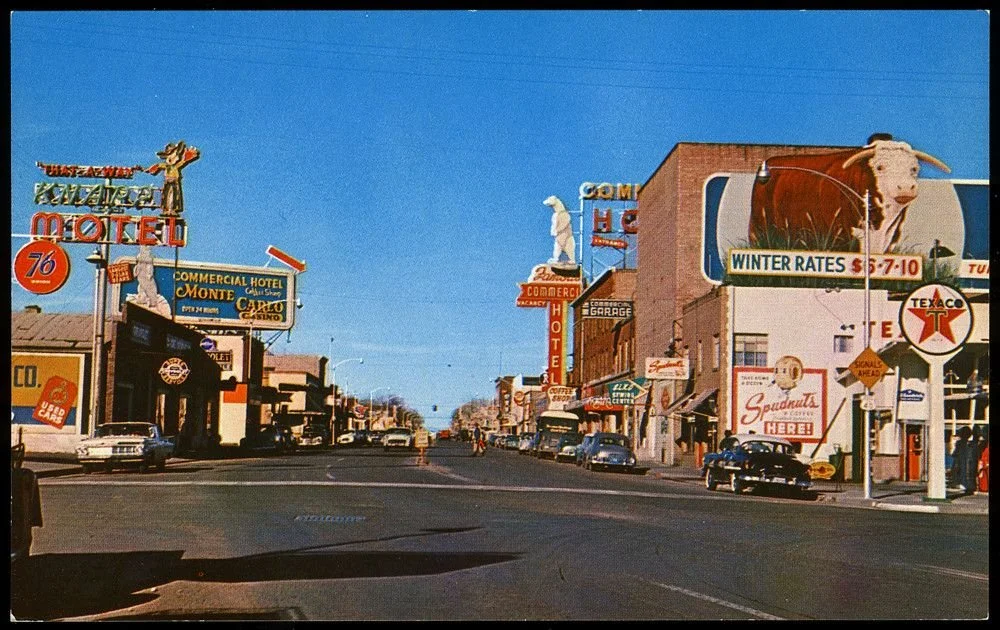
ELKO, NV — JANUARY 31, 1985 — In this dusty old town of gold miners, casinos, and legal prostitution, a modest wrangle of strangers — “strangers to these parts” — gathers ‘round. Stepping onto a small stage, a half-dozen grizzled men in denim take turns holding forth. Each spins a rhyme or two, reciting verses about an open range that closed nearly a century ago. Then like cattle crossing the prairie, the strangers leave Elko. But they will be back.
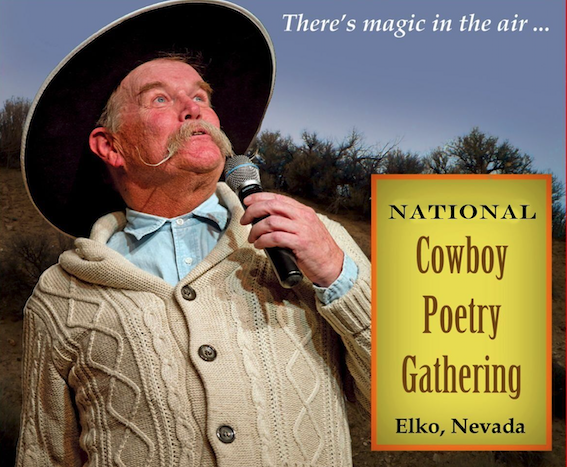
Mention cowboys and few think of poetry. But Elko — and Alpine, Texas, Prescott, Arizona, and a dozen other Western locales — know better. “When an innocent group of people in Nevada had the brass monkeys to connect the word ‘cowboy’ with the word ‘poetry’,” wrote Charles Seeman of Elko’s Western Folklife Center, “it was like mixing uranium-235 with strontium-90. ‘Cowboy Poetry’ became a magic phrase.”
I rumbled and rambled an' crashed through life.
I never had the courage to take me a wife.
He told it so softly with a tear in his eye,
He said, “Son, life's a bitch an' then you just die.”
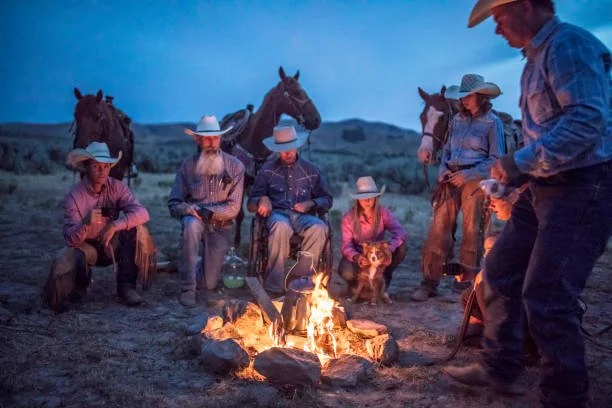
Huddled around campfires, cowboys began telling tales back when the West was still wild. Some settled for yet another “big windy” about another cowboy who lost his heart or his horse, but others preferred rhyme and rhythm. In the 1890s, Western newspapers published poetry by local cowboys. Anthologies soon featured verse not about gunfights and grit but about hard livin’.
The wages that a cowboy earns
In summer goes like smoke.
And when the snow begins to drift
You bet your neck he's broke.
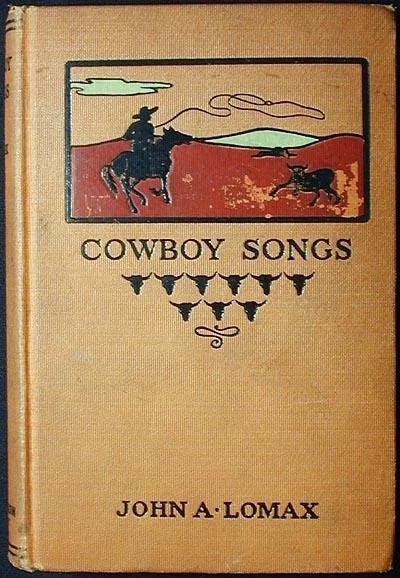
Then in 1910, folklorist John Lomax (Alan’s father), published Cowboy Songs and other Frontier Ballads. Beyond “Whoopee ti-yi-yo” and “Home on the Range,” Lomax tapped a rich mine of folklore blending the meter of British ballads with life on the lone prairie. Cowboy poets soon sauntered forward to add more rhymes, but once Western movies took over, the public preferred myth to metaphor.
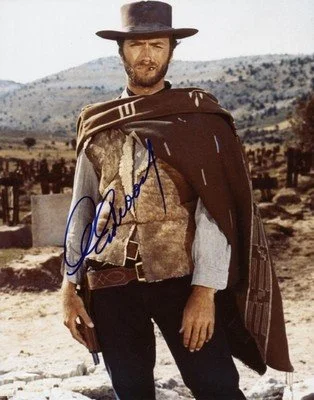
For nearly a half century, cowboys were stern, silent types, highly unlikely to recite in iambic pentameter. Then in 1975, Elko artist Sarah Sweetwater gathered a few old-timers onstage. The annual event grew into the first national festival in 1985, with 40 cowboy poets and an audience of 1,000. But word got out. Cowboys write poetry! Sure, as poet/rancher J.B. Allen wrote:
The spellin’ may not be exact
Or commas where they ought,
But there within those rugged lines
A mood is somehow caught.
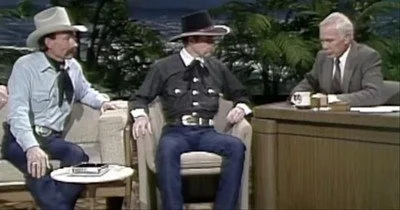
Cowboy poets soon recited on “The Tonight Show.” The reviving genre was written up in People, the BBC, and the New York Times, where essayist Edward Hoagland noted: “a hullabaloo of poets has occurred, with thousands of spectators cheering them on. Rimrock and slickrock and cool willow draws, chuck wagons, pig irons and sunfishing broncs, six-horse hitches and batwing chaps, lariat loops and black stovepipe hats — all of that good old stuff is invoked.”
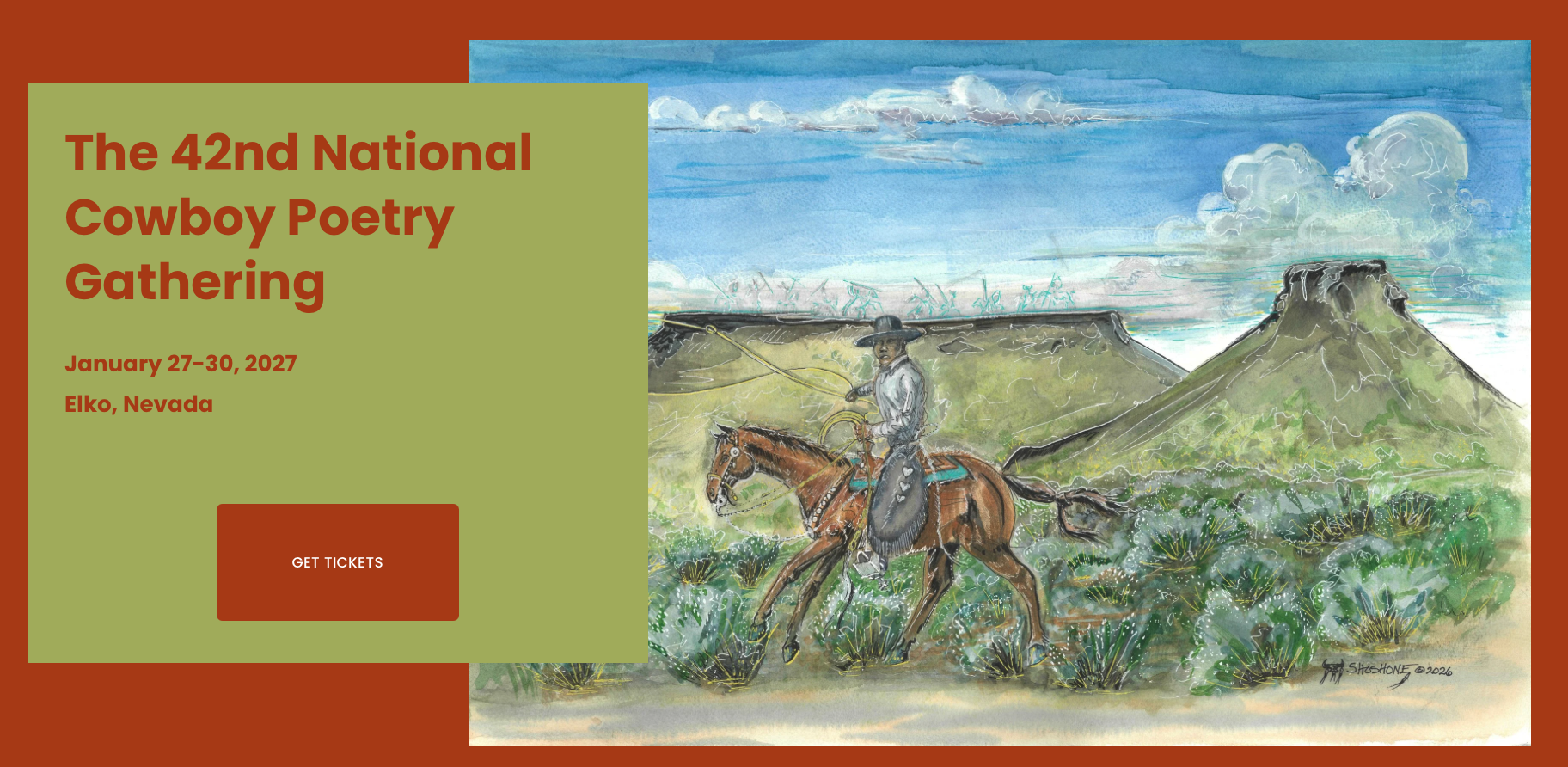
Though Elko (pop. 20,564) is 100+ miles in any direction from any place bigger, next January 27, the 42nd National Cowboy Poetry Gathering will draw hordes of fans. The three-day event will feature Yodeling 101, dancing from two-step to line dances, a saw player, rawhide braiding, floral leather carving, beadworking, BBQ, and other side shows. But the main draw is poetry. Watch.
Cowboy poets are not likely to make anyone renounce Robert Frost or ditch Emily Dickinson. This is poetry that puts the dog (prairie, of course) in “doggerel” and the ass in “assonance.” Cowboy poetry almost always rhymes, loping along in meter as measured as a mule’s pace. Along with horses and heartbreak, much of the genre is about what Baxter Black, a veterinarian turned poet, called “cowboy wrecks.”
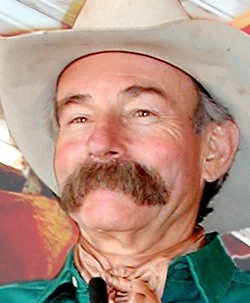
“Cow wrecks, horse wrecks, sheep wrecks, tyrannosaur rex, broken heart wrecks. And the cowboy is always the butt of the joke. The cowboy gets run over, stepped on and, for some reason, that’s funny. If he’s alive, he starts telling the story right away. If he’s dead, you wait a few days and then you start telling it.”
Stanza after stanza, cowboy poets, their mustaches growing out of control, recite from memory. They love a good joke, especially on themselves.
Not much of a thinker
He was more of a drinker.
So even if the phrase “cowboy poetry” may be scorned by the Ezra Pound crowd, there’s a heap o’ livin’ in these here verses, and enough nostalgia to feed whole herds of fans. Black, whom the Washington Post said, “could make a dead man sit up and laugh,” explained why.
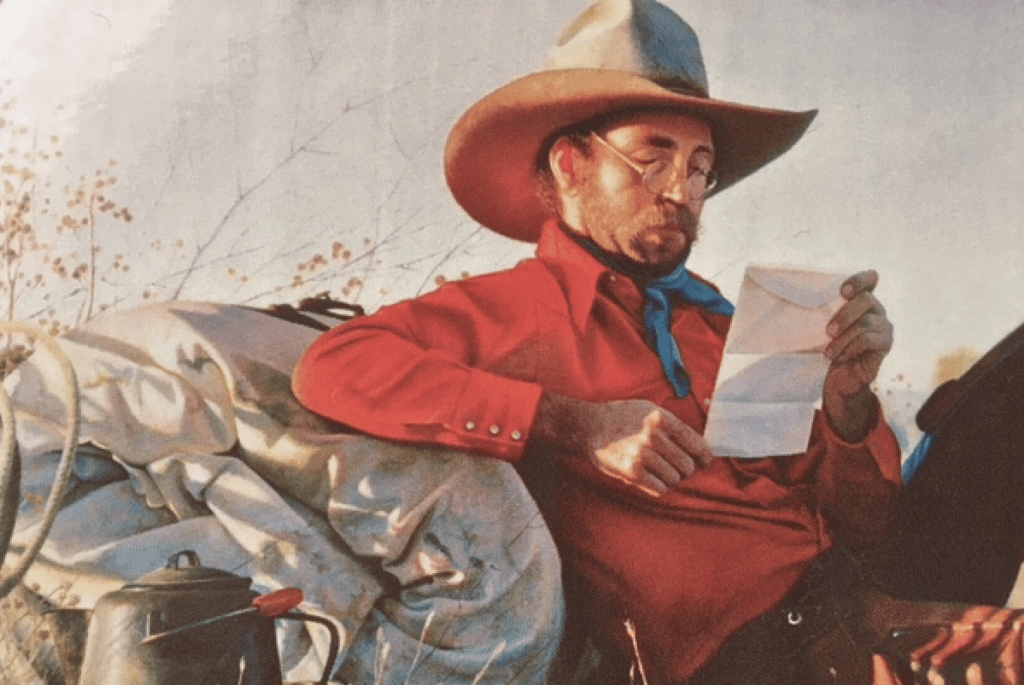
“In spite of all the computerized, digitalized, high-tech innovations of today, there will always be a need for a cowboy."