WHEN PAPER AIRPLANES PASSED THE TEST
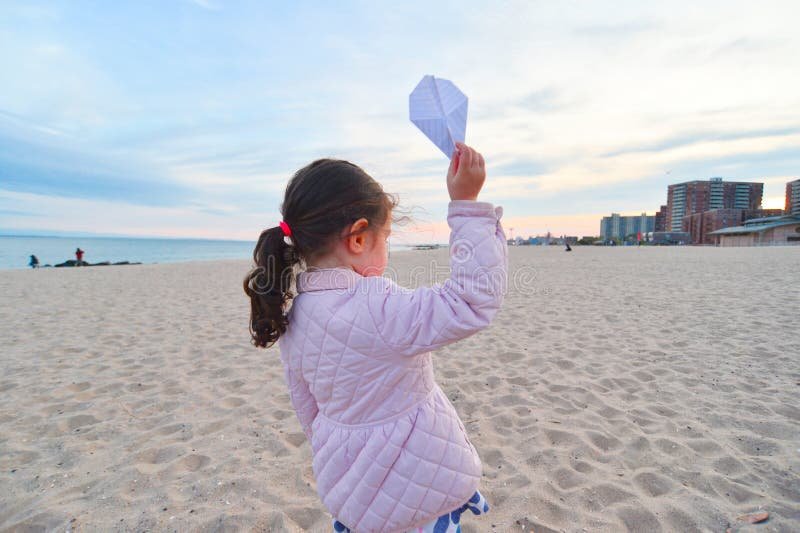
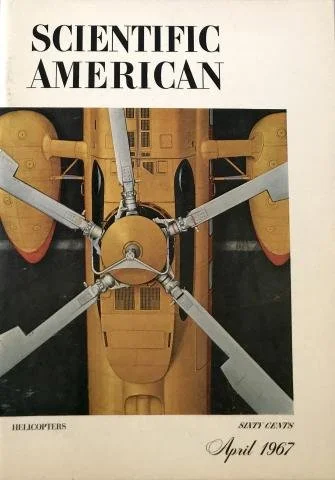
No one knows who designed the first paper airplane. Written records pin the invention to the 1860s, four decades before the Wright Brothers. By the 1960s, metal planes were streaking across the sky, but it took a contest to bring paper wings out of countless classrooms and into the spotlight.
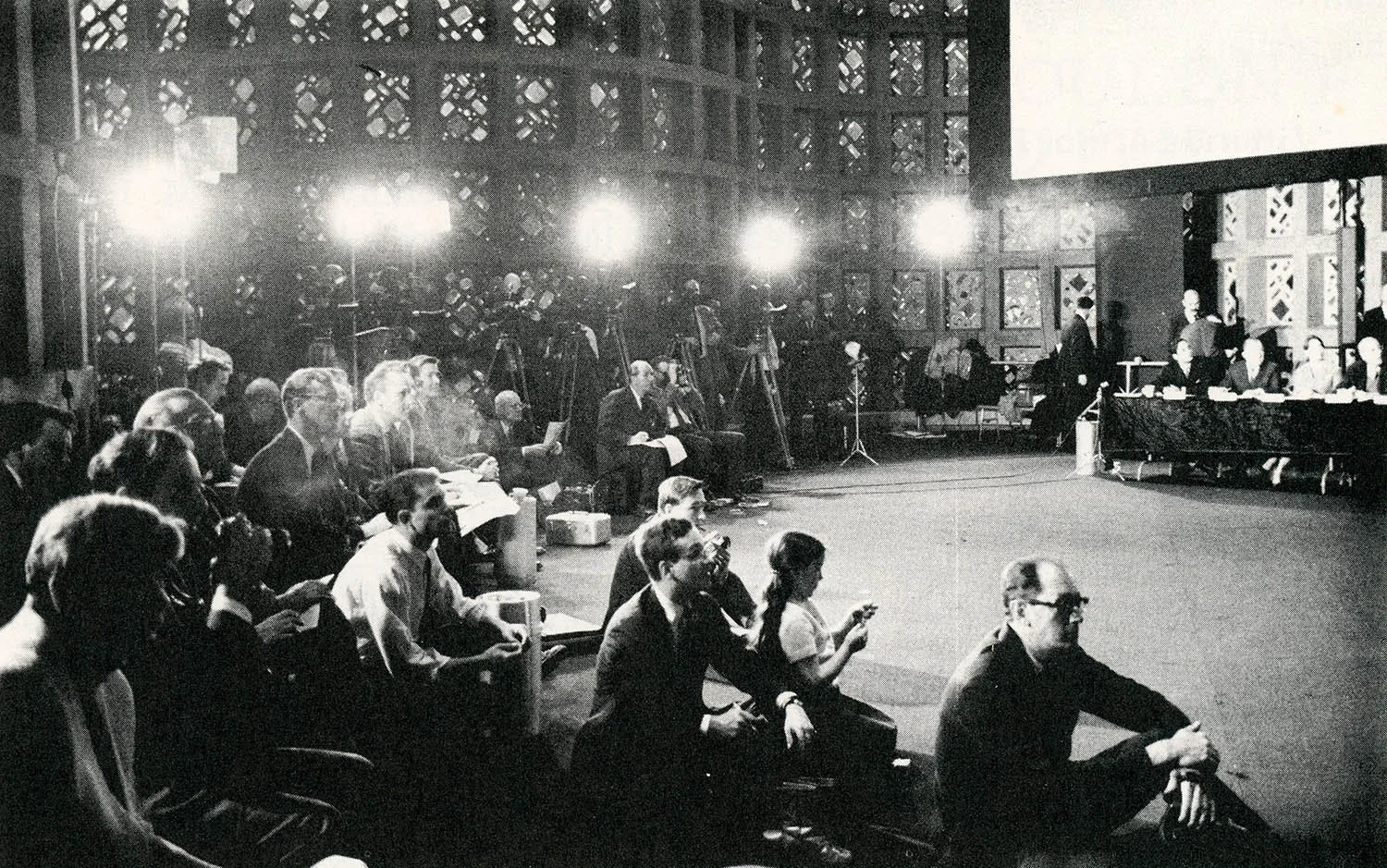
February 21, 1967: The East Coast hunkers down for a snowstorm. The rest of America hums along with The Monkees (“I’m a Believer”) and The Turtles (“Happy Together”). There must be other events to cover but upstairs in the New York Hall of Science, dozens of reporters, cameramen, and onlookers gather to watch grown men, some sporting stopwatches and slide rules, hurl paper airplanes.
The First International Paper Airplane Competition drew “press coverage not seen since the visit of Pope Paul.” Flashbulbs popped. Cameras whirred. And one-by-one, flimsy white airplanes spiraled, soared, or dove into the carpet to the cheers and boos of the crowd.
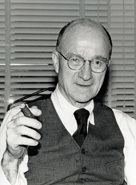
When the contest ended, reporters surrounded Gerard Piel, editor of Scientific American, the noted journal that dreamed up the contest. Was there, as the magazine expected, some paper design that presaged the forthcoming SST? Was there a paper model that might help us get to the moon? Did paper planes hold the key to the future of aeronautics?
“No,” Piel deadpanned. “We have learned nothing new at all.”
But the world’s first paper airplane contest taught two lessons. 1) We learned how paper airplanes captured the imagination of millions. And 2) we learned how wonderful and wacky paper airplanes could be. Consider:
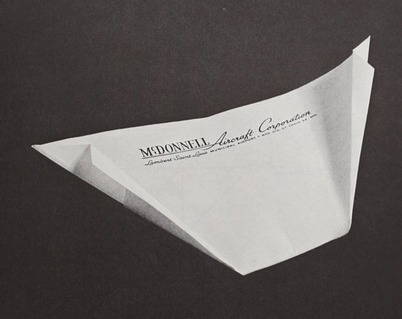
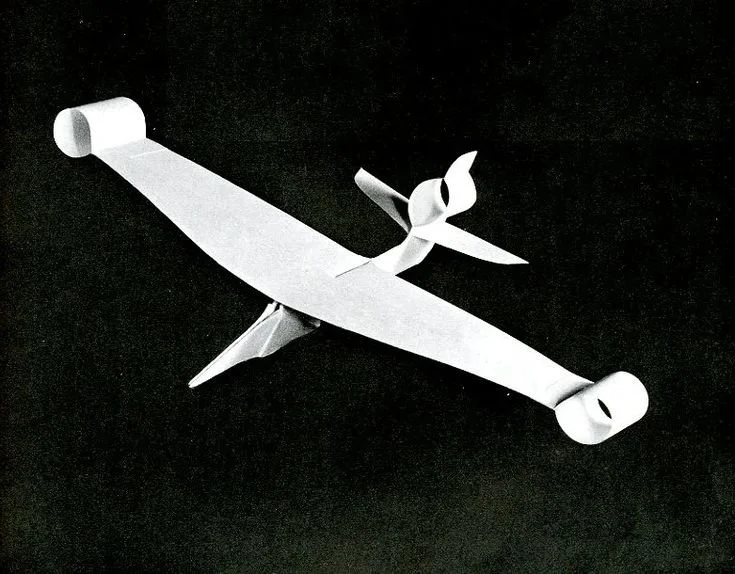
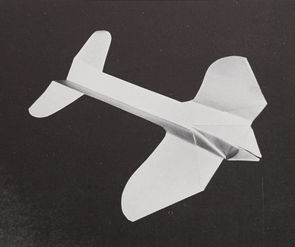
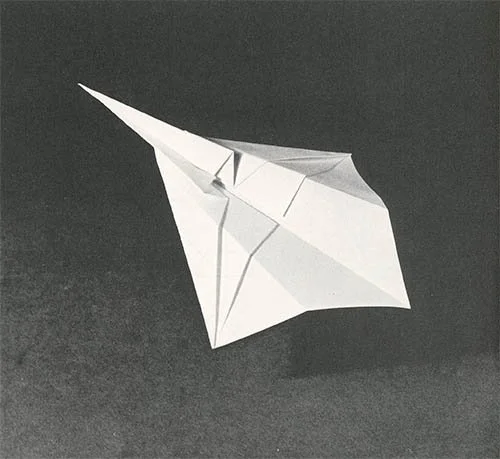
The contest began with a full-page ad in the New York Times. Ironically placed — some said deliberately — opposite an article on the SST, the ad called to the kid in all of us.
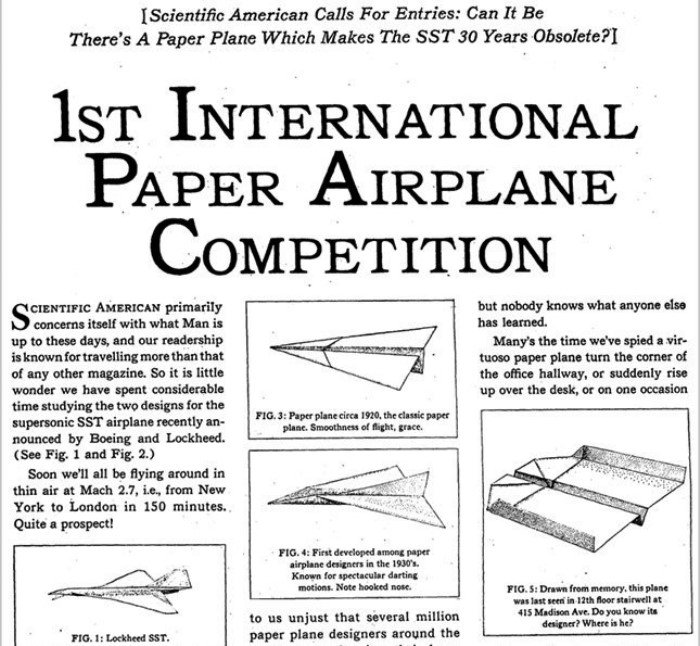
“Paper airplane design has become one of those secret pleasures performed behind closed doors. Everybody does it, but nobody knows what anyone else has learned. Many’s the time we’ve seen a virtuoso paper plane turn the corner of the office hallway, or suddenly rise up over the desk, or on one occasion we’ll never forget, veer first down the stairs to the left, and suddenly to the right, staying aloft 12 seconds in all. But who is its designer? Is he a Board Chairman or a stock boy? And what has he done lately?”
And the call went out. “In light of the possiblity that the future of aeronautics may now be flying in a paper plane, we are hereby calling for entries in the 1st International Paper Airplane Competition.”
America’s oldest magazine had struck a nerve. By mid-morning Gerard Piel’s office was “shoulder deep in newsmen.” What were the contest rules? How would planes be tested? In Cold War terms, was Piel worried about “a paper airplane gap?”
The word spread in 100+ American newspapers. One Parisian daily saw the contest as “perfectly illustrative of certain typically American qualities — ingeniousness, ingenuousness, a sense of humor. . .”
Designers went to their drawing boards, or their school notebooks. Entries soon flowed into Scientific American offices, coming in “styrofoam concoctions, coffee cans, plastic boxes, shoe boxes, cigar boxes, candy boxes, 1-gallon milk cartons, a 6-foot-long metal cylinder and — by far the largest number — in cereal boxes of no determinable brand preferences.”
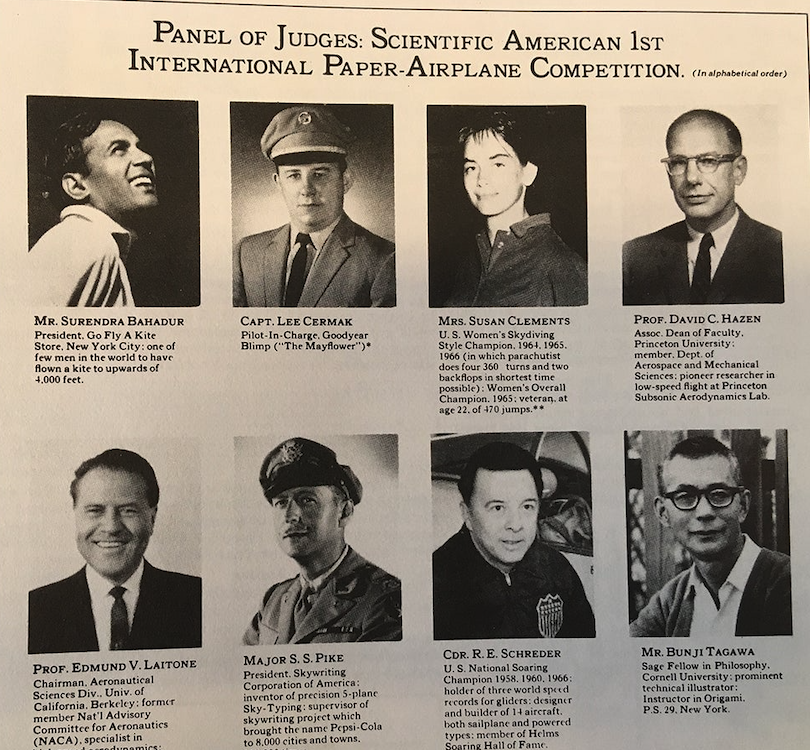
Overwhelmed by entries, Scientific American moved the contest back a month. Additional ads added to the frenzy, introducing eight contest judges, including two aeronautics professors, the U.S. national soaring champ, and a pilot of the Goodyear Blimp. Four categories — duration aloft, distance aloft, acrobatics, and origami — were announced, each divided into amateur designers and those employed in the airplane industry.
By early February, nearly 12,000 planes from 28 countries were poised for flight. The largest was 11 feet long, the smallest just a speck to be dropped into flight. Two entrants had known Orville Wright. An Oregon girl called her design “U.S. Air Force futcher air'plane.”
Finally, the day before the nation paused for Washington’s Birthday, the contest began. Watch:
All that morning, men in skinny black ties tossed planes, measured or counted, and recorded the results. A thick paper wing circled and circled, staying aloft the longest — 10.2 seconds. A sleek construction paper dart won the distance category, sailing 92 feet before hitting the runway back wall.
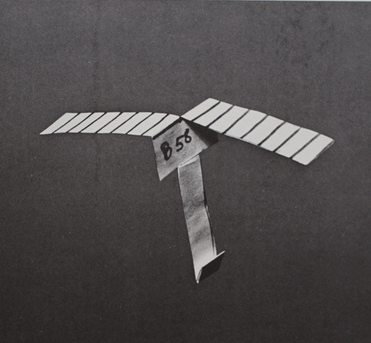
But more interesting than the winners were designs not commonly seen in any lab or fifth grade. A flying wing crossed the room, flipped over, then flipped again! A tubular model had aeronautics engineers baffled. And a paper helicopter! (I have personally dropped these from the Eiffel Tower, the Leaning Tower of Pisa, and to the delight of five-year-olds in several states.)
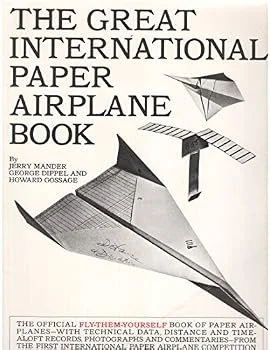
The competition ended not with a crash but with a book that was as much fun as the contest itself. Tongue-in-cheek, scissors in hand, The Great International Paper Airplane Book was the official record of “an event that has already taken its proper place in aeronautical history.”
The book sampled letters from entrants describing unforgettable planes that soared “1 hour and 33 minutes before disappearing up and out of sight” and “from Rockefeller Center before disappearing over Times Square. . .” The book also included 20 fold-out entries. Many of us were busy for weeks.
Today, paper airplane contests are routinely held at science museums, summer camps, college dorms. . . A dozen books offer designs, tear-out models, and more. But The Great International Paper Airplane Book harkens back to the moment when a serious science magazine tapped the joy of flight and the fun of doing it yourself.
Don’t take my word for it. From Amazon reviews:
— “A classic. Got my first copy in 7th grade. Promptly made, flew, and memorized nearly every model in the book. It was the start of a 45 year career in aerospace, now retired.”
—“I was given this book when I was a boy and absolutely loved it! It opened up my imagination for flight and the way aircraft work.”
— “And just like that, you're a kid again.”