
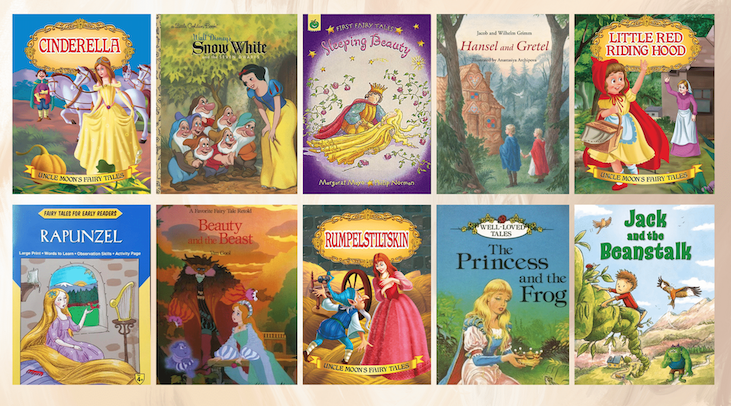
FAIRYLAND, USA — Once upon a time, fairy tales hosted a cast of characters both charmed and charming. Golden-haired girls, dewey-eyed dwarves, Hansels and Gretels and Jacks and Jills set out on perilous adventures that ended happily ever after. Sure, an occasional goblin or dragon might rear its ugly head but only for a few scenes, and never as the hero. And then came. . .
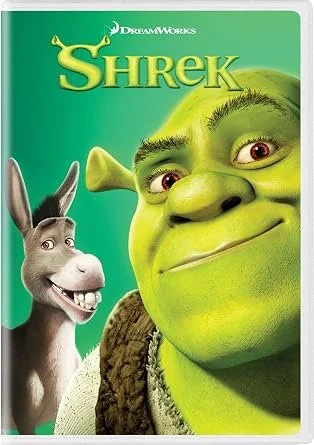
In Yiddish, the name means “fear” or “fright.” On screen, the name has meant a billion dollar franchise whose latest film will be out next year. But Hollywood’s Shrek is a pale imitation of the original. Which begins:
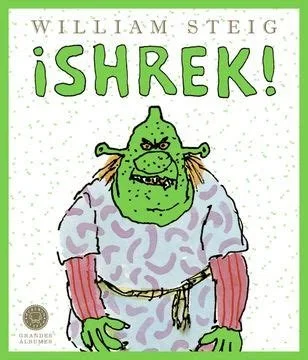
“His mother was ugly and his father was ugly, but Shrek was uglier than the two of them put together. By the time he toddled, Shrek could spit flame a full ninety-nine yards and vent smoke from either ear. With just a look, he cowed the reptiles in the swamp. Any snake dumb enough to bite him instantly got convulsions and died.”
Such a lovable monster could only have come from a singular imagination.
Long before he wrote Shrek! — at age 83 — William Steig was the “King of Cartoonists.” His success stemmed from a childhood where he was given free reign to pursue flights of fancy.

Steig was born in the Bronx in 1907 and raised by Jewish immigrants suspicious of the American dream. “My parents didn't want their sons to become laborers, because we'd be exploited by businessmen,” he remembered, “and they didn't want us to become businessmen, because then we'd exploit the laborers. Since we couldn't afford to study professions, we were encouraged to be artists."
Doodling, drawing, sketching, Steig seemed a natural for cartooning. Though he hated school, he managed to graduate but dropped out of three colleges, including the Yale School of Art after only five days. When the Depression began, he needed to support his parents so he began submitting cartoons to The New Yorker. His timing was perfect.
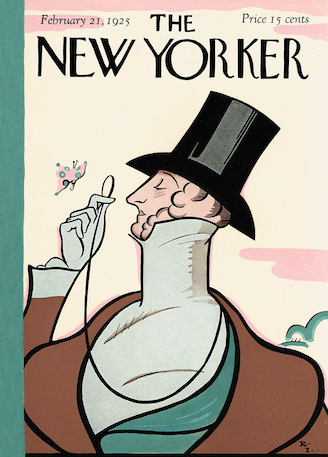
In just five years, The New Yorker had risen from an upstart arts weekly to, well, the talk of the town. Editor Harold Ross loved one-line single-panel cartoons, an art form invented by New Yorker stalwart James Thurber. And Ross loved Steig’s offbeat drawings and crumpled characters.
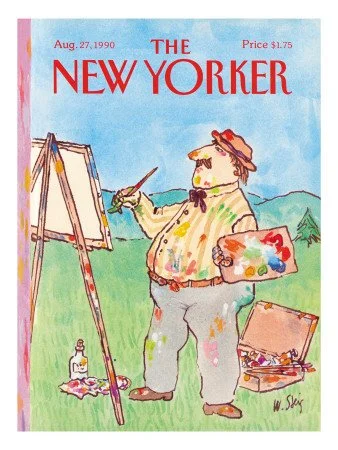
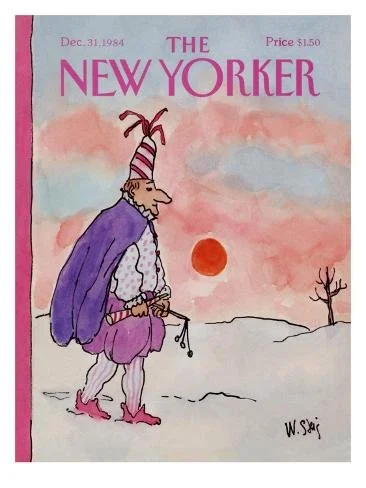
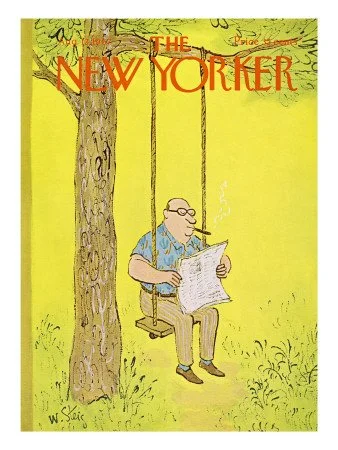
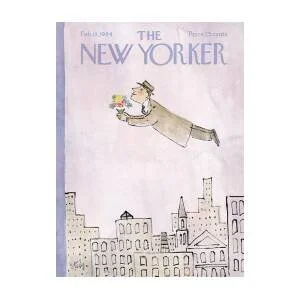
At 22, Steig became a regular contributor. Over the next 60 years, he drew nearly 2,600 cartoons for the magazine, including 117 covers. A William Steig cartoon was like no other. Edgy line drawings verging on squiggles, a Steig seemed to come alive on the page, suggesting larger worlds surrounding their small panels.
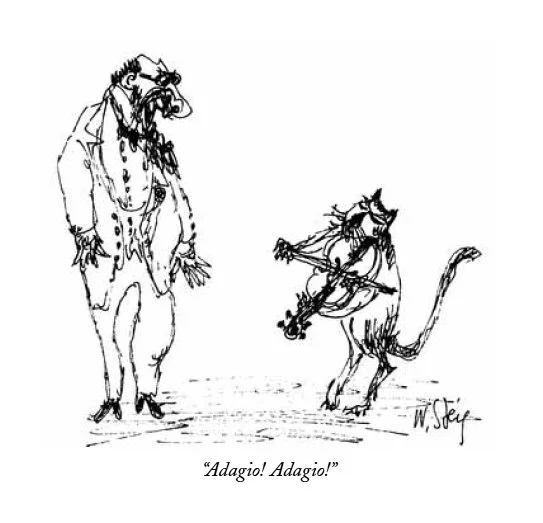
During World War II, when Steig began publishing collections of his cartoons, he became a household word. His name alone, like that of other New Yorker wits, suggested a style. Charles Addams. Thurber. Peter Arno. And William Steig.
The poet W.H. Auden compared Steig’s drawings to Goya. The New Yorker’s art editor had higher praise, writing Steig: “In all the history of graphic expressiveness your genius is unsurpassed: for sensitivity and comic perception of the human plight; for loveliness of line, for constant renewal, constant freshness.”
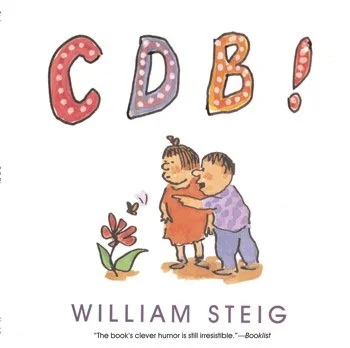
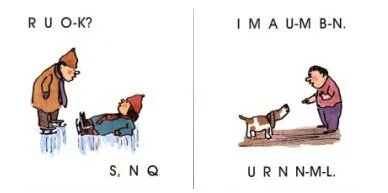
But Steig’s imagination could not be confined to cartoons. It wanted to run wild and free. So at age 61, he took up a new career — children’s books. His first was CDB! Long before teens began texting R U OK? each CDB cartoon offered a complete line in capital letters. (See de bee?)
Steig’s next book, Sylvester and the Magic Pebble, played off a theme he would use again and again. Maggie Steig, his daughter, remembered a favorite game, a variation on “would you rather be?” Beyond the usual “would you rather be a boy or a girl?” Steig asked his three children if they’d rather be “a knee or an elbow? A pinch of pus or a pile of puke? A scab or a wart?”
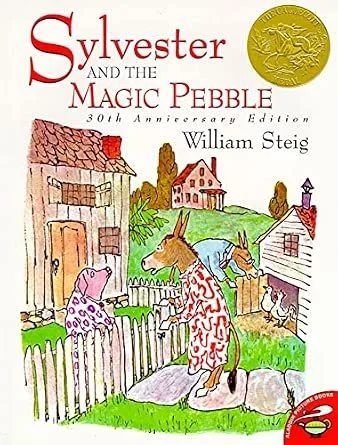
In Sylvester, a donkey turns into a stone and must wait and wait until his parents stumble upon him. In The Amazing Bone, a pig named Pearl finds a bone that not only talks but does impressions and speaks German. In Solomon the Rusty Nail, a rabbit becomes. . .
“Deligthfully inventive.” Two Caldecott Medals for illustration. The New Yorker’s David Denby called Steig “the most wonderful of all children’s authors.” Steig wrote 30 children’s books but there was only one Shrek.
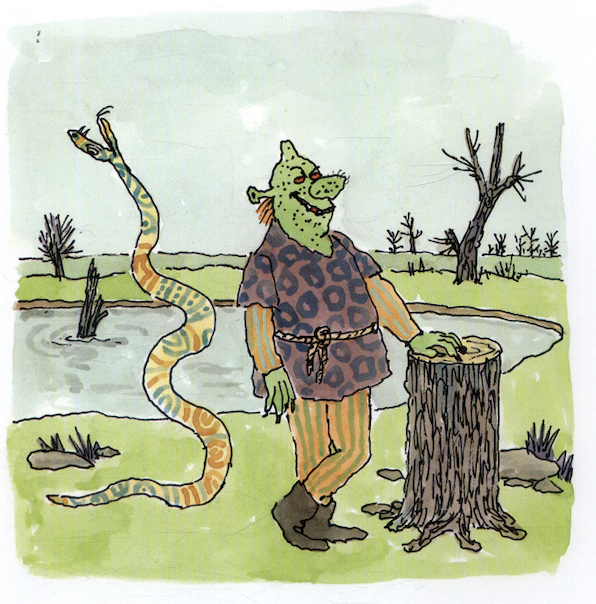
He never said where the idea came from, but it seems to have been lurking in a fanciful child’s subconscious. Here, at last, was the anti-fairy tale starring a most unlovable, even hideous troll. In the 1990 book, Shrek’s parents kick him out of their swampy home “to do his share of damage.” Merry mixups follow, with Shrek driving off dragons with his foul breath and finally meeting a princess as ugly as he is. And they live “horribly ever after, scaring the socks off all who fell afoul of them.”
Dreamworks sanitized the story but Shrek’s anti-hero appeal remained. When the movie came out in 2001, the 93-year-old Steig was approaching his own ending. Despite the softening of Shrek, he went to the premiere and said, "It's vulgar, it's disgusting — and I loved it." He died in 2003, leaving all those cartoons and covers in archives, all those kid books my kids loved, and onscreen, one hideous troll.

“If I'd had it my way,” Steig once said, “I'd have been a professional athlete, a sailor, a beachcomber or some other form of hobo. A painter, a gardener, a novelist, a banjo player, a traveler, anything but a rich man.” But his path seemed chosen in childhood, a childhood that somehow lasted 94 years.
“I think I feel a little differently than other people do. For some reason I've never felt grown up.”