
THE STINKING ROSE
A nickel will get you on the subway but garlic will get you a seat. — old New York saying
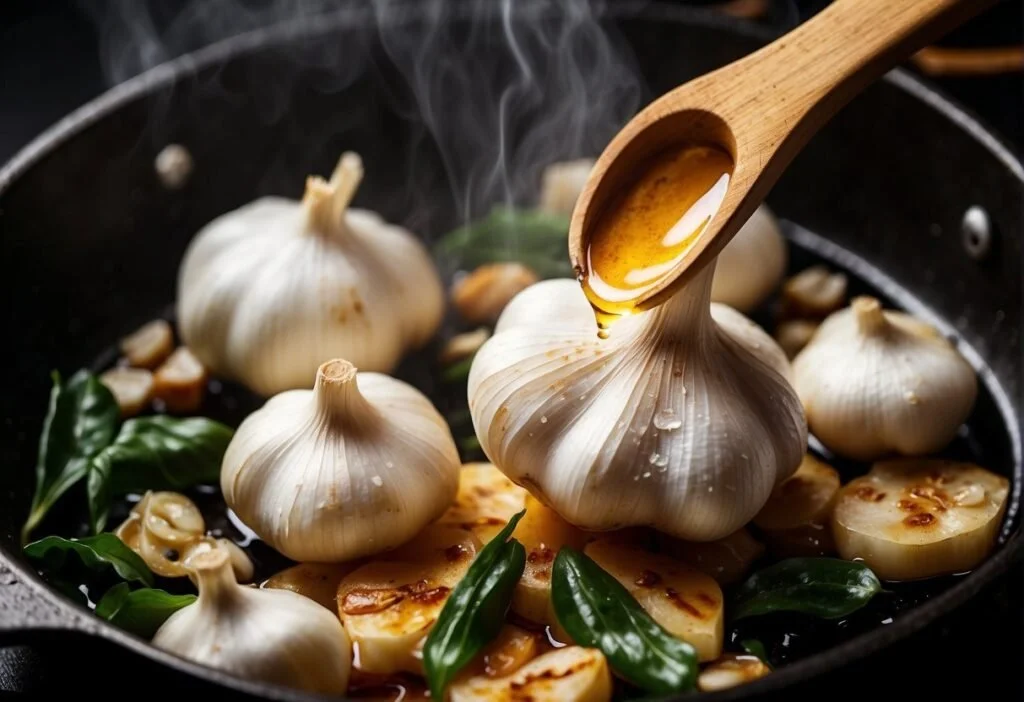
Step into a kitchen, any kitchen where garlic is sizzling. You are home now, bathing in the savory smell of “the stinking rose.” More than merely gifting your nose, the kitchen captures the aromas of earth, of time, of how food should be. Garlic is working its wonders again, warding off vampires, heart disease, and the utter blandness of American food as it used to be.
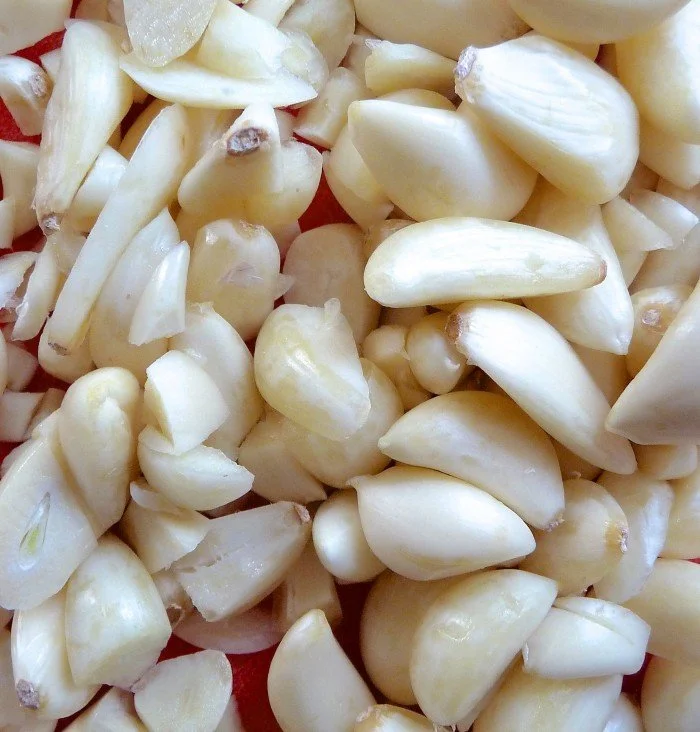
Per capita, the average American now eats two pounds of garlic per year. (I eat about six.) That figure doesn’t rival China, which produces and consumes 80 percent of the world’s garlic. But clove by clove, we are coming up fast. Annual garlic festivals, once a novelty, are now held in several American cities. Garlic cookbooks abound. And a search on Amazon reveals garlic presses, peelers, nutritional supplements, odorless garlic, granulated garlic, organic garlic, black garlic, peeled garlic for the lazy, Himalayan garlic because everything Himalayan must be better... (To be continued.)
Garlic has conquered America but the conquest was not easy. We inherited our fear of garlic from the British, whose cuisine has always avoided actual flavor. America’s first cookbook, in 1796, suggested that “garlicks, though used by the French, are better adapted to the uses of medicine than cookery.” A half century later, another cookbook cautioned that garlic be used “very sparingly, as to many persons it is extremely disagreeable.” Come the 20th century, America’s most popular cookbook, by Fannie Farmer, mentioned garlic just once — to be rubbed on French bread and discarded. But then came “them Eye-talians.”
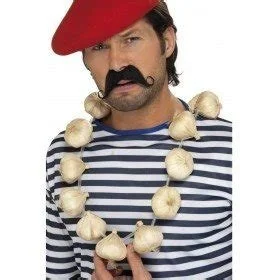
Between 1880 and 1920, four million Italians arrived in “L’America.” Suddenly the rest of America, looking down its nose rather than using it, had another reason to dislike garlic. Garlic, one critic wrote, “is a food fit only for ditch diggers.” This rank prejudice continued into the 1930s when baseball’s Joe DiMaggio, despite his surname, was described as “otherwise well adapted to most U.S. mores. He never reeks of garlic.”
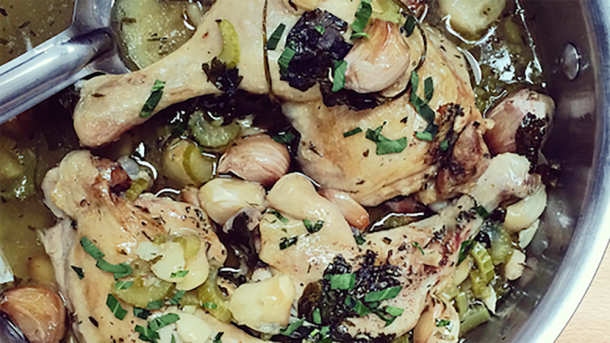
Garlic might have remained “the stinking rose” if not for World War II. American soldiers sampling the cuisine of France and Italy came home with a taste for more. One such soldier was James Beard. Soon to become “the dean of American cookery,” Beard began cooking with garlic. His “Chicken with 40 Cloves of Garlic” (above) became a legend. (I’d use 50 cloves.) And the seed of conquest was planted. (Actually, you don’t plant garlic seeds. You plant the entire clove.)
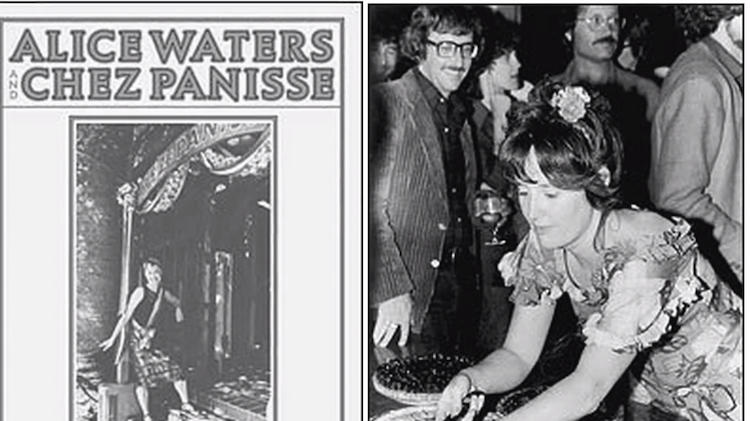
By the 1960s, Americans had learned to like garlic — in moderation. The love affair only blossomed when Alice Waters opened her iconic Chez Panisse restaurant in Berkeley. In 1977, Chez Panisse began celebrating Bastille Day with a garlic-sated menu that infused American culture with such innovations as pesto, roasted garlic, and aioli (garlic mayonaisse.). For dessert — figs with garlic honey.
Berkeley-based filmmaker Les Blank soon captured Chez Panisse’s passion in “Garlic is as Good as Ten Mothers.” The documentary presented a veritable orgy of garlic cloves being chopped, pressed, peeled and piled high. Watch (vegetarians beware — pig bellies in preparation):
“Garlic/Ten Mothers” also took viewers to America’s first, and still largest, garlic festival.
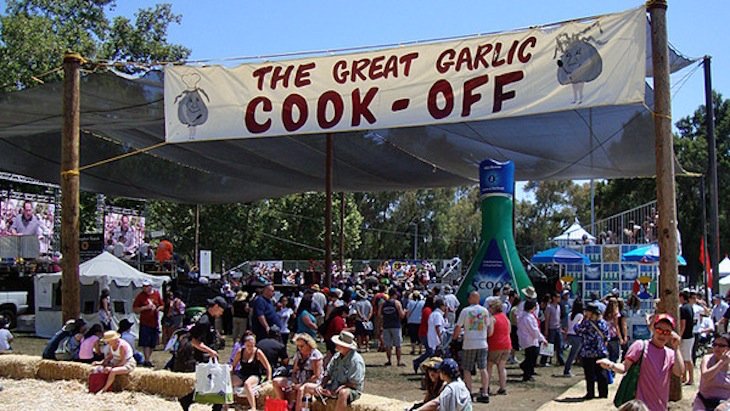
Gilroy, California has good reason to call itself the “garlic capital of the world.” Some 90 percent of American garlic comes from this small town in California’s Central Valley. And each July, 12,000+ show up to eat garlic in everything from shrimp to scones to ice cream. A recent festival featured a Garlic Mule — garlic and vodka. It sold out.
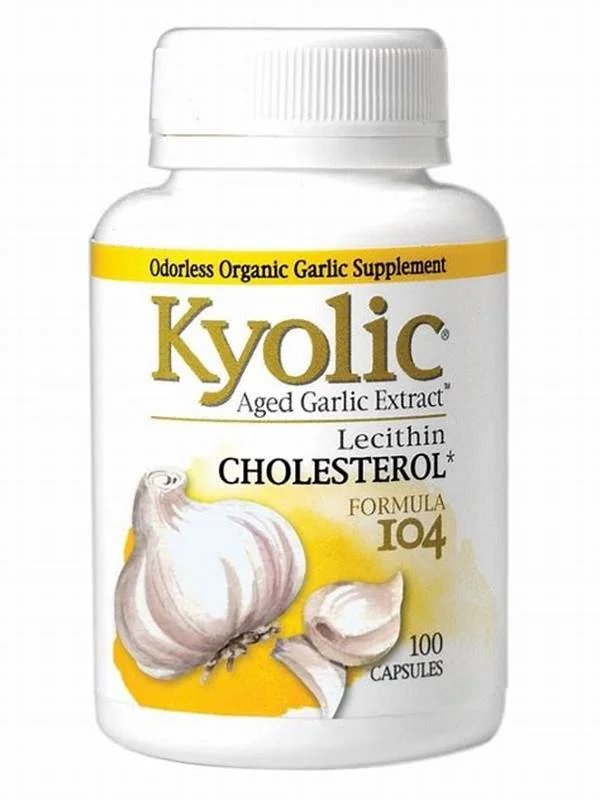
Along with taste and aroma, many tout garlic’s medicinal properties. The little clove is said to lower blood prerssure, fight colon cancer, reduce colds, and ward off not just vampires but dementia.
Never mind that recent studies have called most cure-all claims, including the vampires, into question. The cult of garlic as a panacea explains why that list on Amazon also includes: garlic essential oil, two pounds of fresh garlic from Gilroy, “the new garlic softgel everyone is using,” freeze-dried garlic, “ultimate hair treatment garlic conditioner,” (and shampoo) and dozens of sauces, rubs, pills, and capsules all using the magic word “garlic” to cure sagging sales figures.
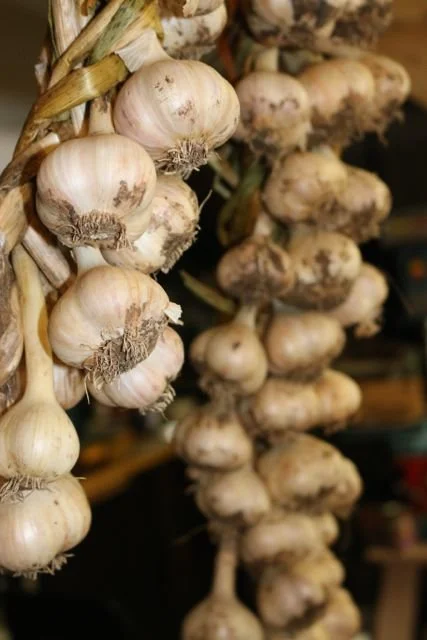
So it may be that garlic is too much with us now. But step into any kitchen where it sizzles. That earthy aroma, once confined to kitchens in France and Italy, is now the smell of American cooking. And if our breath stinks, it stinks like a rose.